Banana

Banana
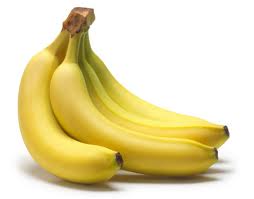
The banana is of great nutritional value. It has a rare combination of energy value, tissue building elements, protein, vitamins and minerals. It is a good source of calories being richer in solids and lower in water content than any other fresh fruit. A large banana supplies more than 100 calories. It contains a large amount of easily digestible sugar, making it a good source of quick energy and an excellent means of recovery from fatigue.
   
Food Value Minerals and Vitamins
Moisture 70.1% Calcium 85 mg
Protein 1.2% Phosphorus 50 mg
Fat 0.3% Iron 0.6 mg
Minerals 0.8% Vitamin CSmall amounts of Vitamin B Complex 8 mg
Fiber 0.4%
Carbohydrates 7.2%
100%
Calorific Value 116
*Values per 100 gms edible portion

  • The banana constitutes almost a complete balanced diet in combination with milk.
  • Banana is known for promoting healthy digestion.
  • The banana is used as a dietary food against intestinal disorders because of its soft texture and blandness. It is the only raw fruit which can be eaten without distress in chronic ulcer cases. It neutralizes the over-acidity of the gastric juices and reduces the irritation of the ulcer by coating the lining of the stomach.
  • Bananas are of great value both in constipation and diarrhoea as they normalize colon functions in the large intestine to absorb large amounts of water for proper bowel moments. Their usefulness in constipation is due to their richness in pectin, which is water-absorbent and this gives them a bulk producing ability. They also possess the ability to change the bacteria in the intestines from the harmful type of bacilli to the beneficial acidophyllus bacilli.
  • Bananas are useful in the treatment of arthritis and gout.
  • Being high in iron content, bananas are beneficial in the treatment of anaemia. They stimulate the production of haemoglobin in the blood.
  • A diet consisting of bananas and skimmed milk is considered an effective remedy for weight reduction. In prescribed course of diet treatment, the daily diet is restricted to six bananas and four glasses of skimmed milk or buttermilk made from skimmed milk for a period of 10 to 15 days. Thereafter green vegetables may be introduced gradually, reducing the intake of bananas from six to four. This regimen or prescribed course of diet treatment can be continued till the desired results are achieved. Bananas are suitable for overweight people as they contain practically no sodium.
  • Cooked banana flower eaten with curd is considered an effective medicine for menstrual disorders like painful menstruation and excessive bleeding.
Taking Banana regularly may be a preventive measure for stroke.In a study it was found that People whose potassium intake is low are 1.5 times more prone to have a stroke than those with high intake of potassium. Low intake of potassium means taking less than 2.4 gm of potassium in a day and high intake is more than 4.0 gm per day.
Nutrition
Banana in diet – prevention from Stroke

Turmeric

Turmeric                                     Curcuma longa                     Common name – Haldi
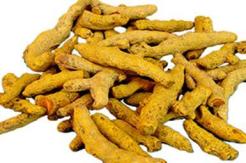
Turmeric is a short herb. Its underground stems are short and thick and constitute commercial turmeric. It’s commonly used as spice in Asian countries.  
Turmeric contains curcumin and an essential oil. Dry rhizomes yield 5.8 per cent essential oil, while the fresh ones yield 0.24 per cent oil containing zingiberine
 Turmeric  
Food Value Minerals and Vitamins
Moisture 13.1 % Calcium
Protein 6.3 % Phosphorus
Fat 5.1 % Iron
Minerals 3.5 % Carotene
Fibre 2.6 % Thiamine
Carbohydrates 69.4 % Niacin
100%
Calorific Value – 349
As per ancient literature, turmeric has many beneficial properties. Turmeric is being currently evaluated for its anti-cancer properties as curcumin has been shown to inhibit tumours of the skin and colon when administered in the early stages of carcinogenesis.
  • It has intestinal antiseptic properties. Dry powder of turmeric with butter milk or water is supposed to be helpful for chronic diarrhoea and flatulence.
  • For Worm infestations — a table spoon of juice of turmeric with a pinch of salt in the morning.
  • For Anaemia — a teaspoon of raw turmeric mixed with honey.
  • Bronchial Asthma — A teaspoon of turmeric powder with a glass of milk, twice or thrice daily is very effective.
  • Chronic cough and throat irritation — half teaspoon of turmeric mixed with small amount of milk is beneficial.
  • Sprains — For sprains or the swellings caused by sprains, turmeric paste mixed with lime and salt can be applied.
  • Boils — application of turmeric paste to the boils speeds up the healing process and ripens the boils.
  • Skin diseases like ringworms and scabies – juice of turmeric is applied on the affected part. Turmeric juice mixed with honey should also be taken orally.
  • Turmeric is extensively used as a spice. It imparts flavour and yellow colour to curries.
  • It’s also used as a colouring matter for confectionary, food and pharmacy industries
  • Turmeric is an important ingredient of herbal cosmetics. It is used in face packs and helps improve complexion.
  • Blemishes, Pimples — Paste made of powder of turmeric with equal quantity of white sandal, orange peel, majeeth and rose leaves is helpful.
  • Chronic Pruritus & Urticaria — Powder of equal quantity of turmeric, amla and sugar – to take 1 gram twice a day for a couple of weeks.
  • Turmeric is a household first aid for cuts and bruises.
  • Curcumin – the main active constituent of turmeric has been shown to have a wide range of therapeutic effects. It is known to have anti allergic, carminative, diuretic and anti oxidant properties.
  • Curcumin – is supposed to be a potential cancer fighter. Lab studies show it can suppress the transformation, proliferation, and invasion of cancerous cells for a wide array of cancers.
 Nutrition

Garlic

Garlic                 Allium sativum
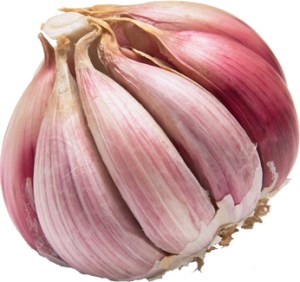
Garlic is widely used around the world for its pungent flavour and as a seasoning or condiment. Garlic may be applied to breads to create a variety of classic dishes. Garlic is used world over to make a wide variety of dishes.
   
  • Studies report that garlic consumption may decrease the progression of cardiovascular disease. It may also reduce Blood Pressure.
  • In a study it was found that garlic helps prevent and treat the common cold.
  • Garlic may strengthen the immune system, helping the body fight diseases such as cancer. Particularly colon and stomach cancers and also breast, prostate, and laryngeal (throat) cancers.
  • Antiparasitic properties.
  • Fresh garlic contains allicin, which is reported to have antibacterial, antiviral, and antifungal properties.
  • Garlic consumption may kill bacteria known to cause ulcers H. Pylori.
The chemicals that contribute to the pungent flavour of garlic also contribute to help block cancer by preventing the formation of some carcinogens that damage DNA. Garlic may also help to stimulate the production of immune-system chemicals interleujin-2, tumour necrosis factor and interferon gamma-the same substances that are used by doctors in some cancers therapies that are based on manipulation of immune system.Fresh garlic juice can kill various microorganisms. Some studies have suggested that eating lots of chopped garlic may lower the risk of colon and stomach cancer by up to 35-50 %. The garlic is said to contain compounds that stop the growth of ulcer causing Helicobacter pylori bacteria. which is identified as a strong risk factor for gastric ulcer.

How much to eat?

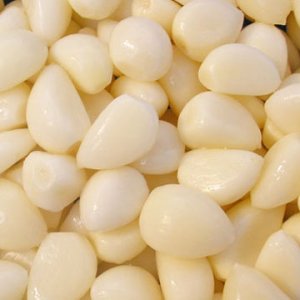
5-18 gms – about 2-6 cloves a week. Better to have raw or lightly cooked garlic.

 Nutrition

Garlic effect

Apple

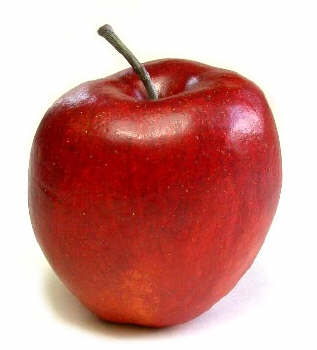
Apple
Nearly 7,500 varieties of Apple are grown all over the world. The apple is a native of Eastern Europe and Western Asia and has been cultivated from pre-historic times.The apple is a highly nutritive food. It contains minerals and vitamins in abundance.

Food Value Minerals and Vitamins
Moisture 84.6% Calcium 10 mg
Protein 0.2% Phosphorus 14 mg
Fat 0.5% Iron 1 mg
Minerals 0.3% Vitamin A 40 IU**
Fibre 1.0% Small amounts of Vitamin E,  and B Complex
Carbohydrates 13.4%
100%
Calorific Value – 59
*Values per 100 gms edible portion **International Unit
  • The skin of apple should not be discarded when taking it in raw form as the skin and the flesh just below it contain more vitamin C than the inner flesh. The vitamin content decreases gradually towards the centre of the fruit. The skin also contains five times more vitamin A than the flesh.
  • Apple contains Pectin and Malic acid.
  • Iron contained in the apple helps in formation of blood.
  • Raw apples are good for constipation.
  • Cooked or baked apples are good for diarrhoea.
  • Apples have been found useful in acute and chronic dysentery among children. Ripe and sweet apples should be crushed into pulp and given to the child several times a day.
  • Apples are of special value to heart patients. They are rich in potassium and phosphorus but low in sodium. It is also useful for patients of high blood pressure.
  • Apple is also said to be beneficial to gout patients caused by increase of uric acid in blood.
  • Apples, boiled to a jelly, make a very good liniment for rheumatic pains. They should be rubbed freely on the affected area.
  • Sweet apples are valuable in dry hacking cough.
  • Apples are useful in kidney stones.
  • The apple peel water is an excellent medicine for the inflamed eyes as an eye wash. The over-ripe apples are useful as a poultice for sore eyes. The pulp is applied over the closed eyes.
  • Tooth-decay can be prevented by regular consumption of apples as they possess a mouth cleansing property.
  • The apple is the best fruit to tone up a weak and run-down patient.  It removes deficiencies of vital organs and makes the body stout and strong. It tones up the body and the brain as it contains more phosphorus and iron than any other fruit or vegetable. Its regular consumption with milk promotes health and youthfulness and helps build healthy and bright skin.
 Nutrition