Garlic

Garlic                 Allium sativum
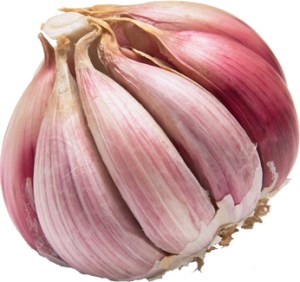
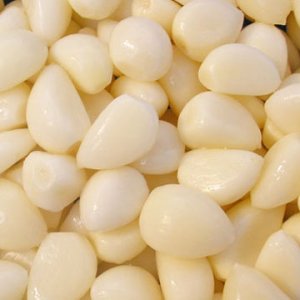
Garlic is widely used around the world for its pungent flavour and as a seasoning or condiment. Garlic may be applied to breads to create a variety of classic dishes. Garlic is used world over to make a wide variety of dishes.
   
  • Studies report that garlic consumption may decrease the progression of cardiovascular disease. It may also reduce Blood Pressure.
  • In a study it was found that garlic helps prevent and treat the common cold.
  • Garlic may strengthen the immune system, helping the body fight diseases such as cancer. Particularly colon and stomach cancers and also breast, prostate, and laryngeal (throat) cancers.
  • Antiparasitic properties.
  • Fresh garlic contains allicin, which is reported to have antibacterial, antiviral, and antifungal properties.
  • Garlic consumption may kill bacteria known to cause ulcers H. Pylori.
The chemicals that contribute to the pungent flavour of garlic also contribute to help block cancer by preventing the formation of some carcinogens that damage DNA. Garlic may also help to stimulate the production of immune-system chemicals interleujin-2, tumour necrosis factor and interferon gamma-the same substances that are used by doctors in some cancers therapies that are based on manipulation of immune system.Fresh garlic juice can kill various microorganisms. Some studies have suggested that eating lots of chopped garlic may lower the risk of colon and stomach cancer by up to 35-50 %. The garlic is said to contain compounds that stop the growth of ulcer causing Helicobacter pylori bacteria. which is identified as a strong risk factor for gastric ulcer.

How much to eat?

5-18 gms – about 2-6 cloves a week. Better to have raw or lightly cooked garlic.

 Nutrition

Garlic effect

Apple

Apple
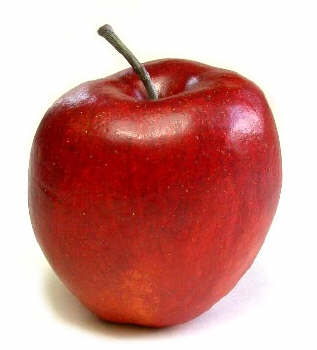
Nearly 7,500 varieties of Apple are grown all over the world. The apple is a native of Eastern Europe and Western Asia and has been cultivated from pre-historic times.The apple is a highly nutritive food. It contains minerals and vitamins in abundance.

Food Value Minerals and Vitamins
Moisture 84.6% Calcium 10 mg
Protein 0.2% Phosphorus 14 mg
Fat 0.5% Iron 1 mg
Minerals 0.3% Vitamin A 40 IU**
Fibre 1.0% Small amounts of Vitamin E,  and B Complex
Carbohydrates 13.4%
100%
Calorific Value – 59
*Values per 100 gms edible portion **International Unit
  • The skin of apple should not be discarded when taking it in raw form as the skin and the flesh just below it contain more vitamin C than the inner flesh. The vitamin content decreases gradually towards the centre of the fruit. The skin also contains five times more vitamin A than the flesh.
  • Apple contains Pectin and Malic acid.
  • Iron contained in the apple helps in formation of blood.
  • Raw apples are good for constipation.
  • Cooked or baked apples are good for diarrhoea.
  • Apples have been found useful in acute and chronic dysentery among children. Ripe and sweet apples should be crushed into pulp and given to the child several times a day.
  • Apples are of special value to heart patients. They are rich in potassium and phosphorus but low in sodium. It is also useful for patients of high blood pressure.
  • Apple is also said to be beneficial to gout patients caused by increase of uric acid in blood.
  • Apples, boiled to a jelly, make a very good liniment for rheumatic pains. They should be rubbed freely on the affected area.
  • Sweet apples are valuable in dry hacking cough.
  • Apples are useful in kidney stones.
  • The apple peel water is an excellent medicine for the inflamed eyes as an eye wash. The over-ripe apples are useful as a poultice for sore eyes. The pulp is applied over the closed eyes.
  • Tooth-decay can be prevented by regular consumption of apples as they possess a mouth cleansing property.
  • The apple is the best fruit to tone up a weak and run-down patient.  It removes deficiencies of vital organs and makes the body stout and strong. It tones up the body and the brain as it contains more phosphorus and iron than any other fruit or vegetable. Its regular consumption with milk promotes health and youthfulness and helps build healthy and bright skin.
 Nutrition

Triphala

Triphala
Triphala is household name in the Indian subcontinent. Triphala Churan is a powder of the dried fruits of three herbs without their seeds.Triphala is a combination of three important herbal fruits: –

  • Amla – emblica officinalis
  • Harad – terminalia chebula
  • Baheda – terminalia bellirica

 Amla

 Harad

 Baheda

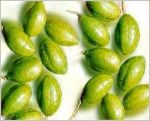
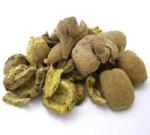
Amla – is the richest source of Vitamin C. It also contains tannic acid, glucose, protein, cellulose and calcium. Amla is useful for stomach problems, it is antipyretic, hair tonic and nerve brain tonic. Its also useful in anaemia, hyperacidity and in gynecological problems and epistaxis. Amla is considered to have restorative and preventive properties.Harad – Contains tannin up to 30%, chebulininc acid and Vitamin B complex. It has carminative properties. It has anti worm effect and protective effect on the lungs.  It is considered beneficial for Asthma, Piles, constipation and sinus allergies.

Baheda – Is rich in Vitamin A. It has astringent, digestive, laxative, anti- helmentic and expectorant properties.

Triphala is an important combination of medicine and is used extensively in Ayurvedic system of medicine. It is used as medicine as well as rejuvenating agent. It is said to remove toxins and various other undesirable accumulations from the body.

It is said to improve digestion and assimilation and act as antioxidant. It is also beneficial in chronic lung diseases, skin diseases, eye disorders and conditions with raised cholesterol levels.

Triphala can be taken with honey or with milk at bed time. Average daily dose is 2-5 gms.

 Nutrition

Ginger – for common problems

Ginger – for common problems
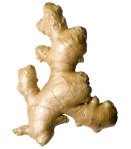
Ginger is a common house hold herb in India. In India and China it is used as a spice in all types of vegetable preparations. Adrak ka aachar is a popular condiment in Asian countries.Other uses of ginger are in bakery items such as biscuits, cakes and puddings as well as in soups. Ginger bread is popular in western countries. Oil of ginger is used to make flavouring essence and in perfumery.
Contents of Ginger

Ginger contains Phosporus, Calcium, Iron, Carotene, Thiamine, Riboflamin, Niacin, Vitamine C.

100 grm. of ginger contains moisture: 80.9 % , protiens: 2.3 %, carbohydrates: 12.3 %. Its caloric value is 67.

Therapeutic uses of ginger

  • As a soothing drink.
    This can be made by boiling a small amount of crushed ginger in a cup of water. Add a teaspoon of honey and a little fresh lemon juice. This makes a soothing drink and can serve as a substitute for bed tea.
  • For Aches and Pains
    Ginger acts as an excellent pain killer. For headaches – a ginger ointment made by crushing dry ginger on a grinding stone or otherwise, can be applied on the forehead. A few drops of ginger juice put in the ears relieves ear ache. Also if rubbed on the gums relieves toothache.
  • For Cold & Cough
    Small amount (appx. 10 grm.) of ginger crushed or cut to small pieces to be boiled in a cup of water, sugar added to taste, can be had for cough and cold.
    Ginger Tea – can be made by adding small amount of ginger in boiled water before adding tea leaves.
    Ginger mixed with honey taken three times a day is a good remedy for cough.
  • For Diarrhoea
    Dry ginger with crystals of rock salt to be powdered and taken with small piece of jaggery.
  • For Indigestion
    Chewing a piece of ginger regularly after meals helps relieve dyspepsia.
    Ginger juice + fresh lime + mint juice + honey helps gastrointestinal problems and piles.
  • For Irregular painful menstruation
    Pieces of ginger boiled in water + small amount of sugar, taken three times a day is helpful.
  • For Bronchitis
    Ginger powder + pepper + cloves + honey
 Nutrition

Healing Powers of Water

Healing Powers of Water

Up to seventy percent of the total body weight is due to water. Although it is present in all parts of the body, it is more in organs such as lungs and brain and fluids such as blood, lymph, saliva and secretions by the organs of the digestive system.
Most people believe that we feel thirsty whenever our body needs more water. While this is true, recent research studies have indicated that there are several other indicators of inadequate water in some or all parts of the body. Ignoring these indicators can lead to several major diseases that medicines may cure but not treat.

How is the body water regulated?

Whenever there is water shortage in the house, one would prioritize the use of water for essential purposes. Similarly, when the body receives less water, histamine, a chemical compound present in all cells, initiates a system of water regulation. Histamine directs some neurotransmitters to operate sub-systems to regulate water intake. These sub-systems use chemical substances such as vasopressin” and renin-angiotensin for regulating water intake and distribution.
The ratio of the water content in and outside the cells of the various organs is very important. As age advances, water content in the cells decreases. Since the water content in each cell plays a vital role in maintaining is normal function, inadequate water can lead to loss of some functions. Loss of functions results in specific signs and symptoms.
Important use of water for maintaining normal health

  • Necessary for all chemical reactions in the body. Just as water helps a seed grow into a tree, it also helps our body grow from birth to adulthood.
  • The flow of water inside and outside the cells generates energy. This energy is stored in body along with other chemical sources of energy in the body.
  • The energy generated by the water in the cells helps transmit impulses in the nerves.
  • Helps formation of a glue like material that helps the solid substances in the walls of the cells to be “stuck” to each other.
  • Helps transport the chemical substances produced by the brain that carry its messages to different parts of the body.
  • Just as there are lanes on a main road for different types of vehicles, chemical substances of the brain are transported in the “water lanes” along the length of the nerves.
  • Water content in the body influences the functions of the various proteins and enzymes that are dissolved in it.

In addition to these, Nature Cure describes the following roles of water in our body

  • Water helps maintain the moisture of the lining of the internal organs of the body.
  • It maintains normal volume and consistency of fluids such as blood and lymph.
  • It regulates body temperature.
  • It removes “poisons” or “toxins” from the body through urine, sweat and breathing.
  • Water is essential for regulating the normal structure and functions of the skin.
  • The body looses about four liters of water every day. It is therefore necessary to replenish this volume by drinking at least the equivalent amount of water every day. Inadequate intake of water can lead to dehydration.

Normal daily requirement of water

  • Quantity of water required for the body functions depends on several factors such as age, climate, season, physical activity, type of food consumed, amount of condiments and spices used for cooking, the water content in the food, salt intake etc.
  • Normally, our daily diet provides about two-third of the body’s requirement of water. Some health practitioners suggest that you drink about eight to ten glasses of water every day to meet the remaining one-third of the body’s requirement. You also need to drink a lot of water when you are tired and / or are sweating profusely.
  • One should avoid drinking water while eating food, as digestion of the food is likely to be adversely affected. Water also dilutes the digestive juices in the stomach, thus leading to indigestion. It is desirable that you drink water on empty stomach or three hours after food or one to one and half-hours before food.

How should you drink water?
Nature Cure recommends that you need to “eat liquids and drink solids”. This means that you need to take water sip by sip, and “chew” it in the mouth in order to mix it with the saliva. Avoid regular use of straws for drinking water and or fluids.

What is the best type of water for drinking?
Nature Cure recommends drinking pure water to which no minerals are added.
However, water from natural sources may contain minerals that can be beneficial to the body in specific conditions due to their reaction and affinity towards the mineral content in the food.

Does temperature of the drinking water affect health?

  • Cold water from natural sources is fit for drinking because of six main reasons.

1. Lowers the body temperature
2. Dilutes the blood to the required consistency.
3. Promotes excretion of poisons from the skin in the form of “evaporation”.
4. Stimulates the normal functions of the kidneys and therefore increases the rate of removal of “poisons” from the body through the urine.
5. Increases movements of the intestines, thus facilitating formation and passing of soft stools.

  • Sipping hot water has several benefits too. For example, as soon as you drink hot water, there is instant stimulation of the inner lining of the stomach and contraction of its blood vessels. Thus, you are less likely to suffer from increased acid secretions in the stomach. Hot water cleans the stomach, relieves heartburn, belching, flatulence, acute indigestion, vomiting and cramps in the abdomen. It is important to remember that hot water should be sipped and not gulped.

Hydrotherapy
Hydrotherapy is a branch of healing systems that deals with the management of diseases such as headache, constipation, high blood pressure, etc. by using water, either as an external application or taken internally or both.
Water is used for hydrotherapy because of three main reasons:
1. It has immense power for absorbing and communicating heat.
2. Water is an universal solvent. This means that majority of the substances can dissolve in water.
3. Water can be easily frozen to a solid state as ice or heated to a gaseous form as vapour.

Contributed by Sanjeev Gupta