Gurpreet Kaur’s journey in this world ....
Gurpreet Kaur was a Musician. She was a singer and a composer of music. Her interest was composing and singing Gurbani Shabads in Indian Classical style. She sang Shabads in All the Raags mentioned in Sri Guru Granth Sahib Ji. She also taught Gurmat Sangeet at Gurmat Gian Missionary College, Jawadi, Ludhiana.
Elder child to Pushpinder Kaur and Dr. Brig. Harminder Singh, was born in Amritsar on 13th Jan 1962. She attended various convent schools as a child because her father would get frequent Army postings as a dental surgeon. She graduated with Music Honors from Govt. College for Women, Chandigarh.
Music was her hobby and she composed and sang Raag based Gurbani Shabads. Doing Kirtan was part of growing up nurtured by her parents. She learned music from her father Dr. Brigadier Harminder Singh who was a dental surgeon in Indian Army and a very good singer himself. Gurpreet’s Bhua (father’s sister), Ajit Kaur retied as a Head of Department of Music from Govt. College for Women Ludhiana, and was a renounced Punjabi singer of her time. Gurpreet Kaur also learned nuances of Indian Classical Music from Pandita Sharma.
She was a mother of three children, and a grandmother. Her daughter Keerat Kaur is a Computer Engineer. Her two sons Gurkeerat Singh and Jaskeerat Singh are doctors in USA. Her daughter Keerat Kaur too was part of her group ~ Gurmat Gian Group.
Gurpreet Kaur left this world at the age of 54yrs on 12th Sept 2016 in Baltimore USA.
She had recorded around 25 cds of Gurbani Keertan.
'Raag Ratan' Album (6 CDs) is a Compilation of Shabads in All the 31 Sudh Raags of Sri Guru Granth Sahib Ji.
'Gauri Sagar' Album (3 CDs) is a Compilation of All forms of Raag Gauri in Sri Guru Granth Sahib Ji.
'Nanak Ki Malhaar' ~ ((3 CDs) is an album of Raag Malhar Shabads in various forms of Malhar.
'Gur Parsaad Basant Bana' ~ (3 CDs) is an album of Shabads in Raag Basant sung in various forms of Raag Basant.
Har Ki Vadeyai
Sarni Aayea
Sewa
Priya Kee Preet Piyaree
Mohan Ghar Aavho Karo Jodariya
Mo Kao Taar Le Raama Taar Le
Tere Kavan Kavan Gun Keh Keh Gawan
Mera Baid Guru Govinda
Saajanrraa Mera Saajanrraa
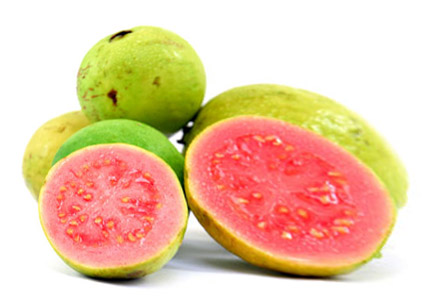
Guava is a tropical fruit, cultivated mainly in the Asian countries. It is quite similar in shape to pear. Inside, there is flesh that is either white or pinkish/reddish in colour. More often than not, you can find lots of small hard seeds enveloping the soft and sweet pulp of the fruit. Guava is quite rich in Vitamin C, maybe even more than orange, apart from a number of other vitamins and minerals.
Guava fruit is often eaten raw with a pinch of salt and pepper. The fruit is also often prepared as a dessert, in fruit salads. Because of the high level of pectin, guavas are extensively used to make candies, preserves, jellies, jams, marmalades and also for juices.
Guava
Nutritional value per 165 g of individual fruit portion
Calories
112
Iron
0.4 mg
Moisture
133 gm
Potassium
688 mg
Dietary Fiber
8.9 gm
Copper
0.4 mg
Protein
4.2 gm
Beta-carotene (Vitamin A)
1030 IU
Fat
1.6 gm
Ascorbic acid (Vitamin C)
377 mg
Ash
2.3 gm
Thiamin (Vitamin B1)
0.1 mg
Carbohydrates
23.6 gm
Riboflavin (Vitamin B2)
0.1 mg
Calcium
30 mg
Niacin (Vitamin B3)
1.8 mg
Phosphorus
66 mg
Folic acid
81 mcg
Guavas are often included among superfruits, being rich in dietary fiber, vitamins A and C, folic acid, and the dietary minerals, potassium, copper and manganese. Having a generally broad, low-calorie profile of essential nutrients, a single common guava fruit contains about four times the amount of vitamin C as an orange.Guavas contain both carotenoids and polyphenols giving them relatively high potential antioxidant value among plant foods.
From preliminary medical research in laboratory models, extracts from apple guava leaves or bark are implicated in therapeutic mechanisms against cancer, bacterial infections, inflammation and pain. Essential oils from guava leaves display anti-cancer activity in vitro.
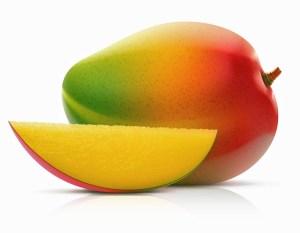
Mangoes have been cultivated in the Indian subcontinent for thousands of years. Nearly half of the world’s mangoes are cultivated in India alone.Mango is generally sweet, although the taste varies with the type. There are vast varieties of them. Mangoes are widely used in cuisine. Sour, unripe mangoes are used in chutneys, pickles, or side dishes, or may be eaten raw with salt and chili. A cooling summer drink called panna is made from mangoes.Ripe mangoes are typically eaten fresh; however, they can have many other culinary uses. Mango Lassi, a popular drink made throughout South Asia is created by mixing ripe mangoes or mango pulp with yogurt and sugar. Ripe mangoes are also used to make curries.Mangoes are used in preserves like moramba, amchur (dried and powdered unripe mango) and pickles, including a spicy mustard-oil pickle.
Mango is used to make juices, smoothies, ice cream, fruit bars. Pieces of mango can be mashed and used as a topping on ice cream or blended with milk and ice as milkshakes.
Mango (raw)
Nutritional value per 100 g (3.5 oz)
Energy
272 kJ (65 kcal)
Thiamine (Vit. B1)
0.058 mg
Carbohydrates
17 gm
Riboflavin (Vit. B2)
0.057 mg
Sugars
14.8 gm
Pantothenic acid (B5)
0.160 mg
Dietary fiber
1.8 gm
Vitamin B6
0.134 mg
Fat
0.27 gm
Folate (Vit. B9)
14 μg
Protein
0.51 gm
Vitamin C
27.7 mg
Vitamin A equiv.
38 μg
Calcium
10 mg
beta-carotene
445 μg
Iron
0.13 mg
Magnesium
9 mg
Phosphorus
11 mg
Potassium
156 mg
Zinc
0.04 mg
Mango is rich in a variety of phytochemicals and nutrients. The fruit pulp is high in prebiotic dietary fiber, vitamin C, diverse polyphenols and provitamin A carotenoids.Mango contains essential vitamins and dietary minerals and 17 amino acids. Mango peel and pulp contain other phytonutrients, such as the pigment antioxidants – carotenoids and polyphenols – and omega-3 and -6 polyunsaturated fatty acids.
Phytochemical and nutrient content appears to vary across mango species. Up to 25 different carotenoids have been isolated from mango pulp, the densest of which was beta-carotene, which accounts for the yellow-orange pigmentation of most mango species. Peel and leaves also have significant polyphenol content, including xanthonoids, mangiferin and gallic acid.
The mango triterpene, lupeol, is an effective inhibitor in laboratory models of prostate and skin cancers. An extract of mango branch bark called Vimang, isolated by Cuban scientists, contains numerous polyphenols with antioxidant properties in vitro and on blood parameters of elderly humans.
Potential for contact dermatitis
Mango peel contains urushiol, the chemical in poison ivy and poison sumac that can cause urushiol-induced contact dermatitis in susceptible people. Those with a history of poison ivy or poison oak contact dermatitis may be most at risk for such an allergic reaction. Urushiol is also present in mango leaves and stems.
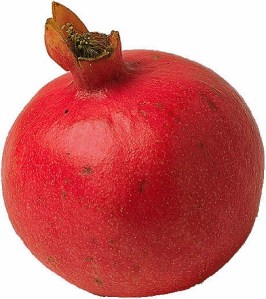
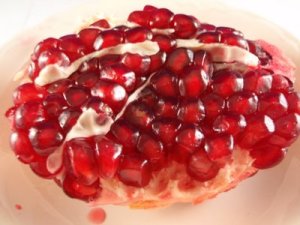
Pomegranate fruit is native to the Iranian Plateau and the Himalayas in north Pakistan and India.The pomegranate juice can be very sweet or sour, but most fruits are moderate in taste, with sour notes from the acidic tannins contained in the juice. Pomegranate seeds are used as a spice known as anardana mainly in Indian and Pakistani cuisine.
Contents of Pomegranate
Food Value
Minerals and Vitamins
Moisture
78.0%
Calcium
10 mg
Protein
1.6%
Phosphorus
70 mg
Fat
0.1%
Iron
0.3 mg
Minerals
0.7%
Vitamin C, Small amounts of Vitamin B Complex
16 mg
Fibre
5.1%
Carbohydrates
14.5%
100%
Calorific Value – 65
*Values per 100 gms edible portion
Important contents of pomegranate are: vitamin C, vitamin B5 (pantothenic acid), potassium and polyphenols, such as tannins and flavonoids. It is high in fiber. It has unsaturated oils and micronutrients.The most abundant polyphenols in pomegranate juice are the tannins called ellagitannins. Other phytochemicals include polyphenolic catechins, gallocatechins, and anthocyanins, such as prodelphinidins, delphinidin, cyanidin, and pelargonidin.
Since ancient times pomegranate has been used for various ailments.
The rind of the fruit and the bark of the pomegranate tree is used as a traditional remedy against diarrhoea, dysentery and intestinal parasites especially tapeworm.
The seeds and juice are considered a tonic for the heart and throat
The astringent qualities of the flower juice, rind and tree bark are considered valuable for a variety of purposes, such as stopping nose bleeds and gum bleeds, toning skin, (after blending with mustard oil) firming-up sagging breasts and treating haemorrhoids.
Pomegranate juice (of specific fruit strains) is also used as eye drops as it is believed to slow the development of cataracts.
Modern research has indicated many useful properties of this fruit.
pomegranate may be effective in reducing heart disease risk factors
It has been shown to cause drop in LDL cholesterol.
consumption of pomegranate juice for two weeks was shown to reduce systolic blood pressure.
Pomegranate contains many phytochemicals with antioxidant action, such as ellagic acid. Ellagic acid has anticarcinogenic, antiatherogenic and antifibrosis activity.
Studies have shown that ellagic acid can suppress UV-induced skin pigmentation when applied topically or when administered orally.
pomegranate extract has skin-whitening property. This effect was probably caused by the inhibition of proliferation of melanocytes and melanin synthesis.
The pomegranate flowers are used to make a red dye.
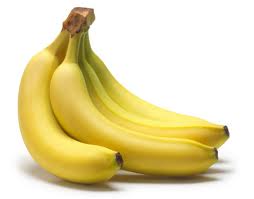
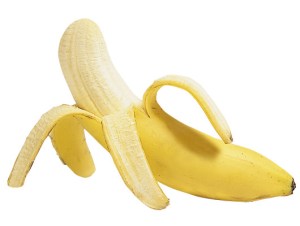
The banana is of great nutritional value. It has a rare combination of energy value, tissue building elements, protein, vitamins and minerals. It is a good source of calories being richer in solids and lower in water content than any other fresh fruit. A large banana supplies more than 100 calories. It contains a large amount of easily digestible sugar, making it a good source of quick energy and an excellent means of recovery from fatigue.
Food Value
Minerals and Vitamins
Moisture
70.1%
Calcium
85 mg
Protein
1.2%
Phosphorus
50 mg
Fat
0.3%
Iron
0.6 mg
Minerals
0.8%
Vitamin CSmall amounts of Vitamin B Complex
8 mg
Fiber
0.4%
Carbohydrates
7.2%
100%
Calorific Value 116
*Values per 100 gms edible portion
The banana constitutes almost a complete balanced diet in combination with milk.
Banana is known for promoting healthy digestion.
The banana is used as a dietary food against intestinal disorders because of its soft texture and blandness. It is the only raw fruit which can be eaten without distress in chronic ulcer cases. It neutralizes the over-acidity of the gastric juices and reduces the irritation of the ulcer by coating the lining of the stomach.
Bananas are of great value both in constipation and diarrhoea as they normalize colon functions in the large intestine to absorb large amounts of water for proper bowel moments. Their usefulness in constipation is due to their richness in pectin, which is water-absorbent and this gives them a bulk producing ability. They also possess the ability to change the bacteria in the intestines from the harmful type of bacilli to the beneficial acidophyllus bacilli.
Bananas are useful in the treatment of arthritis and gout.
Being high in iron content, bananas are beneficial in the treatment of anaemia. They stimulate the production of haemoglobin in the blood.
A diet consisting of bananas and skimmed milk is considered an effective remedy for weight reduction. In prescribed course of diet treatment, the daily diet is restricted to six bananas and four glasses of skimmed milk or buttermilk made from skimmed milk for a period of 10 to 15 days. Thereafter green vegetables may be introduced gradually, reducing the intake of bananas from six to four. This regimen or prescribed course of diet treatment can be continued till the desired results are achieved. Bananas are suitable for overweight people as they contain practically no sodium.
Cooked banana flower eaten with curd is considered an effective medicine for menstrual disorders like painful menstruation and excessive bleeding.
Taking Banana regularly may be a preventive measure for stroke.In a study it was found that People whose potassium intake is low are 1.5 times more prone to have a stroke than those with high intake of potassium. Low intake of potassium means taking less than 2.4 gm of potassium in a day and high intake is more than 4.0 gm per day.
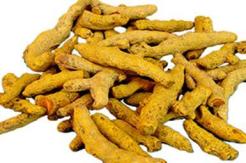
Turmeric is a short herb. Its underground stems are short and thick and constitute commercial turmeric. It’s commonly used as spice in Asian countries.
Turmeric contains curcumin and an essential oil. Dry rhizomes yield 5.8 per cent essential oil, while the fresh ones yield 0.24 per cent oil containing zingiberine.
Food Value
Minerals and Vitamins
Moisture
13.1 %
Calcium
Protein
6.3 %
Phosphorus
Fat
5.1 %
Iron
Minerals
3.5 %
Carotene
Fibre
2.6 %
Thiamine
Carbohydrates
69.4 %
Niacin
100%
Calorific Value – 349
As per ancient literature, turmeric has many beneficial properties. Turmeric is being currently evaluated for its anti-cancer properties as curcumin has been shown to inhibit tumours of the skin and colon when administered in the early stages of carcinogenesis.
It has intestinal antiseptic properties. Dry powder of turmeric with butter milk or water is supposed to be helpful for chronic diarrhoea and flatulence.
For Worm infestations — a table spoon of juice of turmeric with a pinch of salt in the morning.
For Anaemia — a teaspoon of raw turmeric mixed with honey.
Bronchial Asthma — A teaspoon of turmeric powder with a glass of milk, twice or thrice daily is very effective.
Chronic cough and throat irritation — half teaspoon of turmeric mixed with small amount of milk is beneficial.
Sprains — For sprains or the swellings caused by sprains, turmeric paste mixed with lime and salt can be applied.
Boils — application of turmeric paste to the boils speeds up the healing process and ripens the boils.
Skin diseases like ringworms and scabies – juice of turmeric is applied on the affected part. Turmeric juice mixed with honey should also be taken orally.
Turmeric is extensively used as a spice. It imparts flavour and yellow colour to curries.
It’s also used as a colouring matter for confectionary, food and pharmacy industries
Turmeric is an important ingredient of herbal cosmetics. It is used in face packs and helps improve complexion.
Blemishes, Pimples — Paste made of powder of turmeric with equal quantity of white sandal, orange peel, majeeth and rose leaves is helpful.
Chronic Pruritus & Urticaria — Powder of equal quantity of turmeric, amla and sugar – to take 1 gram twice a day for a couple of weeks.
Turmeric is a household first aid for cuts and bruises.
Curcumin – the main active constituent of turmeric has been shown to have a wide range of therapeutic effects. It is known to have anti allergic, carminative, diuretic and anti oxidant properties.
Curcumin – is supposed to be a potential cancer fighter. Lab studies show it can suppress the transformation, proliferation, and invasion of cancerous cells for a wide array of cancers.



 Manbir Online ~ for Health & Fitness