Chewing Tobacco

Chewing Tobacco
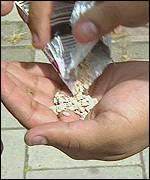
Apart from Smoking, Tobacco is taken in various other forms: Tobacco with betel leaves, Chewing tobacco (khaini), Guthkha, Tobacco snuff.
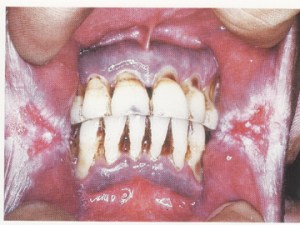
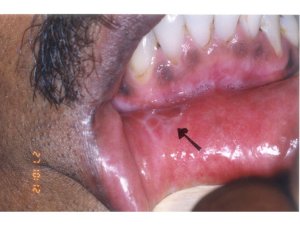
People who chew tobacco for many years are 50 times more likely to get oral cancer, gum disease and losetheir teeth than people who do not chew.The risk of other cancers, heart disease, and ulcerative colitis is 50-70% higher among chewers.Nicotine addiction and dependence is also very real with chewing tobacco. Nicotine addiction leads to increased heart rate and blood pressure. Nicotine constricts the blood vessels and limits oxygen supply throughout the body.Chewing tobacco leaves irritating juices in contact with gums, cheeks and lips for prolonged periods of time. This can lead to a condition called leukoplakia which appears as a smooth, white patch or as leathery-looking wrinkled skin.Oral leukoplakic lesions have been seen upon continued use of tobacco use, which undergo transformation to a dysplastic state. The dysplastic lesions can further develop into carcinomas.Tobacco chewing leads to:

  • Cancer of the oral cavity
  • Cancer of the pharynx, larynx
  • Cancer of esophagus.

The potent carcinogens found in snuff and chewing tobacco include nitrosamines, polycyclic aromatic hydrocarbons, and radiation-emitting polonium.

Oral lesions caused by chewing tobacco rarely cause pain and thus such persons should regularly undergo dental checkups.

Some of the danger signs in those who chew tobacco:

  • Oral sore that won’t heal
  • Oral lump or white patch
  • Prolonged sore throat
  • Difficulty in chewing
  • Restricted movement of the tongue or jaws
  • A feeling of something in the throat

More Dangers of Chewing Tobacco Hazards

  • The enamel of the teeth gets eroded causing sensitivity problems of  teeth.
  • Tooth decay.
  • Stained teeth and bad breath are common among long-term smokeless tobacco users.
  • Chewing tobacco reduces the senses of taste and smell.
  • Chewing tobacco consistently in the same spot can cause permanent gum damage and damage to the supporting bone structure resulting to loss of teeth.
  • Damage to gums leads to leukoplakic lesions which in turn lead to cancer.
 It is a white patchy lesion. Tobacco use is main cause of leukoplakia.  
Smoking 
Tobacco Facts


Acupuncture: in aid of Smokers

Acupuncture: in aid of Smokers
MORE and more patients who fail to respond to modern medicine are turning towards alternative forms of therapy. Do these alternative systems work? Is it merely a placebo effect? Few doctors have done clinical studies to gather objective evidence to answer these questions.
In England, Dr. Tanvir Jamil, has systematically gathered information that suggests acupuncture could help patients quit smoking. He has used acupuncture on 21 patients who wanted to quit smoking and found that five of these gave up the habit, seven reduced the number of cigarettes smoked, and all found the therapy beneficial.

Basic principles

Chinese physicians have practiced acupuncture for over 5000 years. It is based on the concept Qi or bio- energy. The Chinese believe that Qi flows in the body through certain channels or ‘meridians’. Impaired flow leads to disease. ‘Acupoints’ are specific areas on the surface of the body which when stimulated modulate flow of Qi and influence the function of internal organs. Stimulation is achieved by puncturing the ‘acupoint’ with a needle or pressing it with the fingertip (acupressure). Doctors use special ‘maps’ that indicate the location of acupoints all over the body that can be stimulated to treat various conditions.

Many doctors in the West are using acupuncture to treat aches, pains, respiratory infections and allergies. Some claim that they have helped patients quit smoking, but there are no published data. So Dr. Jamil decided to bridge the gap by compiling information on patients who received acupuncture therapy in his clinic to help them quit smoking.
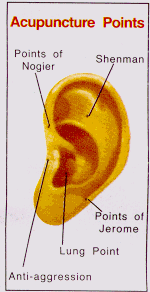
TherapyOver a six-month period, 15 women and 6 men received one acupuncture treatment every week for an average of four (range 2-5) weeks. At each session five ear points (see diagram) and two distal points in the hand were punctured and the needle was left in place for 20 minutes. Patients were also taught to use simple acupressure methods like applying firm pressure on the ‘lung point’ if they felt the urge to smoke.
ResultsFour patients withdrew from the therapy. Five quit smoking and seven decreased the number of cigarettes. Many found that acupuncture reduced stress and controlled craving. In one case, the patient had already stopped smoking and found the acupuncture helped in dealing with “withdrawal’ symptoms. Some noticed that the cigarettes started to taste terrible. Acupressure gave many patients something to do and distract themselves during periods of craving. Overall, patients found the therapy of ‘definite’ benefit.

One 66-year-old woman who had been smoking 20 cigarettes a day for more than 20 years could give up smoking because of this therapy. She had tried unsuccessfully to quit smoking five years earlier when her father died of bronchitis. Her husband had managed to quit with the help of nicotine patches. Neither nicotine patches nor smaller packs of cigarettes nor herbal cigarettes nor hypnotherapy helped her in any way. But after two sessions of acupuncture, she was down to five cigarettes a week. At the end of five sessions, she had stopped smoking. There was some craving initially but this settled rapidly after her second session. She found that acupressure helped her relieve stress. Three years after therapy, she continued to be a non-smoker. In this time, she had taken three sessions of acupuncture during periods of stress.

Scientific basisThe results seen by Dr. Jamil’s clinic could be due to release of endorphins and encephalins that were able to latch on to nicotine receptors in the brain. They could also have been due to hormonal stimulation that brought about the stress relief. Placebo effect cannot be ignored, especially as most of the patients were highly motivated and had wanted to give up smoking for a number of years.

Dr. Jamil has acknowledged that his sample size was too small with no control group to generalize the findings of his study. But data from an open study are better than no data at all. Besides, the results are encouraging enough to undertake further research.

 Smoking

How to get rid of Tobacco Smoking

for those who smoke

How to get rid of Tobacco Smoking
Tobacco is a serious but preventable risk factor for the heart diseases. It has a large habit forming potential. The strong addiction to smoking needs equally strong motivation and determination to get rid of this habit. But it is not an impossible task. Those who on this habit have no option but to get rid of this addiction if they wish to prevent heart and lung problems and to avoid expensive cardiac surgery like cardiac bypass or angioplasty in the future.
A smoker has to makeup his mind to quit smoking. It has to be 100 percent, as anything less that this would not do. It should be understood that it is far easier for a confirmed smoker not to smoke a single cigarette than to struggle with a reduced number. Thus one has to aim at quitting completely. There is nothing like a “reduction in smoking”.

The rewards of quitting smoking are enormous. The extra risk of heart problems start reducing the moment you stop smoking and it should practically disappear in two to three years.

If you can stop smoking and throw away your pack of cigarette for good, nothing like it. If not, you can do it in two or three stages, but with a clear resolve that the goal is complete abstinence and under no circumstances the interim stage be allowed to become the goal.
It is a fact that one cigarette leads to another, because it not only satisfies the craving for the nicotine but also produces craving for more. You would have noticed that when you get up in the morning the craving for the cigarette is the minimum. but after the first smoke the craving increases. It is therefore important to recognize that the easiest cigarette to resist is the first cigarette of the day. Similarly if you are confined to bed due to some illness and have not smoked for a few days, the craving appreciably diminishes.
Thus, if you cannot stop smoking all of a sudden, then you should do it in 3 stages.
In the first stage reduce the number to exactly half, realizing fully that this is a temporary and merely the first battle against tobacco. Continue this for a month. You’ll notice that craving for the cigarette has considerably reduced.
In the second stage, reduce the number of cigarettes to 4 or 5, and continue for another month. At this stage you’ll find that the craving has become so little that it is not difficult to stop the cigarette smoking.
In the third or the final stage, take the final plunge and say goodbye to smoking forever. Do not keep any cigarettes at home. Throw away all the things like ash trays, cigarette tighter or anything that may remind you of smoking.

Make your house a real Non Smoking Zone

In the first few days you may need some substitute like chewing gums or cardamom. Make use of them but be sure not to allow any temptation to overpower you to take to cigarettes.

It should be understood that the nicotine addiction is like any other addiction and can wake up again any time if you smoke even one cigarette. You may be tempted to argue with yourself that you will only smoke 3 or 4 cigarettes a day. But this does not work. It has worked with no one and it would not work with you also. The four cigarettes would soon become 40.

Once you have stopped smoking it should be complete abstinence forever.

  • Whenever you have that craving, try deep breathing when either standing or sitting. Having a glass of water and exercising also helps to decrease the craving.
  • When you feel like taking tobacco, think of your children and the effect on their future if you develop any of the dangerous diseases caused by tobacco.
  • Use the 4 Ds when the craving for smoking/tobacco hits you:
    • Do something else
    • Delay smoking/tobacco consumption
    • Deep breathing
    • Drink water
  • Use positive self-talk.
  • Practice relaxation techniques (yoga, walking, meditation, dancing, music etc.) every day.
  • Be active, and eat a healthy diet!

Tobacco Facts

Tobacco Facts 
  • Tobacco smoke contains more than 4,000 identified chemical compounds, 43 of which are known to cause cancer in humans or animals.
  • The terms “light” and “mild” are grossly misleading, since they imply a healthier cigarette or tobacco product and smokers regulate their nicotine intake by the intensity, volume or frequency of puffing to get their desired nicotine dose.
  • Smokers who don’t quit in their early thirties have a 50% chance of dying of a tobacco-related disease. 
 Smokeless Tobacco

  • There are forms of smokeless tobacco – Tobacco is taken in various ways – Tobacco with betel leaves, Chewing tobacco (khaini), Guthkha, Tobacco snuff.
  • Smokeless tobacco is not safer than cigarettes-it contains many dangerous chemicals, including cancer-producing chemicals.
  • Long-term smokeless tobacco users begin to develop oral tissue abnormalities within a year.
  • Smokeless tobacco can result in non-cancerous and pre-cancerous oral lesions, gum recession, gingivitis, tooth caries, abrasion and stains.
 Passive Smoke (ETS)

  • Environmental tobacco smoke (ETS) [passive smoke] is a Group A carcinogen and it causes 30 times as many lung cancer deaths as all air pollutants combined.
  • Exposure to passive smoke increases the risk of lower respiratory tract infections, asthma, ear infections and Sudden Infant Death Syndrome in children
Health Risks

  • Nicotine produces cancer. Cancers caused by Tobacco
    • Oral cancers
    • Oropharyngeal cancers
    • Laryngeal cancers
    • Hypopharyngeal cancer
    • Lung cancer
    • Esophageal cancer
    • Urinary bladder cancer 
  • Nicotine causes increases in heart rate, blood pressure, and blood flow from the heart; narrowing of blood vessels; decreased oxygen in the blood; increased fatty acids, glucose, cortisol and other hormones in the blood; increased risk of hardened arteries and blood clotting. 
Pregnancy and Smoking
Many women, particularly teenage girls, have taken up smoking in recent years. A study revealed that smoking among pregnant teens has increased, with as many as 29% of non-Hispanic white teens smoking during pregnancy.The health benefits of quitting smoking are significant for the unborn children of pregnant women.

  • Pregnant women who smoke are at much greater risk of miscarriage, stillbirth, pre-term delivery, low-birth weight, and infant mortality.
  • If the pregnant woman stops smoking before pregnancy or during the first 3-4 months of pregnancy, the risks of low birth weight are reduced.
  • Even though the use of the nicotine replacement patch during pregnancy is controversial, many experts agree that the benefits of quitting outweigh the potential toxicity of nicotine found in NRT treatments. 
Smoking 
Chewing Tobacco


Smoking

Smoking
Some people commit suicide by drowning, others by consuming poison, and still others by smoking. The only difference being that smoking not only affects the smokers but also people in the surrounding area and environment.
Tobacco smoking related diseases constitute a major health problem all over the world.Most of the disorderslinked with tobacco smoking result in various health related problems.Tobacco smoke contains more than 4000 compounds some of which are active antigenic, cytotoxic, mutagenic and carcinogenic.

A habitual smokers’ life is shortened by about 11 minutes per cigarette smoked. The average loss of life of a smoker who smokes 16 cigarettes per day is about Six and a half year. A pack a day cigarette smoker puffs more than 70,000 times a year and thus exposes the membranes of the mouth, nose, pharynx, wind pipes and pulmonary tree repetitively to tobacco smoke.
The three constituents of tobacco smoke that are thought to pose the greatest risk to health are:

  • Nicotine
  • Carbon monoxide
  • Tar

NICOTINE

Nicotine, a highly toxic substance is readily absorbed from the oral, nasal and respiratory mucosa to reach the brain tissue within 7 seconds of inhalation. A smoker who smokes 20 cigarettes a day inhales 100mg of nicotine a week which in a single dose will kill him as rapidly as a bullet.

The fatal dose of nicotine is 60mg. It is a neuroendocrine stimulant and causes addiction.

CARBON MONOXIDE

A toxic gas that interferes with oxygen transport, carbon monoxide binds with haemoglobin and forms carboxy haemoglobin (C0Hb). Chronic elevated COHB leads to the occurrence of arteriosclerotic disease, coronary insufficiency, polycythaemia and impairment of skill and co-ordination. In smoking mothers it is associated with still birth, spontaneous abortions and low birth weight baby.

TAR

Tar is the aggregate of particulate matter in tobacco smoke after subtracting nicotine and moisture. It is known to cause cancer. The other major identified carcinogens in tobacco smoke are polynuclear aromatic hydrocarbons, aromatic amines, nitrosamines and catechol. It also contains many potent pulmonary irritants and ciliotoxins.

ADVERSE EFFECTS:Chronic tobacco smoking adversely affects all systems of the body.Heart: Smoking is one of t the three main independent risk factors for coronary heart disease along with hypertension and hypere-cholesterolaemia. Cardiac death rates are 60-70% greater in male smokers than in nonsmokers.Lungs: Chronic smokers show abnormalities of pulmonary function tests. Smoking causes chronic bronchitis and emphysema. It has been associated with an increased incidence of respiratory infections and death from influenza and pneumonia.Cancer: Smoking is the single most important cause of cancer.

  • The risk of lung cancer is 10 times more in men who smoke one pack a day
  • and 25 times more in those who smoke two packs a day as compared to nonsmokers.
  • It also contributes to the development of oral, laryngeal, esophageal, gastric, pancreatic, kidney and bladder cancers.

Ulcers: There is increased incidence of gastric and duodenal ulcers and chronic mouth ulcers in people who smoke.

Stroke: It is a risk factor for development of strokes.

Plasma fats: Tobacco smoking increases the serum concentration of glucose, cortisol, free fatty acids and decreases the ratio of protective high density lipoprotein, to low density lipoprotein which is harmful.

Pregnancy: Smoking in women is associated with delayed conception and increased incidence of ectopic pregnancy. Complications of pregnancy such as Abruptio placentae, IUGR and preterm labour also increase with smoking. It significantly decreases breast milk volume and infant growth rate.

Various forms of smoking are practiced in different parts of India. Among the smoking habits, bidi takes the leading position followed by cigarette, hookah and cigar. Due to the cruder form of tobacco in bidi it has a higher concentration of tar and nicotine and thus is more carcinogenic than cigarette.

Nicotine being addictive, chronic smokers need adequate treatment to quit smoking. Addiction to tobacco is basically addiction to Nicotine. Smokers try to maintain thier blood nicotine levels.Of course, apart from treatment, a great amount of will power and self confidence are also needed.A diet rich in vitamin E foods such as nuts and whole grains can lower the risk of lung cancer among smokers by about 20%.
According to a study: Earlier a person begins to smoke, the more genetic damage they are likely to suffer, increasing their risk for cancer. The findings suggest that adolescents may be handicapping themselves for the rest of their lives in terms of their ability to recover from the damage tobacco can produce.All smokers develop DNA damage, a precursor to cancer, and all smokers who quit show some DNA repair. But smokers who picked up the habit at a very young age, around ages 9 to 12, showed the highest amount of DNA damage.
A study conducted by American Institute of Andrology at Lexington, Ky suggested:
Nonsmoking men enjoy sex more and have sex twice as often as men who smoke heavily. Smoking appears to affect sexual behavior. Studies have linked cigarette smoking to fertility problems in men. Now, researchers suggest cigarette smoking may dampen some of the pleasure of sex for some men.

The study looked at 300 men between the ages of 24 and 36 and found that nonsmokers had sex 11.6 times a month, on average, compared to 5.7 times a month for smokers.

A study found that Cigarette smoking almost doubled the chances of developing moderate or complete erectile dysfunction.  Exposure to passive smoke also significantly increased the incidence of erectile dysfunction.

Smoking is a major factor in impotence.  It is also a turnoff to the opposite sex.

Tobacco use has been associated with premature aging and skin wrinkling.