Python Snake

Python Snake                                                                          Family Boidae
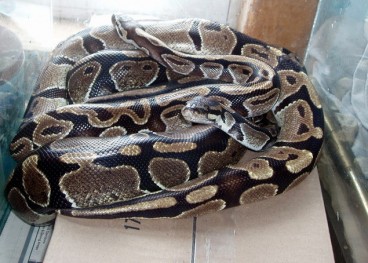
 Python is a common name for Nonpoisonous snakes of boa and python family. Pythons are large and muscular, and kill their prey by squeezing, or constricting, until it suffocates. Although most feed on small mammals, some large species can kill and swallow small pigs and goats. Rarely have they killed humans.

 Python Snake

Pythons range from 1 to 10 m (3 to 33 ft) long and weigh up to 140 kg (300 lb). The female lays 15 to 100 eggs, and broods them until they hatch.

They are found in the tropical and subtropical regions of Africa, Asia, Australia, and the Pacific islands. 

 Python Snake

The reticulated python of Southeast Asia is among the largest snakes, reaching a length of 10 m (33 ft). Other well-known pythons are the Indian python, a favorite of snake handlers;African rock pythonball or royal python of equatorial Africa, which curls into a ball and can be rolled on the ground.

Diamond snake or Carpet snake, also diamond python, common name for a large constricting snake found in Australia and New Guinea. It is named for diamond-shaped markings of yellow and black on the back and abdomen.

 Python Snake

Snake Bite

Black Snake

Black Snake                                                                        Family Colubridae

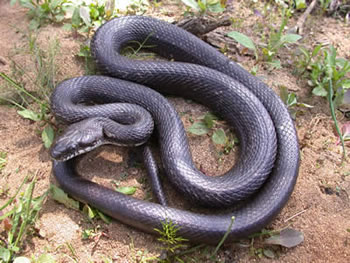
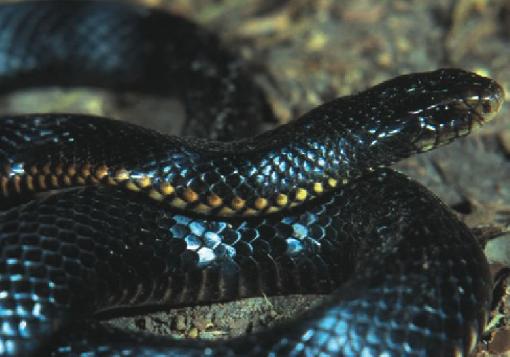
Black Snake is a common name for a non- poisonous snake — Common black snake or Black racer ; black rat snake or pilot snake. 

Found throughout the eastern U.S.

 Black Snake

 It is uniformly black, with smooth scales. It preys on small warm- and cold-blooded animals and swallows them alive. The adult blacksnake is about 2 m (about 6 ft) long. The female lays eggs.

 Black Rat Snake

 Black Snake

Snake Bite

Kaposi’s Sarcoma

Kaposi’s Sarcoma
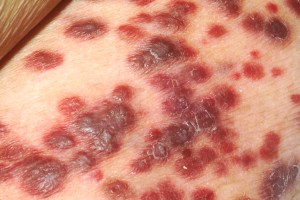
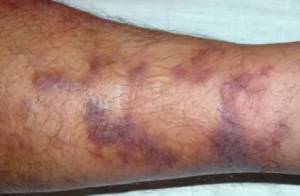
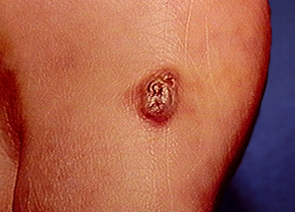
Kaposi’s sarcoma is a cancer of the walls of the blood vessels or lymphatic system. Kaposi’s Sarcoma is a malignant tumor frequently associated with AIDS. It mainly involves the skin. Human herpesvirus-8 (HHV-8) is associated with development of Kaposi’s Sarcoma.
Before the AIDS epidemic, Kaposi’s sarcoma was seen primarily in elderly Italian and Jewish men and developed slowly in these people.In AIDS patients, it can develop aggressively and often involves the skin, lungs, gastrointestinal tract and other organs.It is more frequently associated with AIDS in homosexual men than AIDS in IV drug users. The malignancy results in purplish grape-like lesions in the skin, gastrointestinal tract and other organs.Symptoms associated with Kaposi’s Sarcoma in the gastrointestinal lesions is bleeding. With lesions in the lungs it may cause shortness of breath and bloody sputum.The disease usually progresses slowly and can remain stable for years or decades. However, the skin tumors do have a substantial impact on quality of life in these patients, due both to the stigma associated with the visible skin tumors and the pain they can cause.The cancer usually occurs in people with weakened immune systems, such as those with AIDS or patients who are on immune-suppressing drugs following an organ transplant. The disease is rarely fatal and can often be successfully treated with chemotherapy or other therapies.The appearance of Kaposi’s sarcoma is a poor prognostic sign for individuals with AIDS. It was seen very rare in the United States before the AIDS epidemic.Treatment depends on the site and extent of the lesions. Radiation therapy or cryotherapy can be used in selected cases. Lesions can recur after treatment.


Cancer causing Virus can be spread by Kissing

John Pauk, M.D., M.P.H., formerly of the University of Washington in Seattle, and his associates found out that most cases of new infection of human herpesvirus-8 (HHV-8), which caused an explosion in the number of Kaposi’s sarcoma cases at the beginning of the AIDS epidemic, the virus was most likely transmitted through saliva. This cancer-causing form of herpes disproportionately affects homosexual men.

This study was done on 27 homosexual men. Comparing the sexual history of these patients with those of other homosexual men who were not infected with HHV-8, Pauk found that “deep” kissing (in which saliva is exchanged) with an HIV-positive partner or a partner with Kaposi’s sarcoma and the use of amyl nitrate capsules (“poppers”) or inhaled nitrates (both used to enhance the sexual experience) were associated with an increased risk of infection.

HIV ~ Human Immunodeficiency Virus

HIV in Females – its different!

Quote

 HIV in Females – its different!

It has been found that the markers ( Viral Load, T-cells ) doctors generally use to determine progression of HIV infection behave differently in women and people of color as compared to white men.

  • Viral load, a measurement of how many virus particles are in the blood stream, is lower in women than in men infected for the same amount of time.
  • It remains low in people of color longer than in whites, so women of color generally have the lowest viral loads of all.
  • T-cells, protective immune cells whose number declines over the course of HIV infection, start out at higher levels in healthy women, and decline more slowly in HIV-infected women than they do in men.

More research is needed to determine what these differences mean in practical terms in the treatment of women.

HIV & Hepatitis G

Quote

 HIV & Hepatitis G

Researchers have discovered that infection with an apparently harmless, newly recognized virus seems to interfere with HIV, slowing its progression and prolonging survival of AIDS patients. Virus called GBV-C or hepatitis G, inhibits HIV. Patients with both HIV and hepatitis G lived longer than those infected with HIV alone.