Obesity ~ Your Weight or Your Shape ?

Obesity What is more Important – Your Weight or Your Shape ?
The ultimate risk of diseases in relation of obesity is not the weight but the shape of the weight your body carries.
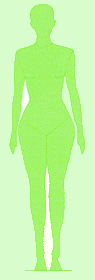
Now many studies have established the fact that if you have a pear shape – namely carrying most of your fat in your butt and your thighs – you are better off than an apple shape where your waist measurement is beyond your hip measurement.
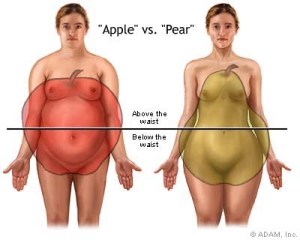
Here is an eight-year follow-up to the nurse’s health study which began with almost 45,000 women. A definite pattern emerged which tells you that it’s not how much you weigh, but where that weight is that can be critical for heart disease. For woman, risk for dying from heart disease is much greater than the risk of dying from breast cancer and yet, the latter seems to get a lot more attention and fear.To find out what the risks are this simple test would help.First, let’s start with waist-hip ratio.To measure your waist-hip ratio, measure your waist at the level of your belly button and your hips at the largest circumference with a tape measure.On division of waist and hip measures we get the waist -hip ratio which should be somewhere between 0.7 to 1.0.If it’s above one that implies your waist is larger than your hips. That’s not good.
Now let’s go for the body mass index.
The body mass index, or BMI, is the ratio of your weight in kilograms divided by your height in meters squared.
It is now found that even if your BMI is higher than desirable, it doesn’t seem to make as much difference as your waist-hip ratio.BMI’s of less than 25 has been considered desirable, over 25 is considered to be undesirable.
It is also to be understood that the risk for women under the age of 60 is more pronounced than women over the age of 60. The risk factors that we are concerned here are mainly for coronary heart disease which includes non fatal heart attacks as well as fatal heart attacks.
If your waist-hip ratio is 0.72 or below, you are the standard, and don’t at least have to worry about heart attacks based on your body shape.If your waist-hip ratio is 0.72 to .76 and you are under 60, your risk is 1.7 times higher than the standard or 70 percent higher.If your ratio is 0.76 to 0.80, your risk is two and a half times higher.If your ratio is 0.80 to .88, your risk approaches three times higher.If your waist-hip ratio is over 0.88, your risk is four and a half times higher.If you are older than 60, the top category of risk is 1.9 times higher.So you can see that the effects of this are diminished in women over the age of 60, implying that extra abdominal fat is less risky for older woman. Now here is the major point of this study. With minor exceptions, it didn’t matter whether your body mass index was under 25 or over 25. In other words, an overweight woman, if she has more of an hour-glass figure, seems to be protected. In addition, you can look at the absolute waist circumference measurements.
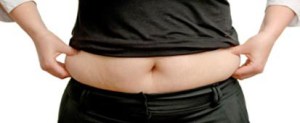
At 71.1 centimetres, your waist is fine.At a waist circumference of 81.3 to 86.4 centimetres, your risk is a couple of times higher.If your ratio is over 96 centimetres, and you are under 60, your risk is up four times. If you are over 60, your risk is only up two times.

It can be easily concluded that an overweight woman, if she has more of

an hour-glass figure, seems to be protected.

A waist circumference above 100 cm in men and above 90 cm in women is associated with increased levels of triglyceride and reduced levels of HDL cholesterol.

So, for those who are in a high risk category it’s important to take preventive measures concerning exercise and cholesterol and take care of oneself as best as possible.

Obesity
Childhood Obesity

Obesity

Obesity
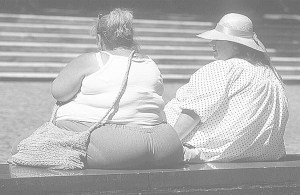
Obesity is an excess of body fat frequently resulting in a significant impairment of health.
Adipose tissue is a normal constituent of the human body that serves the function of storing energy as fat. The fat may be used by the body in response to various metabolic demands. The excess fat accumulation is associated with increased fat cell size.A very important reason for obesity is the overconsumption of carbohydrates. When carbohydrates enter our body they are rapidly broken down into glucose (a sugar). Glucose raises blood sugar levels causing pancreas to make the hormone insulin. Insulin inhibits fat already stored in our body from being broken down and it also promotes the storage of new fat in the body; and increases cholesterol levels.In many forms of severe childhood-onset obesity, the total number of fat cells is increased.Formerly, obesity was explained by the single adverse behaviour of inappropriate eating in the setting of attractive foods. But now it has been established that obesity has multiple causes and is of different types. Both genetic and environmental factors are likely to be involved in the pathogenesis of obesity. These include excess caloric intake, decreased physical activity, and metabolic and endocrine abnormalities.Genetic determinants can either play a major role in the pathogenesis of obesity or enhance susceptibility to its development.The conditions in which genetics may play a role are Prader-Willi syndrome, Ahlstrom’s syndrome, the Laurence-Moon-Biedl syndrome, Cohen’s syndrome, and Carpenter’s syndrome.Over weight can be estimated by Body mass index (BMI), which is weight/height square, where weight is in kilograms and height is in meters.
Obesity is defined as a body mass index above 30 kg/square meter.
Weight gain may confer increased health risks even if the BMI does not exceed 25. In women a weight gain of more than 5 kg (11 lb) is associated with increased risks of diabetes and heart disease, and in men any weight gain after age 25 appears to carry increased health risks.
More than 30% of Americans are 20% or more overweight, and one third of women and more than one quarter of men are trying to lose weight at any given time.

Obesity related topics

Noonan Syndrome

Noonan Syndrome
Synonyms:

  • webbed neck syndrome
  • male Turner syndrome
  • female pseudo-Turner syndrome

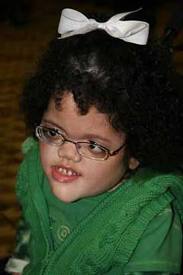
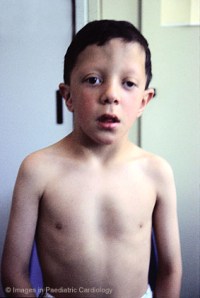
Jacqueline Noonan, paediatrician and heart specialist in 1963, published a report on a small group of patients with typical facies, congenital heart defect, and some clinical features similar to Turner syndrome, but with normal chromosomes. Its after her that this syndrome has been named.

Noonan syndrome is inherited as an autosomal dominant condition. This means that the Noonan gene is on a non-sex (autosomal) chromosome and is transmitted from parent with a 50% probability to child. Although one dose of the Noonan gene is enough to cause the syndrome. A gene for Noonan syndrome (NS1) has been mapped to chromosome number 12. There are several different Noonan genes.

The frequency of the Noonan syndrome is estimated to be between 1:1,000 and 1:2,500 in the general population

 
Main features of this syndrome are:

  • Pulmonary Stenosis
  • Short stature after birth
  • Webbing of Neck
  • Caved in Chest Bones
  • In boys, Testes that do not descend into the scrotum.

Other possible heart defects are hypertrophic cardiomyopathy (thickened heart muscle), atrial septum defect (hole in the wall separating the anterior heart chambers), ventricular septum defect(hole in the wall separating the main heart chambers), septal hypertrophy or a combination of all these defects.

 
Other Facial features that may be present in this syndrome are:

  • Drooping of eyelids.
  • Downwards slanting eyes with arched eyebrows
  • Extra skin fold at the inner angle of the eyes.
  • Increased distance between the eyes.
  • Broad forehead
  • Very Blue or blue green eyes
  • Curly hair
  • Flat broad root of the nose.
  • Short broad neck with skin folds
  • Many pigmented birth marks

Variations occur in the facial features and they change with the age. As the child grows, the face gradually becomes more normal, often more triangular with a high forehead.

 
Other features of this syndrome

  • The birth length and weight of children with Noonan syndrome are often normal. The increase in height in both boys and girls is less than normal throughout the whole growing period.
  • On an average, puberty is delayed by about two years in both sexes.
  • During the first years of life the children may have great feeding and nutrition problems and frequent respiratory tract infections.
  • Only a few children with Noonan syndrome are seriously handicapped. Delayed motor development and speech may be seen in about 25% of the children.
  • Studies have shown that these children’s IQ was within normal limits, though in most cases in the lower range of normal. Mental retardation in approx. 35 %
  • Many of those with Noonan syndrome have a form of visual disturbance, squinting, near sight, or long sight, which may necessitate use of spectacles. The visual disturbance is usually mild.
  • A mild type of hearing impairment has been reported.
  • Children with Noonan syndrome often have dental problems. 1/3 of them have wrongly positioned teeth. The teeth often appear late and in an abnormal order.
  • Repeated attacks of epilepsy have been described in a few cases
  • Reduced fertility in men. Women’s fertility is normal.
 

Nitric Oxide

Nitric Oxide
  • Nitric oxide is a naturally occurring molecule found in a variety of cell types and organ systems. In the cardiovascular system, NO is an important determinant of basal vascular tone, prevents platelet activation, limits leukocyte adhesion to the endothelium, and regulates myocardial contractility. NO may also play a role in the pathogenesis of common cardiovascular disorders, including hypotension accompanying shock states, essential hypertension, and atherosclerosis.
  • It was first identified as endothelial-derived relaxing factor in blood vessels and as the mediator of the bactericidal actions of macrophages. NO’s role as a neural messenger may be even more prominent. NO is a likely transmitter of nonadrenergic, noncholinergic neurons.  Excess release of NO appears to account for a major portion of neural damage following vascular stroke.
  • Nitric oxide is a cytotoxic agent of macrophages, a messenger molecule of neurons, and a vasodilator produced by endothelial cells.
  • Nitric Oxide has been shown to be a mediator of Erectile function.
  • NO is a critical determinant of basal vascular tone, and a deficiency of NO is associated with hypertension.
  • Common disorders that promote atherosclerosis, such as hypertension, hyperlipidemia, smoking, and diabetes, are all associated with abnormal endothelial function. Deficiency of bioactive NO is associated with Abnormal Endothelial Function.
  • A deficiency of NO producing neurons in the gastrointestinal tract is believed to be responsible for certain abnormalities in gastrointestinal motility, such as Hirschsprung’s disease, achalasia, and chronic intestinal pseudo-obstruction.
  • Drugs like nitroglycerin, isosorbide mononitrate and dinitrate, and nitroprusside, promote vasodilation and platelet inhibition in dysfunctional coronary arteries by being metabolized to NO.
  • NO can be useful in the treatment of persistent pulmonary hypertension of the newborn, the pulmonary vasoconstriction that accompanies congenital diaphragmatic hernia, primary pulmonary hypertension, and adult respiratory distress syndrome.

Vitamin B5

Calcium pantothenate, Calcium pantothenate, VitaminB5
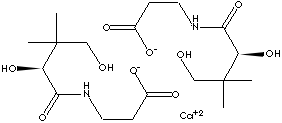
Calcium pantothenate also known as Calcium pantothenate is a water soluble vitamin. It is produced in the intestines by bacteria. Vitamin B5 is lost in cooking water and is destroyed by heat or freezing.  Acids and alkalis such as vinegar and baking soda also destroy this vitamin.Vitamin B5 is necessary has a role in various fuctions in our body:
  • Release of energy from carbohydrates.
  • Synthesis and degradation of fatty acids.
  • Other acetylation reactions.
  • Production of steroid hormones by Adrenal Glands.
  • Nervous system function.
  • Metabolism of Proteins, Fats and carbohydrates.
  • Skin Health.
  • Resistance to Stress.
  • It has role in preventing the side effects of other drugs.
  • It is said to have a role in preventing depression.

Vitamin B5 should be taken along with other B vitamins. It should also be combined with co- nutrients like manganese, sulphur, zinc and vitamin C.

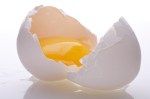
Natural sources are: Egg yolks, Milk, Yoghurt, Cheese, Wheat germ, Nuts and Whole grains.