Pityriasis alba

Pityriasis alba
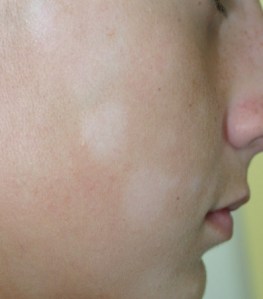
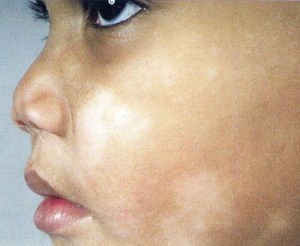
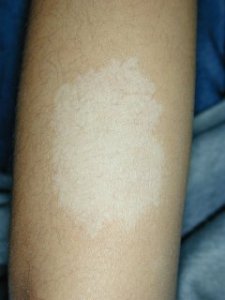
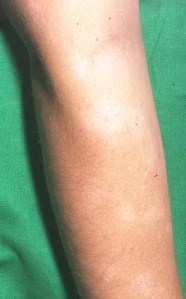
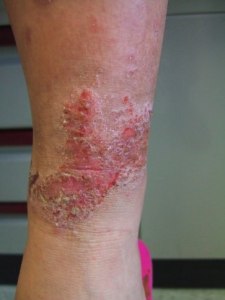
Pityriasis alba is a common skin condition mostly occurring in children and usually seen as dry, fine-scaled, pale patches on the face.
   
The condition mostly lasts for a year or so. It may resolve when the child reaches puberty.  The exact cause is not known. Expected reasons are heat, humidity, detergents or soaps. Children at higher risk for pityriasis alba include those with: Asthma, Hayfever (allergic rhinitis), Eczema (atopic dermatitis) and Dry skin (xerosis).
   
Treatment: Use non-soap cleansers or moisturizing soaps. Apply moisturizers. To use petroleum jelly like Vaseline. To avoid sun exposure and wear sunscreen.  Over-the-counter hydrocortisone cream may be applied sparingly for 3–7 days.
 Skin Diseases

Melasma

Melasma or Chloasma or Pregnancy mask
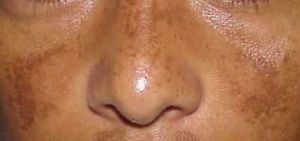
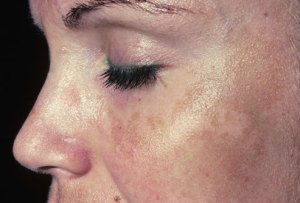
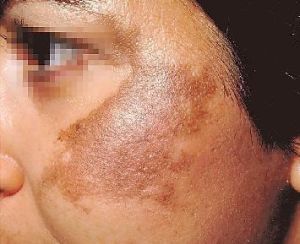
Melasma is a very common patchy brown, tan, or blue-gray facial skin discoloration.
   
Women with brownish skin tones are more prone to get it. It is especially common in pregnant women, women who are taking birth control pills, and women taking hormone replacement therapy during menopause. Sun exposure is also a strong risk factor for melasma. The condition is particularly common in tropical climates.
   
Melasma does not cause any other problem except cosmetic reasons for a women to get rid of it. A uniform brown color is usually seen over the cheeks, forehead, nose, or upper lip. It is mosty symmetrical.Treatment: Melasma goes of its own after pregnancy or after stopping the oral contraceptive pills.Creams containing tretinoin, kojic acid, have been shown to improve the appearance of melasma. 2% hydroquinone creams, Sunscreen, Sun avoidance all help.
Skin Diseases

Neurodermatitis

Neurodermatitis or Lichen Simplex chronicus or Scratch dermatitis
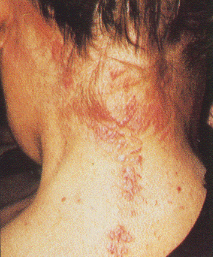
It is a skin disorder in which skin becomes irritated causing itching. The itching becomes chronic with uncontrollable scratching.
   
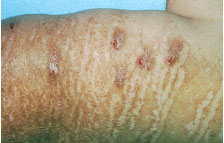
The cycle of itching and scratching causes the skin to thicken and become scaly. It is seen more in females and affects people between 20 and 50 years of age. The itching and scratching of neurodermatitis can lead to skin damage and secondary bacterial infections.Symptoms are: Itchy skin with Redness, warmth or swelling and Thick and scaly appearance.
   
Treating neurodermatitis is to break this cycle of itching and scratching. Once you have stopped scratching the affected area, the skin returns to a normal appearance.
 Skin Diseases

Lichen Planus

Lichen Planus
Lichen planus is a disease in which there is an itchy rash on the skin or in the mouth. The exact cause is not known, it is said to be due to an allergic or immune reaction.
   
It may be associated with exposure to Chemicals, Dyes or some medications. Risk factors also include Hepatitis C. Uncommon in children.
   
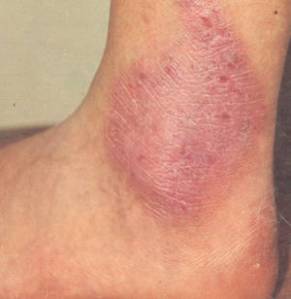
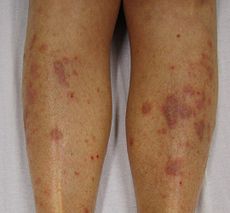
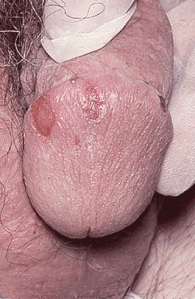
The lesions are Purplish, Itchy, flat topped papule on flexor aspects of forearms, trunk and extensor aspects of legs. Lesions have distinct, sharp borders.
   
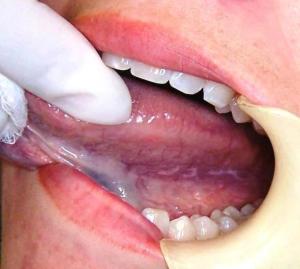
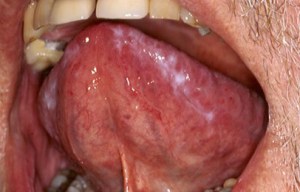
Mouth lesion is: Tender or painful, Located on the sides of the tongue or the inside of the cheek. May be on the gums.
   
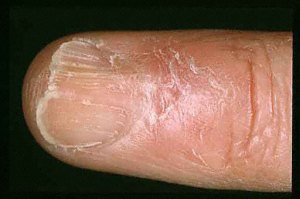
Other symptoms include: Dry mouth, Hair Loss, Metallic taste in the mouth, Ridges in the nails.

Treatment: Topical or Oral corticosteroids. Immune suppressing agents like cyclosporine in severe cases.

 Skin Diseases

Ecthyma

Ecthyma
Ecthyma is a skin infection similar to impetigo. It is often called “deep impetigo” because it occurs deep inside the skin. Ecthyma extends into the dermis. Ecthyma is most often caused by the bacteria streptococcus.
   
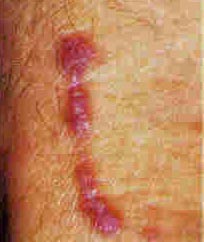
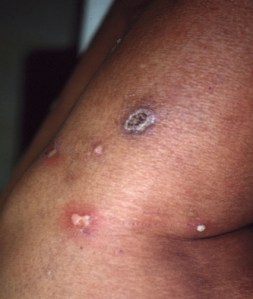
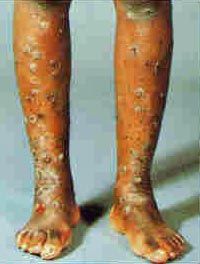
The lesion looks like small blister with a red border that may be filled with pus. The blister is similar to that seen in persons with impetigo, but the infection spreads much deeper into the skin. There is permanent skin damage with scarring in case of Ecthyma.Treatment consists of local and systemic Antibiotics.
Skin Diseases
Impetigo