Fish has cardiovascular benefits

Fish has cardiovascular benefits
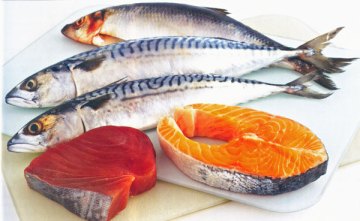
It was always known that Fish in diet has high benefit to health. Now it has been shown in a study that Fish indeed has cardiovascular benefits, but there are few buts:


  • How fish is cooked can make a dramatic difference in the heart benefits it provides. Compared with women who rarely or never ate fish, those who ate five or more servings per week had a 30% lower risk of developing heart failure — but only if the fish was baked or broiled.
  • If the fish was fried, it appeared to be harmful, not healthy.
  • Some types of fish appear to be healthier than others. Eating dark, oily fish such as salmon and mackerel was associated with a lower risk of heart failure, whereas eating tuna fish or white fish such as sole and cod were not.
  • These types of fish may beneficial due to its high content of omega-3 fatty acids, good fats that appear to reduce the risk of heart disease by lowering inflammation, blood pressure, and cell damage. But it seems that the real benefit is not solely due to only the omega-3 but the benefit is from the whole Fish.
  • Pills of Omega-3 certainly are not going to give the same benefit.
Fish Fat fights Alzheimer’s disease 
Nutrition 
Medical Tidbits

Cystic Fibrosis

Cystic Fibrosis
Cystic Fibrosis is an inherited disease of secretory glands that make mucus and sweat. Cystic fibrosis mostly affects the lungs, pancreas, liver, intestines, sinuses, and sex organs. In this disease the mucus made by glands is thick and sticky.
The mucus in the lungs blocks the airways and causes repeated bacterial infections to damage the lungs. Over time, these infections can severely damage the lungs.
The secretions of pancreas gland too become thick and block the ducts in the gland thus preventing the flow of the digestive enzymes to the intestines where they have to help in the digestive process. Thus the digestion of food in the intestines is hampered resulting to deficient absorption of proteins and fats and causing vitamin deficiency and malnutrition because nutrients leave your body unused. It also can cause bulky stools, intestinal gas, a swollen belly from severe constipation, and pain or discomfort.
Cystic Fibrosis causes the sweat to become too salty and as a result the body loses too much of salt while sweating causing dehydration, weakness, low blood pressure and many related problems due to loss of salt.
Infertility in men, Diabetes, osteoporosis are also problems in this disease. It also makes harder for women to get pregnant.
Those who have this disease need to inherit faulty genes from both their patents.A defect in the CFTR gene causes cystic fibrosis. This gene makes a protein that controls the movement of salt and water in and out of body’s cells. In people who have cystic fibrosis, the gene makes a protein that doesn’t work right. This causes thick, sticky mucus and very salty sweat.Every person inherits two CFTR genes—one from each parent. Children who inherit a faulty CFTR gene from each parent will have cystic fibrosis.Children who inherit a faulty CFTR gene from one parent and a normal CFTR gene from the other parent will be “CF carriers.” Cystic fibrosis carriers usually have no symptoms of cystic fibrosis and live normal lives. However, carriers can pass the faulty CFTR gene on to their children.Cystic fibrosis is one of the most common inherited diseases among Caucasians.

Symptoms

  • Most children with CF are diagnosed by age 2. A small number, however, are not diagnosed until age 18 or older. Symptoms differ from person to person depending upon the severity of the disease.
  • Symptoms in new born include: No bowel movements in first 24 to 48 hours of life. Salty tasting skin.
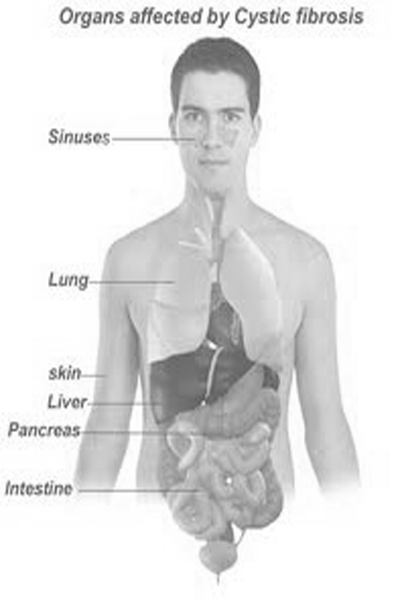
  • Severe constipation and pain abdomen. Increased gas, bloating of abdomen. Nausea and loss of appetite. Pale or clay coloured stool, foul smelling, have mucus. Stool float in water.
  • Weight loss
  • Frequent bouts of bronchitis and pneumonia. Lung infections caused by unusual germs that don’t respond to standard antibiotics. Lung infection with Pseudomonas is more common in patients of Cystic Fibrosis. As cystic fibrosis gets worse, more serious complications develop, such as pneumothorax , or collapsed lung; or bronchiectasis.
  • They develop nasal polyps.
  • As cystic fibrosis gets worse, other complications may occur like: Pancreatitis, Rectal prolapse, Liver disease , Diabetes, Gallstones.
  • Men who have cystic fibrosis are infertile because they’re born without a vas deferens. This is the tube that delivers sperm from the testicle to the penis.
  • A woman who has cystic fibrosis may have a hard time getting pregnant because of mucus blocking her cervix or other cystic fibrosis complications.
  • Because of excessive salt loss: Dehydration , Increased Heart Rate, tiredness, weakness, decreased blood pressure.
  • Low bone density causing osteoporosis. Late in disease, Clubbing of fingers and toes.

Tests

  • A genetic test shows whether a newborn has faulty CFTR genes.
  • Tests to show the functions of pancreas.
  • Sweat Test: It measures the amount of salt in sweat. Sweat is collected on a pad or paper and then analyzed. High salt levels confirm a diagnosis of cystic fibrosis.
  • If you’re pregnant, prenatal genetic tests can find out whether your foetus has cystic fibrosis. These tests include amniocentesis and chorionic villus sampling.

Treatment

Consists of managing the various problems created by this disease.

Chest Infection needs special attention. Various measures towards softening the mucus in the lungs have to be taken. Chest Physical Therapy (CPT) is directed towards helping in softening the mucus in the lungs so as to help in coughing it out. Breathing techniques also help dislodge mucus so you can cough it up.

Oral pancreatic enzymes to help you digest fats and proteins and absorb more vitamins.

Supplements of vitamins A, D, E, and K to replace the fat-soluble vitamins that the intestines can’t absorb.

High-calorie and High Salt diet.

Most cystic fibrosis patients born today live to their mid-30s, but that’s an average. Some succumb to the disease before their 10th birthday, while others live into their 50s.

We already know which gene causes cystic fibrosis, but to a large extent that gene does not by itself explain how severe the condition will be.

Recently, researchers were able to identify two genes on chromosome 11 and also five genes on chromosome 20 linked to severe cases of the disease.

The study was published in Nature Genetics

Guava

Guava                                                           Psidium guajava
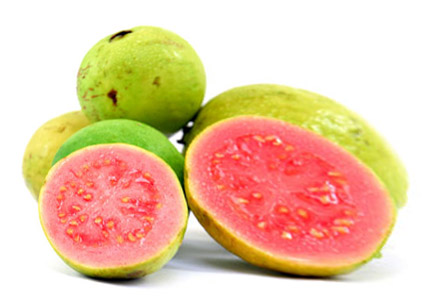
Guava is a tropical fruit, cultivated mainly in the Asian countries. It is quite similar in shape to pear. Inside, there is flesh that is either white or pinkish/reddish in colour. More often than not, you can find lots of small hard seeds enveloping the soft and sweet pulp of the fruit. Guava is quite rich in Vitamin C, maybe even more than orange, apart from a number of other vitamins and minerals.
Guava fruit is often eaten raw with a pinch of salt and pepper. The fruit is also often prepared as a dessert, in fruit salads. Because of the high level of pectin, guavas are extensively used to make candies, preserves, jellies, jams, marmalades and also for juices.
 

Guava

Nutritional value per 165 g of individual fruit portion

Calories 112 Iron 0.4 mg
Moisture 133 gm Potassium 688 mg
Dietary Fiber 8.9 gm Copper 0.4 mg
Protein 4.2 gm Beta-carotene (Vitamin A) 1030 IU
Fat 1.6 gm Ascorbic acid (Vitamin C) 377 mg
Ash 2.3 gm Thiamin (Vitamin B1) 0.1 mg
Carbohydrates 23.6 gm Riboflavin (Vitamin B2) 0.1 mg
Calcium 30 mg Niacin (Vitamin B3) 1.8 mg
Phosphorus 66 mg Folic acid 81 mcg
Guavas are often included among superfruits, being rich in dietary fiber, vitamins A and C, folic acid, and the dietary minerals, potassium, copper and manganese. Having a generally broad, low-calorie profile of essential nutrients, a single common guava fruit contains about four times the amount of vitamin C as an orange.Guavas contain both carotenoids and polyphenols giving them relatively high potential antioxidant value among plant foods.
From preliminary medical research in laboratory models, extracts from apple guava leaves or bark are implicated in therapeutic mechanisms against cancer, bacterial infections, inflammation and pain. Essential oils from guava leaves display anti-cancer activity in vitro.
 Nutrition

Mango

Mango
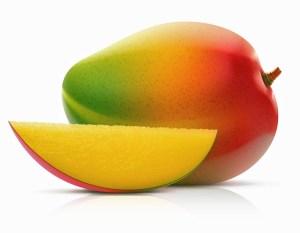
Mangoes have been cultivated in the Indian subcontinent for thousands of years.  Nearly half of the world’s mangoes are cultivated in India alone.Mango is generally sweet, although the taste varies with the type. There are vast varieties of them. Mangoes are widely used in cuisine. Sour, unripe mangoes are used in chutneys, pickles, or side dishes, or may be eaten raw with salt and chili. A cooling summer drink called panna is made from mangoes.Ripe mangoes are typically eaten fresh; however, they can have many other culinary uses. Mango Lassi, a popular drink made throughout South Asia is created by mixing ripe mangoes or mango pulp with yogurt and sugar. Ripe mangoes are also used to make curries.Mangoes are used in preserves like morambaamchur (dried and powdered unripe mango) and pickles, including a spicy mustard-oil pickle.

Mango is used to make juices, smoothies, ice cream, fruit bars. Pieces of mango can be mashed and used as a topping on ice cream or blended with milk and ice as milkshakes.


Mango (raw)

Nutritional value per 100 g (3.5 oz)

Energy 272 kJ (65 kcal) Thiamine (Vit. B1) 0.058 mg
Carbohydrates 17 gm Riboflavin (Vit. B2) 0.057 mg
Sugars 14.8 gm Pantothenic acid (B5) 0.160 mg
Dietary fiber 1.8 gm Vitamin B6 0.134 mg
Fat 0.27 gm Folate (Vit. B9) 14 μg
Protein 0.51 gm Vitamin C 27.7 mg
Vitamin A equiv. 38 μg Calcium 10 mg
beta-carotene 445 μg Iron 0.13 mg
Magnesium 9 mg Phosphorus 11 mg
Potassium 156 mg Zinc 0.04 mg
Mango is rich in a variety of phytochemicals and nutrients. The fruit pulp is high in prebiotic dietary fiber, vitamin C, diverse polyphenols and provitamin A carotenoids.Mango contains essential vitamins and dietary minerals and 17 amino acids. Mango peel and pulp contain other phytonutrients, such as the pigment antioxidants – carotenoids and polyphenols – and omega-3 and -6 polyunsaturated fatty acids.

Phytochemical and nutrient content appears to vary across mango species. Up to 25 different carotenoids have been isolated from mango pulp, the densest of which was beta-carotene, which accounts for the yellow-orange pigmentation of most mango species. Peel and leaves also have significant polyphenol content, including xanthonoids, mangiferin and gallic acid.

The mango triterpene, lupeol, is an effective inhibitor in laboratory models of prostate and skin cancers. An extract of mango branch bark called Vimang, isolated by Cuban scientists, contains numerous polyphenols with antioxidant properties in vitro and on blood parameters of elderly humans.

Potential for contact dermatitis

Mango peel contains urushiol, the chemical in poison ivy and poison sumac that can cause urushiol-induced contact dermatitis in susceptible people. Those with a history of poison ivy or poison oak contact dermatitis may be most at risk for such an allergic reaction. Urushiol is also present in mango leaves and stems.

 Nutrition

Pomegranate

Pomegranate                      Punica granatum
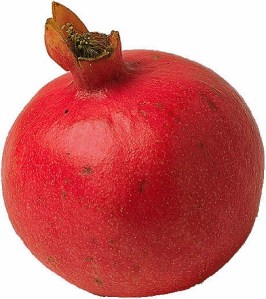
Pomegranate fruit is native to the Iranian Plateau and the Himalayas in north Pakistan and India.The pomegranate juice can be very sweet or sour, but most fruits are moderate in taste, with sour notes from the acidic tannins contained in the juice. Pomegranate seeds are used as a spice known as anardana mainly in Indian and Pakistani cuisine.
   
Contents of Pomegranate

Food Value Minerals and Vitamins
Moisture 78.0% Calcium 10 mg
Protein 1.6% Phosphorus 70 mg
Fat 0.1% Iron 0.3 mg
Minerals 0.7% Vitamin C, Small amounts of Vitamin B Complex 16 mg
Fibre 5.1%
Carbohydrates 14.5%
100%
Calorific Value – 65
*Values per 100 gms edible portion
Important contents of pomegranate are: vitamin C, vitamin B5 (pantothenic acid), potassium and polyphenols, such as tannins and flavonoids. It is high in fiber. It has unsaturated oils and micronutrients.The most abundant polyphenols in pomegranate juice are the tannins called ellagitannins. Other phytochemicals include polyphenolic catechins, gallocatechins, and anthocyanins, such as prodelphinidins, delphinidin, cyanidin, and pelargonidin.
Since ancient times pomegranate has been used for various ailments.

  • The rind of the fruit and the bark of the pomegranate tree is used as a traditional remedy against diarrhoea, dysentery and intestinal parasites especially tapeworm.
  • The seeds and juice are considered a tonic for the heart and throat
  • The astringent qualities of the flower juice, rind and tree bark are considered valuable for a variety of purposes, such as stopping nose bleeds and gum bleeds, toning skin, (after blending with mustard oil) firming-up sagging breasts and treating haemorrhoids.
  • Pomegranate juice (of specific fruit strains) is also used as eye drops as it is believed to slow the development of cataracts.
Modern research has indicated many useful properties of this fruit.

  • pomegranate may be effective in reducing heart disease risk factors
  • It has been shown to cause drop in LDL cholesterol.
  • consumption of pomegranate juice for two weeks was shown to reduce systolic blood pressure.
  • Pomegranate contains many phytochemicals with antioxidant action, such as ellagic acid. Ellagic acid has anticarcinogenic, antiatherogenic and antifibrosis activity.
  • Studies have shown that ellagic acid can suppress UV-induced skin pigmentation when applied topically or when administered orally.
  • pomegranate extract has skin-whitening property. This effect was probably caused by the inhibition of proliferation of melanocytes and melanin synthesis.
  • The pomegranate flowers are used to make a red dye.
Nutrition 
Pomegranate Juice – has Antioxidants