Vaginal Diaphragm

Vaginal Diaphragm
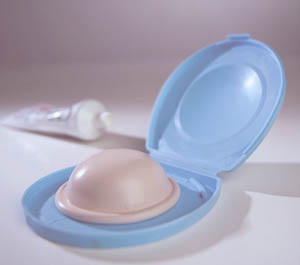
This is a female contraceptive cap worn by women in her vagina during coitus.
It acts as a mechanical barrier. It was first introduced by Hasse from Germany in 1882.This is made of rubber dome with a base made of either flat or coiled steel spring. They are available invarious sizes from 50-100 mm diameters. Females who have not given birth to a baby need smaller size as compared to those who have produced children by vaginal route.  
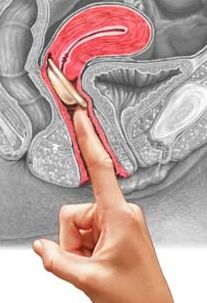
When fitted inside it covers the cervix lying above the diaphragm while the ring comes in contact with the vaginal wall all round.The diaphragm is introduced before intercourse and is taken out at least 8 hours after the last intercourse. It is washed with cold water and soap and dried and left in the container for reuse. One diaphragm can be used for approx. 6 months.  
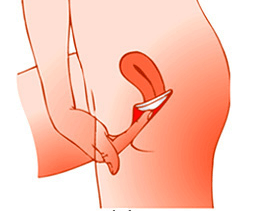
Pregnancy failure per 100 women year is  15

Contraception


Oral contraceptive

Oral contraceptive
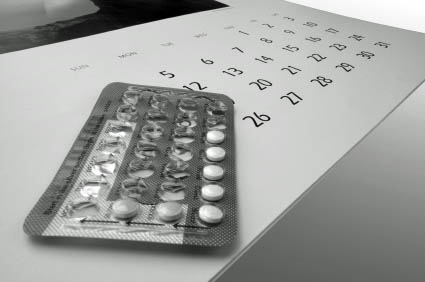
Oral contraceptive is a hormonal pill. It is a combination of oestrogen and progesterone. When taken orally and regularly it acts as the most effective method to prevent pregnancy.Rock, Garcia, Pincus from USA first pioneered in the clinical use of the pill as contraceptive in 1957.
The OC is started from the 5th day of a menses. One pill is taken at bed time daily for 21 days. Within a week the next menses comes. The next course is started from the 5th day of the menses. If one pill is missed at any night the missed pill is taken at the next morning.
There are some Absolute contraindications when the oral contraceptive is not to be taken –

  • History of liver disease or jaundice with one year.
  • Thromboembolic disorders.
  • Carcinoma of breast, cervix or uterus.
  • Undiagnosed genital bleeding.

There are some Relative contraindications where it may or may not be used after proper consideration.

  • Migraine
  • Severer allergy
  • Hypertension
  • Diabetes
  • Women aged beyond 35 years who smoke.
Mechanism of action of Oral contraceptiveOral contraceptives containing the oestrogen and progesterone act by their action on the anterior pituitary and hypothalamus. Its action is also at the uterus and the cervix. It causes the abolition of midcycle FSH-LH surge by suppressing GNRH and FSH. These hormones are required for the development of follicles in the ovary. Thus as no follicular development takes place no ovulation occurs. At the Cervix the cervical mucus becomes less penetrable to sperm by the action of progesterone. Endometrial lining of the uterus also becomes unresponsive to lodging of the fertilized egg.All women must have preliminary medical checkups before starting on the pill.
Following delivery ovulation is delayed beyond 6 weeks, although it can happen at 4th week when the women are not breast feeding. Thus if the mother is not breastfeeding it is started at 4 weeks and if she is breastfeeding it is started after 6 months because oestrogen inhibits prolactin action on breasts causing poor milk yield.

Pregnancy failure per 100 women year is  0.1

 Contraception

Natural Methods of Contraception

Natural Methods of Contraception
There are few Natural ways to prevent pregnancy:

  • Coitus Interruptus ( Withdrawal method )
  • Rhythm Method
  • Basal Body Temperature method
  • Cervical Mucus method
  • ELISA Test 

Coitus Interruptus (withdrawal method)

This is an old practice of taking out the erected penis from vagina just before the ejaculation. The benefits involved are that it is safe, simple, without any cost and a widely accepted method. But the disadvantages with this are that it depends on the decision of the male partner. It also hampers sexual pleasure and if routinely practiced may cause neurosis in the couple. As regards the effectiveness – the pregnancy rate is 35 per 100 women year. Failure in this method is due to leaking of sperm into vagina just before the ejaculation. This method mainly depends on the exact time of withdrawal before ejaculation which may be difficult to achieve by many of the couples. Even if the couple succeeds on many occasions it may fail any single occasion. 
Rhythm Method

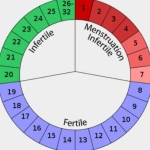
This method is based on an observation that the ovulation in females takes place 2 weeks before menses. Thus we can calculate a ‘Safe Period’ during which we can expect to avoid pregnancy without taking additional measures during intercourse. Now as we know that the menses cycles in women may not be on precise day every month, the calculation of the safe period is done on the basis of duration of 12 previous cycles. First note down the shortest and the longest cycles during the last 12 cycles.
The first fertile day will be minus 18 days from shortest cycle.
The last fertile day would be minus 11 days from the longest cycle.

For example : – if the short cycle is 25 days the first fertile day would be ( 25-18 ) – 7th day
if the longest cycle is 32 days, the last fertile day would be ( 32-11 ) – 21st day.
Thus there should be abstinence for 2 weeks from 7th to 21st day.

This method is based upon observation of Ogino, in 1930 in Japan and Knaus, in 1933 in Austria. One should keep in mind that this method of contraception is somewhat crude.

Basal Body Temperature Method

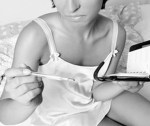
This method involves detecting the time of ovulation by observing temperature shift of 0.05 ° C at lutealphase following ovulation. The female has to observe abstinence during first half of menses cycle till 3 days of elevated temperature at 0.05 ° C.
Interpreting and maintaining temperature chat may require lot of care and thus failure chance is very high.

Cervical Mucus Method

This method depends on the observation of changes in the consistency and the volume of cervical mucus in relation to the ovulation. On feeling the cervical mucus in the vagina by fingers the dry days and the wet days are recognized by the women. The wet days are the fertile days.

The number of wet days are about 10 days in 28 day cycle.

Wet days start with sticky white mucus for 2-3 days following 2-3 days dry days after menses.

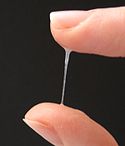
Sticky white mucus days is followed by clear slippery profuse mucus for 3-5 days (this slippery mucus is capable of being stretched between two fingers).

The last day is called the peak day. Following peak day there is sticky mucus for 3 days. This is the end of fertile period.

Many women are unable to observe these symptoms and thus the Pregnancy failure rate is as high as 22 per 100 women year.  

ELISA Test (Enzyme Linked Immunosorbent Assays)

This test uses two monoclonal antibodies to detect colour change. In this test urine is tested using this kit daily from 12th day of cycle for 5-9 days. The colour change is detected due to LH surge prior to ovulation. The women can thus find out the day of ovulation.  

Contraception


Contraception

Contraception
Contraception is a practice to prevent pregnancy. Modern men & women have various options to prevent unwanted pregnancies and plan their family as per their desire. This has given them lot of control over their life and they are able to look after their off springs in much a better way. Contraceptives are the tools for this purpose of planning family. There are various ways by which both men and women can prevent pregnancy and continue to have sexual relation.
Some important methods of Contraception

TubectomyIt is a permanent surgical method of contraception in case of females. Both the fallopian tubes are ligated.
VasectomyIt is a permanent surgical contraception in males.
CondomIt is a male rubber cap or covering that completely covers the erected penis during intercourse and prevents the ejaculation into vagina. Pregnancy failure may occur due to leakage or rupture.
Intrauterine Contraceptive Device
Emergency Contraception

Lyme disease

Lyme disease
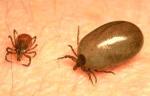
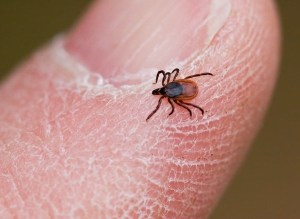
Lyme disease discovered in 1975. Lyme disease is a serious illness caused by pin-sized ticks that live in wooded and grassy areas.
Organism causing this disease is Borrelia burgdorferi
Lyme bacterium needs no iron.
The bacterium that causes Lyme disease has been identified as the first disease-causing germ that does not need to take iron from the blood stream of its host. Other bacteria that cause disease have evolved a strategy to scavenge from the blood of victims the iron that is essential to their survival. Although iron is abundant in humans, the amount of free iron is well below the levels required to support the growth of most bacteria. But Borrelia burgdorferi, which causes Lyme disease, apparently evolved a biological strategy that does not need iron, thus avoiding the problems that other bacteria have in getting iron from the blood stream. In fact, iron is extremely toxic to it.
How does it present ?
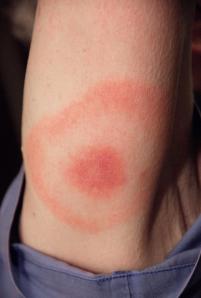
Starts with a typical bull’s-eye rash. Then comes fatigue, chills, fevers and joint pain that can persist for weeks. Some people develop serious arthritis. If untreated, Lyme disease also can severely damage the heart and nervous system.
The disease can even present with cardiac and neurological problems like carditis or Cranial nerve palsies, Chronic Lymphocytic Meningitis, Motor or Sensory Rediculitis, Encephalitis or Myelitis.
How Best to Protect
Until now, doctors’ best advice was: Use insecticide containing the chemical DEET. Check yourself and your children regularly for ticks. Wear long sleeves and pants tucked into socks or boots when venturing into tick-prone areas like unmowed grass or bush.
But that last bit of advice is unrealistic. Ticks are most active in the summer when people are stripping down to shorts and bare feet. And it’s not just campers, hikers or utility workers stomping through the bush who are at risk. Many people in Lyme-plagued areas are exposed in their own well-manicured back yards, just sitting in the grass or weeding the garden.
Till recently there was no other preventive measure to secure protection against Lyme disease.
Vaccine for Lyme disease: In December 1998, the Food and Drug Administration approved the world’s first Lyme vaccine, SmithKline Beecham’s LYMErix. Now doctors are advising anyone age 15 to 70 who lives in Lyme-endemic states and spends time outdoors to consider being vaccinated.It requires two shots given about a month apart, and then a third shot a year later. After the three-shot series, LYMErix offers about 80 percent protection from Lyme disease. But after just the first two shots, the vaccine is only about 50 percent protective.
Tick checks recommended in high risk areas.
Don’t panic if you get bitten by a tick without being vaccinated. All ticks don’t carry Lyme, and they have to feed on you for about 48 hours before they can transmit the disease. It takes that long for the Lyme bacteria hibernating in a tick’s gut to activate and move into the salivary glands, where it’s injected into a person. If you do regular tick checks each day and remove them, chances are you won’t be infected. The bite itself is not enough.The vaccine, blocks Lyme by creating antibodies that recognize an outer protein of the bacteria in the tick’s saliva, neutralizing it at skin level.
Treatment: Early cases can be treated with Tetracycline or Erythromycin. Late cases or those with Neurological involvement need treatment with Cephalosporin like Cefotaxime.
 Diseases & Conditions