Exercise ~ Some Facts

Some Facts on Exercise

What is Fitness ?

Fitness means the ability of the body to tolerate stress in all its forms – Like – A hard day in office. Fighting an infection with a germ invading the body. A skid on the road. Each and every stress to the body, be it small or big needs expenditure of energy and involvement of all the body’s defences. More oxygen has to be delivered at the muscles; more waste products have to be carried away. All these place extra demand on the circulatory system and strain the capacity of heart. How our body faces any stressful condition depends on our baseline of Fitness. For some of us, even leisure can be stressful. Exercise helps us in keeping fit. It helps in toning up the body for many eventualities.
Many people believe that if you exercise a particular area of the body, the fatty tissue in the immediate area is burned up. No it is wrong. If you bend the waist often enough you’ll NOT trim down your mid section. The exercise we do burn up fat from all over the body and not from a specific area. Thus it is impossible to reduce the amount of fat from a particular area without affecting the amount in other parts of the body. Thus, when we manage to reduce fat with the help of exercise and diet it has a general effect including the waistline.


It has been shown that unexercised muscles deteriorate at a phenomenal rate. For the first three days that a person is immobile, he losses about one fifth of his maximal muscle strength. Immobility also affects other systems of the body like circulatory system, nervous system, digestive system, respiratory system.

While daily exercise is desirable it is believed that at least Three non consecutive days in a week is must to maintain adequate levels of physical fitness.
If you cover one mile by walking or by jogging, you spend same amount of energy in both cases. Because in both cases you are moving the same weight the same distance. The speed does not matter. Of course, if you jog rather than walk for 30 minutes, you’ll cover more distance and consequently burn more calories.
The best exercise should be moderate, enjoyable and refreshing and not too strenuous and unpleasant.

Walking is one of the best exercises.
Vigorous stretching exercises DO NOT keep the muscles flexible. Stretching exercises should be done slowly and deliberately allowing the muscles to relax. When doing stretching exercises like bending or twisting at the waist and touching toes, it is advisable to move slowly and when the first sign of tension occurs, hold that position for several seconds, then relax. Repeat the exercise for several times.
The minimum amount of time one should spend exercising in a day is 20 minutes.
Brisk walking has tremendous benefits. It also affects the human capillary systems. There are approximately 60,000 miles of blood vessels in the body. These are mostly minute vessels responsible for the irrigation of the flesh. When the muscle is at rest only few capillaries would open and perhaps 50 times as many will open while the muscle is being exercised. A regular daily striding will not only open up more capillaries but would also help in the formation of new vessels to nourish the muscles. Exercise not only stimulates development of blood vessels in the skeletal muscles tissue, it also does the same with the heart. Thus a fit person is better prepared to survive the occlusion of a vessel. It has been shown that exercise even helps in the formation of new vessels even after an occlusion has occurs.
Striding has beneficial effect on the mind. It is said to clear the mind and improve thought process. A brisk long walk in the evening has some tranquillizing effects. They say regular brisk walking benefits anxiety and depression.
Rope jumping is another very effective exercise. It is effective convenient and most inexpensive exercise. Rope jumping is most effective in trimming legs, thighs, and hips. It also exercises the upper body more than what jogging does. It gives you sturdier feet and ankles and stronger wrists. It improves balance and coordination. Approximately, 10 minutes a day rope skipping may be equal to 30 minutes a day of jogging in terms of cardiovascular benefits. It has been seen that simple rope skipping produces the greatest fitness in the shortest time.
Physical fitness is linked inseparably to personal effectiveness in every field. With a regular program of exercise a person canimprove his efficiency. Sedentary persons have improved their physical work capacity by as much as 25 percent in a month or so.
A person who does regular exercise becomes trimmer, lighter of foot and brighter of spirit.
Those who do regular exercise have more vigour more strength, they get less fatigue and less frustration and their bodies are less susceptible to organic consequence of stress such as peptic ulcer, skin ailments and heart diseases etc etc.

Exercise Physiology

Two kinds of exercise are recognized : isotonic and isometric.

Isotonic exercise involves moving a muscle through a long distance against low resistance, as in running, swimming, or gymnastics.

In isometric exercise, on the other hand, muscles are moved through a short distance against a high resistance, as in pushing or pulling an immovable object.

Isometric exercise is best for developing large muscles, whereas isotonic exercise has beneficial effects on the cardiovascular system. It increases the amount of blood that the heart can pump and causes proliferation of small blood vessels that carry oxygen to the muscles. These changes make possible longer sustained activity. Neither kind of exercise increases the number of muscle fibers, but both types—and especially isometric exercise—increase the thickness of the muscle fibers and their ability to store glycogen, the fuel for muscular activity.

Target Heart Rate
Exercise



Eat and Cook Healthy

Eat and Cook Healthy

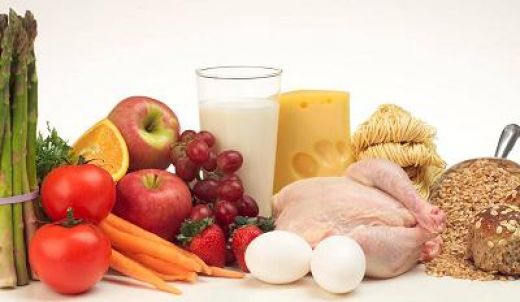
To lead a healthy and fit life we need to eat and cook healthy. Here are few tips which may be of help in keeping you fit and eat healthy food.

  • Substitute whole milk with skimmed milk.

  • Make curd and paneer (cheese) from skimmed milk.

  • Instead of frying prefer baking, grilling, roasting and steaming of food.

  • Use brown ( unpolished ) rice

  • Use whole wheat flour with bran.

  • Use non sticking pans to reduce the use of oil.

  • Oil or fat that has been used for repeated number of times as a cooking medium for frying should be avioded. Oil used for deep frying a number of times becomes toxic and is unhealthy.

  • Use less salt and sugar. You can gradually develop a taste of taking less amount of sugar with tea and coffee. Low sodium salt is also available which can be used instead of regular salt.

  • Avoid using soda bicarb in your cooking to prevent loss of vitamin A.

  • Use plenty of vegetables and fruits in your diet. Try taking 4-5 types of vegetablles and fruits daily.

  • Adding soya products to your daily diet would be of immense benifit, even if it is of small quantity.

  • Above all do not put yourself on diet.

    Food that help reduce Fat

How best to Organize your Diet

How best to Organize your Diet

The best way to organise your diet is by adding more of Vegetables and Fruits, cuting down on saturated Fats and to bring down as much as possible the amount of meat in a week.

Fruits and vegetables are full of nutrients, and most are low in fat and calories. In addition, they contain several plant chemicals (often called phytochemicals ) that also contribute to health and possibly disease prevention — and you can’t get them from a vitamin pill.

Eating Vegetables and Fruits have to be in sufficient quantity. Five servings a day is ideal. It may sound difficult but by organising your food items, taking care of your likes and dislikes it is indeed possible by adding good amount of vegetables and fruits in every meal you take.

  • Include fruits and vegetables in every meal.
  • Convenience has to be important ground rule. Canned food items or fresh ones as per liking and availability.
  • Variety is also important. Eat diffirent vegetables and fruits rather than eating same type every day.
  • Vegetables should be focus of your meals. Try to skip meat all together couple of days in a week.

For many people, healthful eating is a temporary endeavor, cut short by unrealistic goals and bad feelings when those goals aren’t met. But it doesn’t have to be that way.

Don’t consider yourself ‘on a Diet’. Diets are things people start and stop, while healthful eating should be a way of life.

Do not give up your favorite foods entirely. You may not banish chocolate or french fries from your menu forever, but do keep portions reasonable and view those foods as treats, rather than staples.

There is nothing like Good food or Bad foodRemember that all foods can fit in a healthful eating pattern — again, in the appropriate proportions. 

         A typical day’s healthy diet should include:

  • No more than 10 percent of calories from saturated fat and
  • No more than 30 percent of total calories from all types of fat.
  • 55 percent or more of total daily calories should come from complex carbohydrates such as those found in cereals, grains, fruits and vegetables.
  • Dietary cholesterol should be limited to 300 milligrams a day.
  • No more than six grams or one teaspoon of salt each day.
  • To choose most of what they consume from plant-based sources.
  • To eat five servings of fruits and vegetables.
  • To eat six servings of breads, pastas and cereals every day.

The good news is that we don’t need one diet to prevent
heart disease, another to decrease cancer risk and yet
another to prevent obesity and diabetes.

Calculate your Calorie requirement

Add More Fiber to Your Meals

Add More Fiber to Your Meals

A low-fat, high-fiber diet promotes gastrointestinal health and may protect against Heart disease, Diabetes, Colon & Rectal Cancer, Breast and Prostate cancer.

Fiber is not a nutrient. But is has a very important role in our diet.

High Fiber Food are low in calories and low in Fat and are more filling.
Fiber, found only in plant-based foods, is a general term for the complex carbohydrates in foods that pass through the body undigested. There are two different types of fiber: soluble and insoluble. Soluble fiber dissolves in water; insoluble fiber doesn’t. Some foods contain soluble fiber, others contain insoluble fiber, and many contain a combination. The two types of fiber act differently in the body, and both are important. But increasing the overall fiber content of your diet is more important than focusing on the specific types of fiber.

All of these foods are good sources of fiber:

  • Whole grains. These are grains, such as wheat, oats, rice, barley and corn, that have not been refined. Refining is the process of removing certain parts of the grain — the parts that happen to contain the fiber. White flour is made from refined wheat grain, whereas whole-wheat flour is made from unrefined wheat grain.
  • Fruits and vegetables. Fruits and vegetables are high in fiber.
  • Legumes. Legumes are dry beans and peas. In addition to being an excellent source of fiber, legumes contain vitamins and minerals and are a good source of protein.
  • Nuts and seeds. Nuts and seeds are high in fiber, but are also high in calories and fat, so don’t go overboard.

Prefer Whole Wheat Bread ( Brown Bread ).
Prefer Brown Rice or Barley to white rice.
Eat bean based dishes more often.
Add nuts and seeds and dried fruits to salads.
When possible eat vegetables and fruits raw and with skin.

Substances that Boost Brain Power !!

Substances that Boost Brain Power !!

Most of us use only 5 percent of our brain power. It may be possible to enhance the brain power by using the remaining part of the brain to increase mental clarity and enhance memory. Many substances have been shown directly or indirectly to affect the brain cells to make them fuction more effficiently. Since ages people had been curious to find out means to increase memory. Some of the substances said to affect the brain power are :-

Alpha Lipoic Acid: It is an antioxidant that fights free radicals in both the watery and fatty areas of the body. Animal-based research demonstrates that ALA protects brain cell membranes from free-radical damage and improves long-term memory in aging animals.

Phosphatidylserine: PS is a vitamin-like substance used by the body to help build and maintain healthy brain cells. It sharpens the mind by helping the brain’s nerve cells function better including generation, storage, transmission and reception of nerve impulses.

Huperzine A: Huperzine A is a naturally occurring compound found in club moss, a plant used in traditional Chinese medicine. In recent years, Chinese researchers have discovered that a purified and standardized extract of Huperzine A enhances memory and learning in animals. In human studies, the compound has been shown to increase clearheadedness, memory and language ability in Alzheimer’s patients.

Acetyl L Carnitine: ALC molecules are found naturally throughout the body. It is thought to improve communication between the right and left hemispheres of the brain, thereby promoting intuitive and balanced thinking.

Coenzyme Q10: This vitamin-like nutrient found in every cell of the body is thought to safeguard sharp thinking by protecting mitochondria (a cell’s power centers). Mitochondria are prime targets of free-radical damage, and CoQ10 may be one of the few nutrients that provide protection for these delicate and important cell structures.

Docosahexaenoic Acid: The brain is more than 40 percent fat, much of it DHA. DHA, found in fish oil, makes brain cell membranes more fluid which may help sharpen mental acuity. In Japan, students frequently take DHA pills before exams to improve their academic performance. DHA is also critical for the early development of the brain especially in the three months prior to and following birth, the time of most rapid brain growth.

Ginko Biloba: Ginko Biloba is supposed to stimulate intellect by increasing the availability of oxygen to the brain. It has benificial effect on many fuctions of brain such as alertness, memory and intellectual capacity.

Brahmi: This traditional ayurvedic herb has been widely used in India for more than 3,000 years to build and improve mental performance. The herb is safe for use by healthy people of all ages. In India, brahmi tea is given to infants starting in their first month of life to encourage optimal mental development.

Ashwagandha: Ashwaganda is believed to nurture and clear the mind while calming and strengthening the nervous system.

GinsengThis powerful herb has been used traditionally to enhance memory and sharpen mental acuity. It is a mild stimulant so it is sometimes recommended for people feeling lethargic or having trouble concentrating.

Rosemary: The long-standing herbal tradition of rosemary for remembrance has persisted for at least five centuries. This may be because rosemary contains more than a dozen antioxidant compounds, and studies show that the herb exerts its antioxidant activity by scavenging free radicals.

Gotu Kola: Ayurvedic physicians in India claim that gotu kola can increase intelligence, memory and longevity.

Antioxidants: Free radicals, implicated in heart disease, cancer and various other serious ailments, also can have a negative effect on the brain. The brain may bear the brunt of free-radical attacks since it is rich in fatty acids, and it uses large quantities of oxygen (a potential source of free radicals). Antioxidant nutrients such as Vitamine C, Vitamin E, Beta Carotene, immobilize dangerous free radicals before they have a chance to damage brain cells.

B- Complex : The B vitamin family is critical to proper brain function.
B1 ( Thiamin ) helps the brain efficiently utilize carbohydrates for mind fuel
B3 ( Niacin ) may help improve memory, protect against stress and blood clotting, and help prevent strokes.
B5 ( Patothenic Acid, calcium pantothenate) may increase stamina as well as help during times of stress.
B6 ( Pyridoxine ) is essential for production of the brain’s chemical messengers (or neurotransmitters): norepinephrine, serotonin and dopamine.
B12 ( Cobalamin ) may relieve stress and fatigue in the brain because it helps release the energy found in food for use by the brain. It is also linked to the production of acetylcholine, the neurotransmitter that affects memory and learning.

Folic Acid: Also known as folate, this important vitamin helps the body produce the category of neurotransmitters called catecholamines. A lack of these chemicals can cause depression, anxiety and an inability to concentrate.

Iron: Iron is essential for clear, uncluttered thinking. By helping the blood form hemoglobin, the substance that carries oxygen from the lungs to the brain, iron enhances memory, learning, reasoning and judgment.