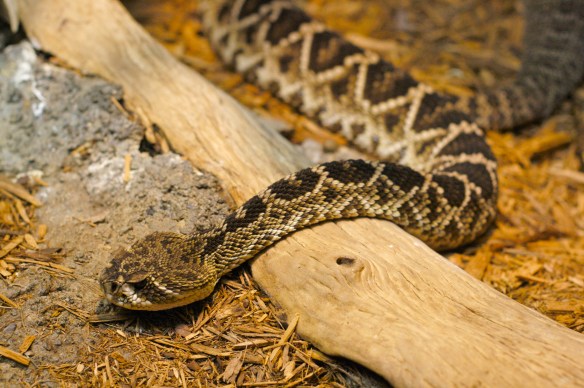
Fer-de-lance

Fer-de-lance                                                                Bothrops atrox
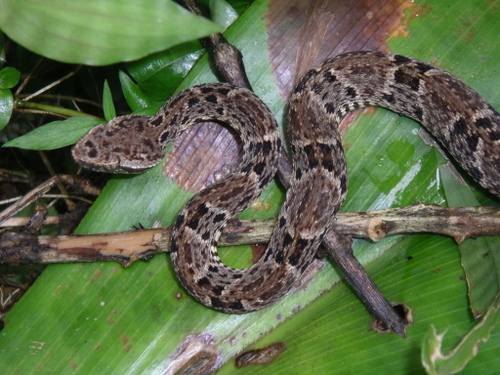
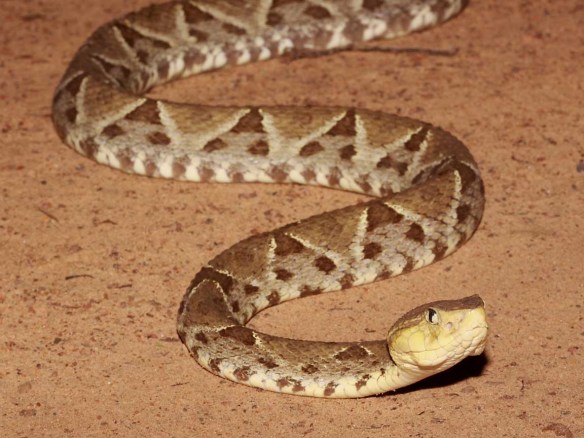
The fer-de-lance is a common Central American snake. It belongs to viper family.It is one of the largest and deadliest of the poisonous snakes. It is a common central American snake and is also found in the south America and West Indies.  Fer-de-lance 
It has velvet type of scales and rich brown and gray colour. Its body is marked with irregular, dark crossbands. It has characteristic sharply triangular head. It has a yellow throat. It lives in both wet and dry places. This snake may grow to 8 feet in length.  It is the most dangerous and feared snake in Costa Rica.

A fer-de-lance snake strikes swiftly and is an aggressive snake. During the day the snake lies coiled, blending with its surroundings, but it is especially dangerous after sunset, when it wanders in search of prey.

 Fer-de-lance 
 They feed on lizards, frogs, birds and small mammals. There may be more than 70 young in one brood. The baby snakes have fully formed fangs and can give poisonous bite.  Fer-de-lance 

Snake Bite

Cancer ~ Some Facts

 Some Facts on Cancer   black-crab-md
  • It is said that Cancer is a sure sign of death !! No it is not so. In USA, 40-50 % of all cancerous diseases are completely cured and if only early stage cancers are taken into account almost 80% are cured.
  • Tobacco – has been proved to cause cancer. Tobacco smoking and chewing is not only associated with cancer of the lungs but its association has been proved with diseases of many organs like larynx, oesophagus, stomach pancreas, urinary bladder and the breasts.
  • Cigarette filters do not give any immunity against cancer, although it has been seen that those with filters cause relatively less harm.
  • Majority of lumps that turn out to be cancerous are painless to start with.
  • Radiation – large doses of radiation can cause cancer and rational use of radiation can suppress cancer.
  • High fiber and low fat diet are supposed to be helpful in preventing the development of cancer of large intestine.
  • Phytochemicals are non nutritive plant chemicals that contain protective and disease preventing compounds. These substances have been shown to protect against cancers.
  • Soya products contain Isoflavones. Diet high in these are associated with lower rates of cancers of Breast, Uterus and Prostate.
  • Tomatoes contain Lycopene which is a powerful antioxidant. Diet high in tomatoes is associated with decreased risk of cancer of stomach, colon and prostate.
Cancer Fighting Food 
Some Facts about Soy Food
Nutritional value of Soyabean
Phytochemicals

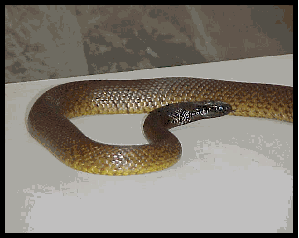
Inland Taipan

Inland Taipan                            Oxyuranus microlepidotus

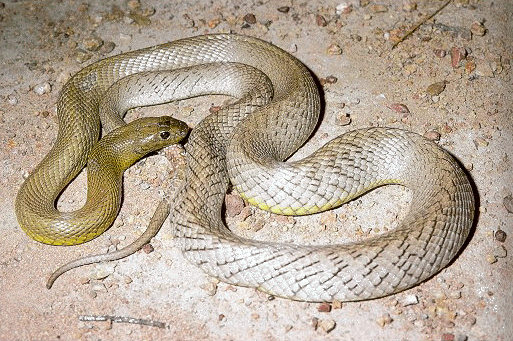
Inland Taipan is the most toxic land snake in the world, with a lethal dose estimated to be fifty times that of the Indian cobra.Inland Taipan has most toxic venom. Maximum yield recorded (for
one bite) is 110mg. That would probably be enough to kill over 100 people or 250,000 mice.Although the Inland Taipan has the most potent venom of any land snake on earth. It is usually quite shy in nature. Taipan venom is overwhelmingly Neurotoxic and thus nervous system is severely affected. Symptoms include vomiting, flaccid paralysis, and eventual respiratory paralysis.The back, sides and tail may be buff-grey to greyish brown, buff-brown, brown or reddish dark brown. The round-Snouted head and neck are usually darker than the body (glossy black in winter, dark brown in summer). The eye is of average size with a blackish brown iris.The Inland Taipan shelters in rat burrows (probably having eaten the original owners), in deep soil cracks and sink holes, and sometimes in rock crevices and deep fissures. It feeds on small to medium-sized mammals. The extremely potent venom acts so quickly that the snake can hold the prey until it succumbs without itself suffering injury. In times of plenty, the Inland Taipan can become quite fat; during prolonged drought, it can starve and become remarkably thin.It is usually most active on the surface in the early half of the morning when it basks. In cooler weather, it is also active in the afternoon; in hot weather it becomes nocturnal.
 
 
 There are about 140 species of snakes in Australia. The most poisonous land snake is the inland tiapan found in south-western Queensland and north-eastern South Australia. Tiger snakes, death adders, copperheads, brown snakes, and red-bellied black snakes are all also highly venomous.

Snake Bite

Eastern Green Mamba Snake

Eastern Green Mamba Snake

Eastern Green Mamba are found in Africa
It can grow up to 8+ ft. It is a tree dwelling snake.

Venom is Neurotoxin.

This is a long slender green snake with long narrow shaped head and long thin tail. It has rounded eyes.

There colour is bright green with hint of yellow.

It is not an aggressive snake and prefers to hide from danger. They prefer to escape when faced with danger.

 Eastern Green Mamba Snake
 Eastern Green Mamba Snake

Snake Bite

Diamondback Rattle Snake

Diamondback Rattle snake

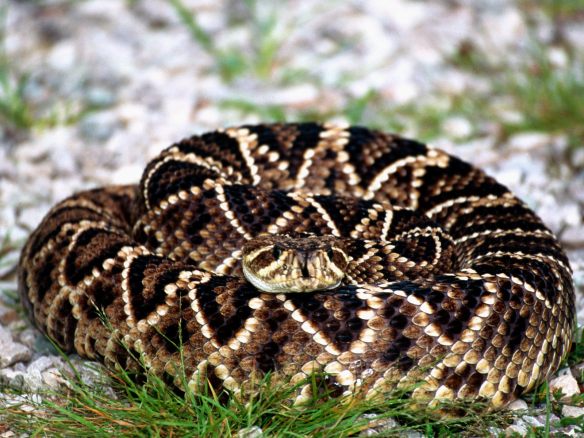
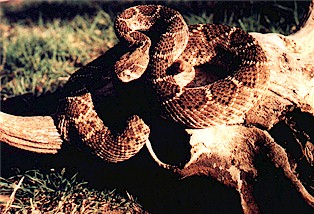
Size upto 6 feet.It has characteristic loud buzzing rattler sound.Their venom contains at least two poisonous, protein-based substances. One, a neurotoxin, depresses the action of the heart and lungs; the other, a hemotoxin, damages blood vessels and other tissue.Rattlesnakes feed on small mammals and reptiles. Like most pit vipers, they give birth from eggs hatched inside the mother.It has forked tongue. The snake uses this to “taste” the air and find its prey. Pit vipers, like the diamondback, also use heat sensitive areas in “pits” on the front of their heads to locate their victims even in total darkness.Rattle snakes are recognized by a loose, horny rattle at the end of the tail, which is shaken vigorously to warn off intruders. The rattle is formed when the snake’s skin is shed,  the end section of the rattle and an attached ring of the old skin are retained on molting. A new ring is added each time the snake molts, which may be as often as four times a year. The last ring on the rattle often becomes worn and breaks off, so that the number of rattles is not, as popularly believed, an accurate indication of age of the snake.Western diamondback rattlesnake are found along the Mexican border from Texas to California

 Eastern Diamondback Rattlesnake

 Western Diamondback Rattlesnake 
 Western Diamondback Rattlesnake
 Eastern Diamondback Rattlesnake

Snake Bite