Unknown's avatar

About Manbir & Gurpreet

Gurpreet Kaur’s journey in this world .... Gurpreet Kaur was a Musician. She was a singer and a composer of music. Her interest was composing and singing Gurbani Shabads in Indian Classical style. She sang Shabads in All the Raags mentioned in Sri Guru Granth Sahib Ji. She also taught Gurmat Sangeet at Gurmat Gian Missionary College, Jawadi, Ludhiana. Elder child to Pushpinder Kaur and Dr. Brig. Harminder Singh, was born in Amritsar on 13th Jan 1962. She attended various convent schools as a child because her father would get frequent Army postings as a dental surgeon. She graduated with Music Honors from Govt. College for Women, Chandigarh. Music was her hobby and she composed and sang Raag based Gurbani Shabads. Doing Kirtan was part of growing up nurtured by her parents. She learned music from her father Dr. Brigadier Harminder Singh who was a dental surgeon in Indian Army and a very good singer himself. Gurpreet’s Bhua (father’s sister), Ajit Kaur retied as a Head of Department of Music from Govt. College for Women Ludhiana, and was a renounced Punjabi singer of her time. Gurpreet Kaur also learned nuances of Indian Classical Music from Pandita Sharma. She was a mother of three children, and a grandmother. Her daughter Keerat Kaur is a Computer Engineer. Her two sons Gurkeerat Singh and Jaskeerat Singh are doctors in USA. Her daughter Keerat Kaur too was part of her group ~ Gurmat Gian Group. Gurpreet Kaur left this world at the age of 54yrs on 12th Sept 2016 in Baltimore USA. She had recorded around 25 cds of Gurbani Keertan. 'Raag Ratan' Album (6 CDs) is a Compilation of Shabads in All the 31 Sudh Raags of Sri Guru Granth Sahib Ji. 'Gauri Sagar' Album (3 CDs) is a Compilation of All forms of Raag Gauri in Sri Guru Granth Sahib Ji. 'Nanak Ki Malhaar' ~ ((3 CDs) is an album of Raag Malhar Shabads in various forms of Malhar. 'Gur Parsaad Basant Bana' ~ (3 CDs) is an album of Shabads in Raag Basant sung in various forms of Raag Basant. Har Ki Vadeyai Sarni Aayea Sewa Priya Kee Preet Piyaree Mohan Ghar Aavho Karo Jodariya Mo Kao Taar Le Raama Taar Le Tere Kavan Kavan Gun Keh Keh Gawan Mera Baid Guru Govinda Saajanrraa Mera Saajanrraa

Banana in diet – prevention from Stroke

Banana in diet – prevention from Stroke

Taking Banana regularly may be a preventive measure for stroke.According to a study carried out by Dr. Deborah M. Green, M D of Neuroscience Institute at the Queen’s Medical Center in Honolulu, Hawaii, USA,  – People with low amount of Potassium in thier diet have increased risk of stroke .People whose potassium intake is low are 1.5 times more prone to have a stroke than those with high intake of potassium. Low intake of potassium means taking less than 2.4 gm of potassium in a day and high intake is more than 4.0 gm per day.

Other studies have also shown that low intake may be associated with increased risk for stroke.

Bananas are rich in potassium. Thus those taking it regularly should not be deficient in potassium.

Diet and Asthma

Some of the findings of a Dutch study in relation to diet in young children with asthma.

Young children who regularly eat full cream milk, butter and other products that contain milk fat are less likely to develop asthma. These children had  less wheezing than children who did not have milk fat in their diet.

Children who ate brown bread daily also had lower rates of asthma and wheezing

The study also found children who consumed fruit juice and vegetables daily had lower asthma rates than other children.

Skip breakfast during exams !

Skip breakfast during exams !

Research suggests that hunger pangs may trigger memory.
American scientists at Yale University found that the hunger hormone ‘ghrelin’ can increase the number of nerve connections in the area of brain where new memories are formed, which may result in the better creation and retrieval of memories.
The study provides evidence that ghrelin may control higher brain functions and may represent a molecular link between learning capabilities and energy metabolism.
It is possible that we are more alert and keyed up to both remember and recall more readily when stressed by hunger.

Low Fat, Low Cholesterol Food

Low Fat, Low Cholesterol Food

Various food items can be grouped in relation to their fat and cholesterol content

Free Foods

*Juices like tomato, lime juice, clear soup, plain soda, diluted butter milk.
*Green leafy vegetables.
*Fresh green salads and other vegetables except roots and tubers.
*Fat free pickles.

Foods Permitted in limited quantities

*Refined oils- sunflower, sesame and soyabean oil are better than other oils.
*Mayonnaise and other sauces made in vegetable oils may be taken in limited amount.
*Egg white can be taken.
*Lean meat, chicken, fish in limited amount provided cooked without fat i.e. boiled, steamed, roasted or baked. Chicken and fish (50 gm) not more than 2 times a week and red meat not more than once in 15 days.
*Skimmed milk intake mot to exceed 500 ml in a day.
*Fruits like guava, orange, papaya, water-melon, apple – 100 gm / day.

Foods to be Avoided

*Fats like butter, ghee, vanaspati, coconut oil.
Fried food
*Puddings and cakes, pasties made in saturated fats or butter, ice creams.
*Ham, bacon, yolk of egg, red meat, organ meats, crab, shrimps.
*Pickle made in oil.
*Milk products like cheese, cream.
*Nuts like almonds, cashewnuts, pea-nuts.
*Canned,tinned, preserved and processed foods to be avoided.
*High calorie fruits like banana, mango, grapes.

Foods Recommended

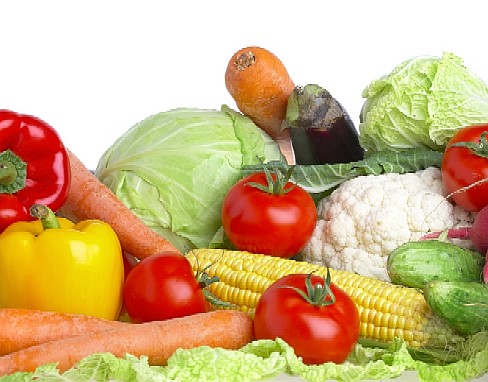
*High fiber food items like green leafy vegetables and green salads should form essential part of daily menu.
*Inclusion of wheat flour with black channa flour or barley flour(4:1) is advisible.
*Whole grams and pulses are preferable to polished ones. Sprouted or raw form should be taken frequently.
*Wholewheat bread is preferable to refined flour bread.

Golden Rules

*No Feasts No Fasts
*Equal spacing of three major meals per day.
*Free Food items should be taken between meals ar when ever hungry.
*There is not hard and fast rule that can be followed. Every food item has to be judged in relation to the quantity of other food items being taken during the meals or being taken in a day.

Lipid Metabolism

Lipid Metabolism

Most of the dietary fat is absorbed into the blood in chylomicrons. Triglyceride is removed from the chylomicrons by lipoprotein lipase in the blood, fatty acids released are taken up by the adipose tissue (Fat storage tissue) and the chylomicron ramnants are removed by the liver.Triglyceride taken up by the liver is broken down to 2-carbon fragments which are used in many metabolic processes. Free fatty acids liberated by the adipose tissue is also taken up by the liver and used in simillar way.
In these processes lipid aggregates are formed containing triglycerides, phospholipids and cholesterol. These are combined with apoproteins to form Lipoproteins which are released into the blood.
These Lipoproteins are:
1. VLDL – Very Low Density Lipoproteins
2. IDL – Intermediate density Lipoproteins
3. LDL – Low Density Lipoproteins
4. HDL – High Density Lipoproteins

The density of the lipoproteins is determined by the relative protein and lipid content with high density lipoproteins containing high protein and less lipids.

The liver synthesises more cholesterol than any other organ. The cholesterol is incorporated into lipoproteins or converted to bile acids or excreted into bile. In biliary obstruction of any kind serum lipid concentration increases mainly due to formation of abnormal lipoprotein known as Lipoprotein X.

LIPID PROFILE

LIPID PROFILE VALUES