Unknown's avatar

About Manbir & Gurpreet

Gurpreet Kaur’s journey in this world .... Gurpreet Kaur was a Musician. She was a singer and a composer of music. Her interest was composing and singing Gurbani Shabads in Indian Classical style. She sang Shabads in All the Raags mentioned in Sri Guru Granth Sahib Ji. She also taught Gurmat Sangeet at Gurmat Gian Missionary College, Jawadi, Ludhiana. Elder child to Pushpinder Kaur and Dr. Brig. Harminder Singh, was born in Amritsar on 13th Jan 1962. She attended various convent schools as a child because her father would get frequent Army postings as a dental surgeon. She graduated with Music Honors from Govt. College for Women, Chandigarh. Music was her hobby and she composed and sang Raag based Gurbani Shabads. Doing Kirtan was part of growing up nurtured by her parents. She learned music from her father Dr. Brigadier Harminder Singh who was a dental surgeon in Indian Army and a very good singer himself. Gurpreet’s Bhua (father’s sister), Ajit Kaur retied as a Head of Department of Music from Govt. College for Women Ludhiana, and was a renounced Punjabi singer of her time. Gurpreet Kaur also learned nuances of Indian Classical Music from Pandita Sharma. She was a mother of three children, and a grandmother. Her daughter Keerat Kaur is a Computer Engineer. Her two sons Gurkeerat Singh and Jaskeerat Singh are doctors in USA. Her daughter Keerat Kaur too was part of her group ~ Gurmat Gian Group. Gurpreet Kaur left this world at the age of 54yrs on 12th Sept 2016 in Baltimore USA. She had recorded around 25 cds of Gurbani Keertan. 'Raag Ratan' Album (6 CDs) is a Compilation of Shabads in All the 31 Sudh Raags of Sri Guru Granth Sahib Ji. 'Gauri Sagar' Album (3 CDs) is a Compilation of All forms of Raag Gauri in Sri Guru Granth Sahib Ji. 'Nanak Ki Malhaar' ~ ((3 CDs) is an album of Raag Malhar Shabads in various forms of Malhar. 'Gur Parsaad Basant Bana' ~ (3 CDs) is an album of Shabads in Raag Basant sung in various forms of Raag Basant. Har Ki Vadeyai Sarni Aayea Sewa Priya Kee Preet Piyaree Mohan Ghar Aavho Karo Jodariya Mo Kao Taar Le Raama Taar Le Tere Kavan Kavan Gun Keh Keh Gawan Mera Baid Guru Govinda Saajanrraa Mera Saajanrraa

Osteogenesis Imperfecta

Osteogenesis Imperfecta

Synonyms:

  • Brittle Bone Disease
  • Ekman-Lobstein Disease
  • Lobstein Disease (Type I)
  • OI
  • Vrolik Disease (Type II)

OI occurs about once in every 10,000 births and the incidence is about the same worldwide.

Osteogenesis Imperfecta is a group of disease characterized by extremely fragile bones that break easily often without any apparent cause. This disease is due to the abnormality of the connective tissue and it is a genetic disorder. In most cases, the various forms of osteogenesis imperfecta are inherited as Autosomal dominant traits.

The mutation is found on the COL1A2 gene on the long arm of chromosome 7 and/or the COL1A1 gene on the long arm of chromosome 17.
Four main types of OI have been identified. OI type I is the most common and the mildest form of the disorder. OI type II is the most severe. The symptoms of OI vary greatly from case to case and even among members of the same family. A person may have just a few or several hundred fractures in a lifetime.

Some of the features seen in patients of OI are

  • Stature is may be normal in mild forms. But in severe form (Type II ) body stature is small with underdeveloped lungs.
  • Type II variety is lethal shortly after birth.
  • Loose joints and low muscle tone.
  • Tendency towards spinal curvature.
  • Brittle teeth.
  • Sclera (white of eye) has blue, purple or gray tint.
  • Hearing loss may be present starting in 20s or 30s.
  • Collagen may be normal in Type I with amount less than normal. In other types the collagen in improperly formed.
  • Triangular face.

Most cases of OI are caused by autosomal dominant genetic defect. Some children with OI inherit the disorder from a parent. Other children are born with OI even though there is no family history of the disorder. In these children, the genetic defect occurred as a spontaneous mutation. A person with OI has 50% chance of passing the disorder to his or her children.

The prognosis for this disease depends on various factors especially the severity of the symptoms. Despite disability most of the persons lead productive life.

There is no cure yet for this disease. The main management involves around managing symptoms, preventing fractures, developing optimal bone and muscle mass, maximizing mobility.

Rodding surgery is frequently used in OI patients. In this procedure metal rod is inserted through the length of long bones to prevent and correct deformities and strengthen the bones.

Persons with OI should exercise as much as possible. The best exercise is swimming and walking. It is advisable to maintain healthy weight have nutritious diet and avoid intoxicants.
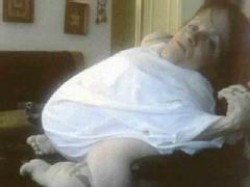
Russell-Silver Syndrome

Russell-Silver Syndrome

Russell-Silver Syndrome is a very rare genetic disorder. Most cases of Russell-Silver Syndrome are the result of new genetic changes (mutations) that occur randomly for no apparent reason. A rare form of Russell-Silver Syndrome is thought to be inherited as an X-linked dominant genetic trait.
The incidence of this disease is uncertain yet. The estimated number of people who develop this condition varies greatly. Some say it affects about 1 in 3,000 people. Other reports say it affects 1 in 100,000 people. Males and females are equally affected.

Some features seen in this syndrome : –

  • Growth delays, which starts before birth ( intrauterine growth retardation)
  • Overgrowth of one side of the body (hemihypertrophy or asymmetry)
  • Unusual characteristic facial features.
  • Affected infants may be low birth weight. Growth delays and immature bone development continue after birth.
  • Asymmetry or overgrowth of one side of the body is obvious at birth. Asymmetry may affect the head, trunk, arms, and/or legs.
  • Characteristic facial features may include a triangular-shaped face with a small, pointed chin; an abnormally prominent forehead (frontal bossing)
  • Precocious sexual development, Cryptorchidism
  • Bluish discoloration of the outer membranes covering the eyeballs (blue sclera)
  • Unusually small, wide mouth; downturned corners of the mouth; and/or an abnormally small jaw .
  • Permanent fixation of the fifth fingers in a bent position. webbing of the second and third toes. Vertebral abnormalities, Absent sacrum, Absent coccyx
  • Coffee-colored patches on the skin (cafe-au-lait spots)
  • Abnormalities of the kidney and urinary tract.
  • Hepatocellular carcinoma

Marfan syndrome

Marfan syndrome 

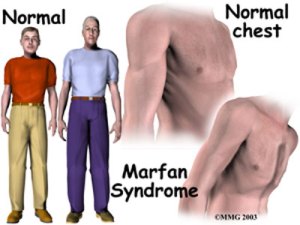
Marfan syndrome is a rare hereditary disorder of connective tissue which causes connective tissue to be weaker than normal.

For people with the Marfan syndrome, weak connective tissue causes problems of the skin, muscles, ligaments, heart, eyes, blood vessels, and bones.

It is estimated that about one in 10,000 people has the Marfan syndrome.

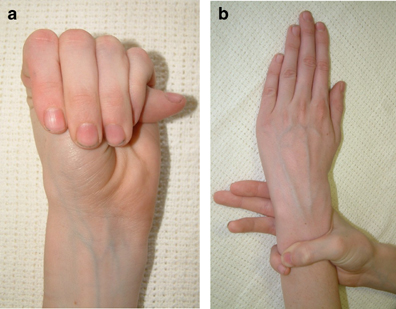
People affected by the Marfan syndrome are most often unusually tall and slender, with particularly long arms, legs, and fingers in comparison to the rest of their body.
Symptoms may not be apparent until adulthood.

The Marfan syndrome follows a pattern of inheritance called “autosomal dominant inheritance.” “Autosomal” means the inheritance is linked to any chromosome other than those which determine the sex of the child. “Dominant” means the effects of the Marfan gene dominate or override the effects of the normal gene in the pair. Therefore, if one parent contributes the Marfan gene and one parent contributes a normal gene, the child will inherit the Marfan disorder. There is a 50% chance during each pregnancy that the affected parent will pass on the Marfan gene and the child will get the Marfan syndrome. There is, of course, also a 50% chance that the affected parent will pass on his or her normal gene, in which case the child will not get the disorder.

Symptoms of the Marfan syndrome may include one or more of the following:

  • Excessive height
  • Particularly long arms and legs, with long slender fingers and toes.
  • Nearsightedness (myopia)
  • Indented or protruding breast bone
  • Curvature of the spine (scoliosis)
  • Mild to severe heart problems
  • Excessive Height

 Eye Problems

Nearsightedness (myopia) is a common condition. It can be corrected with prescription glasses or contact lenses. Many children experience problems with the lens of the eye (the focusing structure located just behind the pupil of the eye and held in place by ligaments). The lens can become torn from its supports and become “dislocated.” This can cause vision problems that are mild or severe enough to interfere with progress in school. In rare instances, the lens may need to be removed surgically.

On rare occasions, a child may suffer a detachment of the retina (the light sensitive tissue located at the back of the eye). This causes a sudden loss of vision and requires emergency surgery.

Problems with the Spine

A child with the Marfan syndrome tend to develop defective spine. Defect in the curvature of the spine (scoliosis) is common. Removable brace to stabilize the spine may be helpful. In some cases, if the curve worsens, in spite of bracing, surgery may be recommended.

Problems with The Breast Bone

Surgery is occasionally recommended to correct an indented chest if it presses severely on the heart or lungs.

Heart Problems

Heart problems can occur because the Marfan syndrome may cause leakage of the mitral or aortic heart valves. These valves control the flow of blood through the heart. Defects of the mitral valve may cause shortness of breath, an irregular pulse, and undue tiredness. Defects of the aortic valve can lead to serious heart failure. In addition, the main artery in the body, the aorta, can become dangerously weakened and rupture.

Marfan syndrome does not affect intelligence, but that visual problems often interfere with progress in school and that may affect the child’s social and psychological adjustment

Thalassaemia

Thalassaemia

Thalassaemia is inherent impairment of haemoglobin production due to partial or complete failure to synthesize a specific type of globin chain.

Hereditary disorders that result in a structurally abnormal hemoglobin or an insufficient quantity of hemoglobin are the most common genetic diseases of humans.

The production of hemoglobin requires a supply of iron, synthesis of heme, and synthesis of globin. Hemoglobin is essential for normal oxygen delivery by red blood cells.

When the condition is Heterozygous, the production of hemoglobin is mildly affected and the condition causes little disability. The synthesis is grossly affected when the patient is Homozygous.

In thalassaemias there is decrease in the quantity of normal globin chains in the hemoglobin. Thalassaemias are divided into the alpha thalassaemias, in which it is the production of alpha globin is deficient, and the beta thalassaemias, in which beta globin production is defective. The thalassaemias are divided clinically into Thalassaemia Minor and Thalassaemia Major, based on disease severity.

Beta-Thalassaemia

In this there is failure to synthesize beta globin chains. It is the most common type and is seen in highest frequency in the Mediterranean area. Those who are heterozygous, are thalassaemia minor, the condition is mild with mild anaemia and usually no disability. The homozygous are thalassaemia major, have profound anaemia after first 4 months of life.

Beta Thalassaemia major
Causes profound anaemia which has crippling effect on the health of the child. The child needs blood transfusion and chances for survival without transfusion for few years are low. Changes in the bone marrow (hyperplasia), results in head bossing and prominent malar eminences, which gives typical appearance of these diseases.

Development and growth of the child is retarded.
Folic acid deficiency develops.
Spleenomegaly (enlargement of spleen) is an early feature.
Cardiac enlargement with heart failure is common.

Repeated transfusions give rise to haemosiderosis (excessive deposition of iron ).

Beta Thalassaemia minor
Is detected often after treatment for mild anaemia with iron therapy fails. The condition is mild and often without any symptom.

Management of Beta Thalassaemia

  • Blood transfusion to maintain haemoglobin.
  • Bone marrow transplantation – Allogeneic bone marrow transplantation from HLA complatible sibling.
  • Folic acid 5 mg daily.
  • In case of iron overload – Desferrioxamine therapy.
  • Splenectomy performed as late as possible.

Prevention
During early in pregnancy, DNA analysis of chorionic villus material can be done to identify a fetus with homozygous beta thalassaemia. Such pregnancy can be terminated. This examination can be done if both the parents are known to be carriers (thalassaemia minor).

Alpah Thalassaemia

It is due to reduction or absence of alpha chain synthesis. This type is common in the South East Asia. There are 2 alpha gene loci on chromosome 16 are therefore four alpha genes. If one is deleted there is no clinical effect. If two are deleted there may be a mild hypochromic anaemia. If three are deleted the patient has Hemoglobin H disease. If all four are deleted the baby is still born. Treatment of Hemoglobin H is similar to beta thalassaemia of intermediate severity.

Genetic Disorders

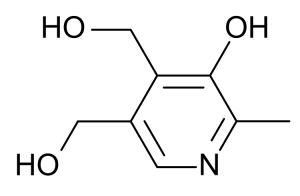
Pyridoxine ~ Vitamin B6

Pyridoxine ~ Vitamin B6 

Pyridoxine assists in the balancing of sodium and potassium as well as promoting red blood cell production. It is linked to cardiovascular health by decreasing the formation of homocysteine. Pyridoxine may help balance hormonal changes in women and aid the immune system.

Lack of pyridoxine may cause anaemia, nerve damage, seizures, skin problems, and sores in the mouth.

It is required in the production of neurotransmitters such as dopamine, serotonin, norepinephrine, epinephrine.

Pyridoxine is given to patients taking Isoniazid (INH) to combat the toxic side effects of the drug. It is given 10–50 mg/day to patients on to prevent peripheral neuropathy and CNS effects that are associated with the use of INH.

Vitamin B6 is usually safe, at intakes up to 200 mg per day in adults. However, vitamin B6 can cause neurological disorders, such as loss of sensation in legs and imbalance, when taken in high doses (200 mg or more per day) over a long period of time.

Vitamin B6 toxicity can damage sensory nerves, leading to numbness in the hands and feet as well as difficulty in walking. Symptoms of a pyridoxine overdose may include poor coordination, staggering, numbness, decreased sensation to touch, temperature, and vibration, and tiredness.

Women in particular may suffer from pre-menstrual fluid retention, severe period pains, emotional PMS symptoms, premenstrual acne and nausea in early pregnancy. Mood swings, depression as well as loss of sexual drive is sometimes noted when there is lack of pyridoxine in the diet or in those on hormone replacement therapy or on birth control pills.

Minimum daily requirement in both Males & Females is 2 mg

People on medication for Parkinson’s disease should be careful about taking Vitamin B6 as it can inactivate levodopa.

People taking pyridoxine late at night sometimes experience very vivid dreams.

Pyridoxine should be taken together with the entire B group vitamins, and in supplementation the quantity of B6 should be nearly the same as B2. B2 is needed to activate the Pyridoxine.

Good sources to obtain pyridoxine from are brewer’s yeast, eggs, chicken, carrots, fish, liver, kidneys, peas, wheat germ, walnuts.

Homocystinuria