Unknown's avatar

About Manbir & Gurpreet

Gurpreet Kaur’s journey in this world .... Gurpreet Kaur was a Musician. She was a singer and a composer of music. Her interest was composing and singing Gurbani Shabads in Indian Classical style. She sang Shabads in All the Raags mentioned in Sri Guru Granth Sahib Ji. She also taught Gurmat Sangeet at Gurmat Gian Missionary College, Jawadi, Ludhiana. Elder child to Pushpinder Kaur and Dr. Brig. Harminder Singh, was born in Amritsar on 13th Jan 1962. She attended various convent schools as a child because her father would get frequent Army postings as a dental surgeon. She graduated with Music Honors from Govt. College for Women, Chandigarh. Music was her hobby and she composed and sang Raag based Gurbani Shabads. Doing Kirtan was part of growing up nurtured by her parents. She learned music from her father Dr. Brigadier Harminder Singh who was a dental surgeon in Indian Army and a very good singer himself. Gurpreet’s Bhua (father’s sister), Ajit Kaur retied as a Head of Department of Music from Govt. College for Women Ludhiana, and was a renounced Punjabi singer of her time. Gurpreet Kaur also learned nuances of Indian Classical Music from Pandita Sharma. She was a mother of three children, and a grandmother. Her daughter Keerat Kaur is a Computer Engineer. Her two sons Gurkeerat Singh and Jaskeerat Singh are doctors in USA. Her daughter Keerat Kaur too was part of her group ~ Gurmat Gian Group. Gurpreet Kaur left this world at the age of 54yrs on 12th Sept 2016 in Baltimore USA. She had recorded around 25 cds of Gurbani Keertan. 'Raag Ratan' Album (6 CDs) is a Compilation of Shabads in All the 31 Sudh Raags of Sri Guru Granth Sahib Ji. 'Gauri Sagar' Album (3 CDs) is a Compilation of All forms of Raag Gauri in Sri Guru Granth Sahib Ji. 'Nanak Ki Malhaar' ~ ((3 CDs) is an album of Raag Malhar Shabads in various forms of Malhar. 'Gur Parsaad Basant Bana' ~ (3 CDs) is an album of Shabads in Raag Basant sung in various forms of Raag Basant. Har Ki Vadeyai Sarni Aayea Sewa Priya Kee Preet Piyaree Mohan Ghar Aavho Karo Jodariya Mo Kao Taar Le Raama Taar Le Tere Kavan Kavan Gun Keh Keh Gawan Mera Baid Guru Govinda Saajanrraa Mera Saajanrraa

Women who actually follow all of the standard health advice ..

Quote

Women who actually follow all of the standard health advice – eat sensibly, don’t smoke, get some exercise, keep the weight down, have an occasional drink ,can reduce their chance of heart disease an astonishing 82 percent, according to a study from the landmark Nurses’ Health Study, conducted at the Harvard School of Public Health.

Tips for Back care

Tips for Back care

A big proportion of us are bound to suffer from back problems sometime or the other during our lifetime. Some problems may be due to basic disease of the spine or as a result of some accident but majority of us suffer from back problems due to faulty posture, sedentary lifestyle, lack of abdominal strength. Here are some helpful Tips to keep your Back Healthy.


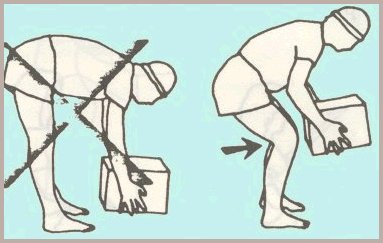
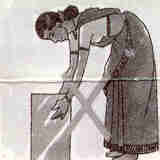
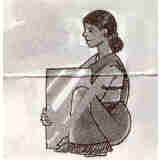
Never lift anything light or heavy with your legs straight. Always bend your knees when lifting something. Keep the weight close to your body. This way the work is done by big muscles of your leg and not the small muscles of back.
 
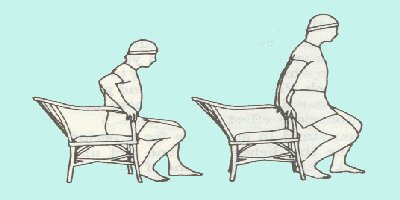
When rising from your chair always have one foot in front of the other. Slide your butt to the edge and, with your back vertical and chin in, use your thigh muscles and arms to push yourself straight up.
 
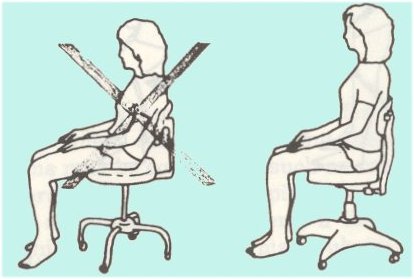
Sitting posture in your chair is extremely important as you spend a large part of your day sitting. Back straight with your abdominal muscles tightened. Sit consciously and not let your body droop.
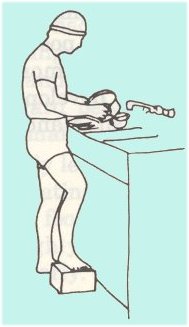
  If you stand in one place for a prolong period of time as when doing dishes, prop one foot up on a box or a short stool. This will relieve some of the back tension.
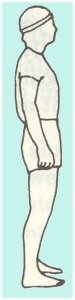
  When standing your knees should be slightly bent with feet pointing straight. While standing the posture should be maintained mainly by the muscles of the upper leg ( quadriceps )
 
 
Sleeping surface should be firm. It helps in back care. If possible sleep on one side or the other. Sleeping on the stomach can cause tightness in the lower back. If you sleep on your back keeping a pillow under your knees will keep lower back flat and minimize tension.


Managing Back Pain

Managing Back Pain

Most of the patients with lower back pain improve with minimal treatment in a matter of days. However, if back problems persist, doctors generally prescribe one or more of the following treatments: proper exercise, rest, heat and cold, posture training, weight loss, stress management and relaxation exercises, medication, spinal manipulation and/or surgery.

Proper exercise

For many people, the key to a healthy back is proper exercise. Some exercises are designed to strengthen your back and stomach muscles, while other exercises are designed to improve your posture. A 30 minute aerobic conditioning program three times a week is ideal for overall fitness. Walking and/or water exercise are highly recommended for most people with back problems.

Techniques for Good Posture

When sitting 

  • Sit in a firm chair with armrests to relieve pressure in your back and shoulders.
  • Keep your upper back straight and shoulders relaxed. Keep stomach muscles pulled in, and maintain the proper curve in your lower back. You can do this by tightening your stomach and buttocks. Some people are more comfortable sitting with the back of the chair at a 15- to 20-degree angle. A small cushion behind the lower back to maintain the natural curve of the back also can be quite helpful.
  • Keep your knees slightly higher than your hips.
  • Use a footstool or book under your feet if necessary.
  • Keep your feet flat on the floor or other surface.
  • Don’t sit for a long period of time. Stand up every now and then to stretch tight muscles and give them a chance to relax.

When Standing:

  • Stand with weight equal on both feet.
  • Avoid locking your knees.
  • Ease tension in your back by placing one foot on a footstool.
  • If you stand for long periods of time, wear flat or low-heeled shoes.
  • Keep your back straight by tightening your stomach muscles and buttocks.

When Sleeping:

  • Lie on your side with your knees bent.
  • If more comfortable, place a pillow between your knees while sleeping on your side.
  • If you sleep on your back, placing pillows under your knees would help your lower back pain.
  • Use a firm mattress.

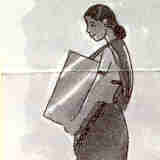
Body Mechanics: To keep good posture while in motion is to use good body mechanics. In lifting, this means that the object lifted is held close to the body and that lifting is done with your legs. The normal back curves are maintained, the legs lift the load. Avoidance of twisting, particularly when carrying a load, is also important for good body mechanics. Move your feet, do not twist your torso.

When bending down to lift an object, bend with your knees instead of your back.

  • Hold the object close to you.
  • Straighten your legs to lift the object.
  • Get help with an object that is too heavy.

The type of shoes you wear can also affect your posture. High heels may put more stress on your lower back by changing your posture. You might find it more comfortable to wear low or flat heels. Cushioned-soled shoes also provide “shock absorbency” for your spine.

Weight Loss

The best way to lose weight is with a balanced diet along with regular exercise. Be sure to avoid fad diets or fast weight-loss programs.

Stress Management

Every day of our lives is filled with some kind of stress. In fact, any situation can cause stress such as work, personal relationships, raising children, paying bills, the death of a loved one or a new experience. Even very happy occasions such as a family wedding, birth of a new baby or family vacation can be stressful. For many people with back pain, the greatest stress comes from unwanted changes in their lives caused by the pain itself. Try to learn to relax your mind and body.

Learn to Relax

Coping successfully with arthritis includes both physical factors such as the right posture and gentle exercise as well as a positive mental attitude. Pain can cause stress which in turn aggravates the discomfort. Learning to relax is an important step in preventing and reducing both stress and pain. Certain yogic asanas such as dhyana or meditation are very helpful. Or try the famous Relaxation Response which is based on the principles of meditation.

  • Lie down or sit quietly in a comfortable position. The room should be cool, clean and quiet.
  • Close your eyes but not tightly.
  • Starting with your feet and slowly progressing up to your face, deeply relax all your muscles. Stay relaxed.
  • Breathe in deeply but gently through your nose. Be aware of your breathing.
  • While breathing out through your mouth, say the word – one -silently to yourself. Empty all thoughts from your mind and concentrate on saying the word, one.
  • Carry on for 10 to 20 minutes. If you like, you could open your eyes to cheek the time but don’t get up or set an alarm or timer.
  • When you have finished, continue lying down or sitting quietly for about five minutes, eyes closed at first. Then get up slowly. Let relaxation occur naturally. Don’t force the pace. If a distracting thought comes into your mind, ignore it and again repeat the word, Practice the Relaxation Response once or twice a day but not within two hours after a meal, as the process of digestion can affect your success.

Surgery

People with sciatica or spinal stenosis often need surgery. A few people with tumors within the spinal canal require it.

New Treatment Helps Back Pain

A new study shows electrical nerve stimulation is an effective way to provide short-term pain relief of lower back pain.
Researchers at the University of Texas Southwestern Medical Center in Dallas compared the effectiveness of exercise therapies to percutaneous electrical stimulation (PENS) and transcutaneous electrical stimulation (TENS) in 60 patients. PENS involves inserting thin needles into the soft tissue of the lower back while TENS involves placing four electrode pads on the back. All study participants received all three therapies as well as the control group therapy, which included placing the needles in the same areas as the PENS treatment, but without the electrical stimulation. Each treatment was given individually for three weeks during the four-month study.
Study results showed PENS was more effective than TENS or the exercise therapy in delivering short-term pain relief while also improving physical function in 91 percent of the patients, researchers reported in the Journal of the American Medical Association.
The PENS therapy was also significantly more effective in improving physical activity, quality of sleep and sense of well-being.
Lower back pain is one of the biggest physical complaints in the United States, which is why there is a growing interest in non-pharmacological treatments such as acupuncture and spinal manipulation.

Back Pain
Exercise
Tips for Back care
Handling Everyday Tasks


Back Pain

Back Pain

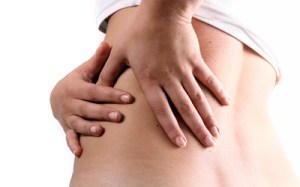
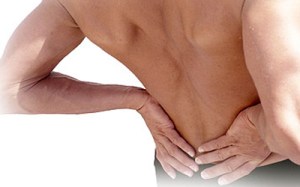
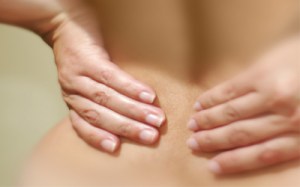
Back pain is one of the most common health problems.Back pain can occur at any age in both men and women. However, it may occur slightly more often in women beginning at middle age, probably due to osteoporosis.
Everyone’s back pain is different. For some people, back pain involves mild pain (pain that is bothersome, aching, sore). For other people, back pain involves severe pain (pain that hurts all the time, even when resting).
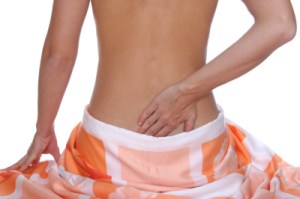
Causes of Back Pain

Ruptured Intervertebral Disc 
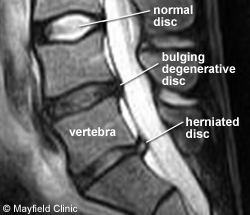
This may be the most painful condition. A ruptured or herniated disc is one that bulges into the spinal canal, pressing on the nerve roots. This causes the nerve roots to become irritated. A ruptured disc may cause back pain and muscle spasms. More commonly it presents as sciatic pain. This is severe pain spreading down one leg and often into the foot.

Spinal Stenosis 
In spinal stenosis, the spinal canal becomes narrowed. This squeezes the back nerves and puts pressure on them. It is this pressure that causes the back pain. Numbness, pain and weakness in the legs also can occur. The most common symptom of spinal stenosis is pain that worsens when walking and subsides when sitting down.

Osteoarthritis
Osteoarthritis can cause back pain. It breaks down the cartilage (soft, elastic material) that cushions the spinal joints. Lower back pain can become more intense when osteoarthritis affects the hips or the knees. Osteoarthritis also can directly affect the spine, causing muscles, tendons, or ligaments to become strained, which can lead to back and/or neck pain.

Ankylosing Spondylitis
This form of arthritis causes the joints in the spine to become stiff and swollen. In time, stiff joints can fuse. The most common symptoms are pain and stiffness in the buttocks and lower back (particularly in the morning).

Injury or Accident
Many back injuries are caused by an unexpected twist or sudden motion. This usually results in muscle strain. With either an injury or accident, severe muscle spasms usually last 48 to 72 hours. They generally are followed by days or weeks of less-severe pain. It usually takes two to four weeks to heal completely from a mild back injury. It could take from six to 12 weeks if there are strained ligaments or if the strain is more severe.

Osteoporosis
This is a type of bone disorder that causes bones to become thin and weak due to calcium loss. Fragile bones, especially those bones in the spinal column, can break more easily, and there is an increased tendency for this to happen in older women. Osteoporosis also contributes to compression fractures, or spinal fractures in which the vertebrae become flattened. Falls, lifting heavy objects or moving the wrong way can result in a compression fracture.

Polymyalgia Rheumatica (PMR) 
This rheumatic disorder causes muscle pain, aching and stiffness in the neck and shoulders, lower back, thighs and hips. It can last a few months or many years. Most people experience severe stiffness in the morning.

Fibromyalgia 
People with fibromyalgia feel pain and stiffness in muscles and tendons, especially in the neck and upper back. The pain can last for weeks, months or years. The symptoms may disappear by themselves. This condition often is related to sleep problems, poor conditioning or an old injury.

Paget’s Disease
This is a type of disorder in which the calcium in the bone spreads unevenly. The bones most commonly affected are in the lower back, pelvis, tailbone, skull and long bones of the legs. Back pain may be a symptom, but most often there are no obvious symptoms. Paget’s disease usually is discovered on an X-ray or bone scan done for reasons other than pain.

Other conditions causing Back Pain
Prostate trouble in men; problems with reproductive organs in women; kidney diseases, such as an infection or kidney stone; diseases of the intestines or pancreas, cancer that has spread to the spine; multiple myeloma, a form of cancer of the bone and bone marrow; curvature of the spine; or rarely, a tumor on the spinal cord.

Factors That Can Make Back Pain Worse

Stress, poor posture, lack of exercise and being overweight all can contribute to the problem. Extra pounds people carry every day due to their being overweight puts added pressure and strain on the back and stomach muscles, causing those muscles to stretch and weaken. Weak back and stomach muscles cannot support the back properly. Poor posture can shift your body out of balance. This forces only a few muscles and joints to do all the work. Without proper exercise, muscles become weak and tire easily. Exercise is necessary to keep the back strong.

Special Tests that may be needed to diagnose the cause of back pain.

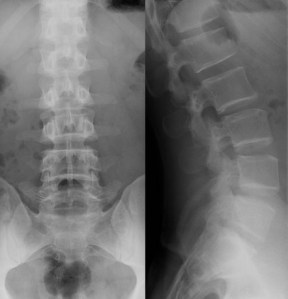
X-ray
CT Scan 
Only a few people with lower back pain need a CT (computerized axial tomography) scan. A special machine takes an X-ray scan of the area. A computer turns this scan into a three-dimensional view of the back. This helps the doctor see if there is a ruptured disc that can’t be seen on regular X-rays. Other conditions that a CT scan can help detect are spinal stenosis, tumors and infections of the spinal cord.
MRI
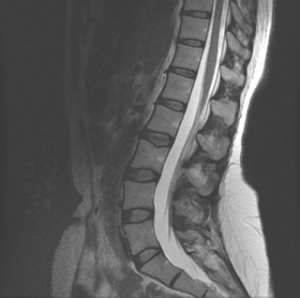
MRI (magnetic resonance imaging) is another way to make very clear pictures of parts of the spine. The MRI does not use X-rays or radioactive dyes. It can provide clearer pictures of soft tissues such as muscles, cartilage, ligaments, tendons and blood vessels, in addition to bone structure.
Myleogram
During a myelogram, a special liquid dye called contrast medium is injected into the spinal canal. X-rays are then taken of the area. The contrast medium can make problem areas show up more clearly on the X-ray such as spinal stenosis or spinal cord tumors.

Bone Scan
During a bone scan, a very small amount of radioactive liquid is injected into a vein and concentrates in the bones for a short time. A special radioactive detecting machine then will scan the area of concern to produce a picture. Occasionally bone scans are done to look for damage or tumors in the bones themselves.

Electrodiagnostic studies are used to help confirm the presence of nerve compression in the spine. An electrodiagnostic study consists of two tests. One is an electrical test, which is designed to study nerve conduction. In this test the nerve is given an electrical stimulation, and the speed of the impulse is measured. The other test is a needle test called an electromyogram, or EMG. The purpose of this test is to study the muscles for primary disease or for the effect of nerve compression on the muscle. The compression is especially seen in herniated discs or spinal stenosis.


Tips for Back care
Managing Back Pain
Exercise
Handling Everyday Tasks


Handling Everyday Tasks
Handling Everyday Tasks


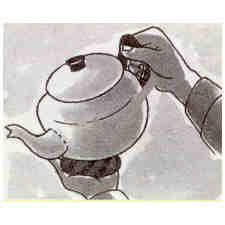
Choose a light weight teapot or fill a teapot up to half its capacity Teapot should have a large handle.


Hold the teapot with both the hands, so that the weight is distributed between both the wrist and forearm. If the teapot is hot, put a folded napkin below it.


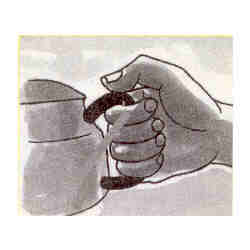
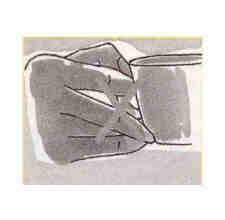
Do not hold a cup like this. It will put strain on your fingers and knuckles.


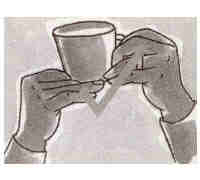
Hold the cup with both hands


Hold the cup or a mug with both hands


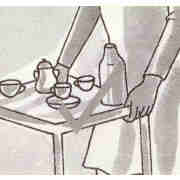
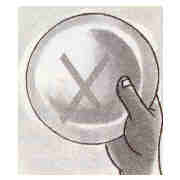
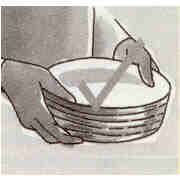
Don’t carry dishes in one hand only. This strains your wrist and thumb. To minimize strain, use both hands


It is best to avoid carrying dishes, even on a try.

Use a trolly, to avoid straining your neck, shoulder, elbow, wrist and fingers.


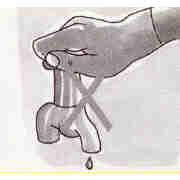
Bib type taps – like this one, cause strain on your wrist, thumb,and fingers.


To reduce the effort and strain,

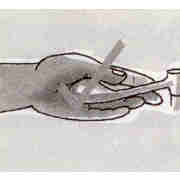
use a lever -style tap.


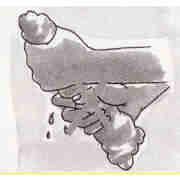
Don’t wring out clothes in the usual way.

It puts strain on your thumb and wrist.


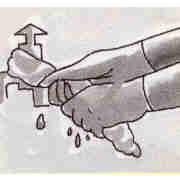
After twisting the clothes around a tap, wring them out with both hands


Never lift somthing heavy in this way.

It will strain your back.


The correct technique : bend your knees. Rest your weight equally on both feet. Then hold the load close to your body and lift it.

   Tips for Back care