Unknown's avatar

About Manbir & Gurpreet

Gurpreet Kaur’s journey in this world .... Gurpreet Kaur was a Musician. She was a singer and a composer of music. Her interest was composing and singing Gurbani Shabads in Indian Classical style. She sang Shabads in All the Raags mentioned in Sri Guru Granth Sahib Ji. She also taught Gurmat Sangeet at Gurmat Gian Missionary College, Jawadi, Ludhiana. Elder child to Pushpinder Kaur and Dr. Brig. Harminder Singh, was born in Amritsar on 13th Jan 1962. She attended various convent schools as a child because her father would get frequent Army postings as a dental surgeon. She graduated with Music Honors from Govt. College for Women, Chandigarh. Music was her hobby and she composed and sang Raag based Gurbani Shabads. Doing Kirtan was part of growing up nurtured by her parents. She learned music from her father Dr. Brigadier Harminder Singh who was a dental surgeon in Indian Army and a very good singer himself. Gurpreet’s Bhua (father’s sister), Ajit Kaur retied as a Head of Department of Music from Govt. College for Women Ludhiana, and was a renounced Punjabi singer of her time. Gurpreet Kaur also learned nuances of Indian Classical Music from Pandita Sharma. She was a mother of three children, and a grandmother. Her daughter Keerat Kaur is a Computer Engineer. Her two sons Gurkeerat Singh and Jaskeerat Singh are doctors in USA. Her daughter Keerat Kaur too was part of her group ~ Gurmat Gian Group. Gurpreet Kaur left this world at the age of 54yrs on 12th Sept 2016 in Baltimore USA. She had recorded around 25 cds of Gurbani Keertan. 'Raag Ratan' Album (6 CDs) is a Compilation of Shabads in All the 31 Sudh Raags of Sri Guru Granth Sahib Ji. 'Gauri Sagar' Album (3 CDs) is a Compilation of All forms of Raag Gauri in Sri Guru Granth Sahib Ji. 'Nanak Ki Malhaar' ~ ((3 CDs) is an album of Raag Malhar Shabads in various forms of Malhar. 'Gur Parsaad Basant Bana' ~ (3 CDs) is an album of Shabads in Raag Basant sung in various forms of Raag Basant. Har Ki Vadeyai Sarni Aayea Sewa Priya Kee Preet Piyaree Mohan Ghar Aavho Karo Jodariya Mo Kao Taar Le Raama Taar Le Tere Kavan Kavan Gun Keh Keh Gawan Mera Baid Guru Govinda Saajanrraa Mera Saajanrraa

Familial Partial Lipodystrophy

Familial Partial Lipodystrophy

Familial partial lipodystrophy – Dunnigan Variety is a rare genetic disease. It is transmitted as an autosomal dominant trait. Both males and females of several generations may be affected. The possibility of transmission from an affected person to the offspring is 50 %.

There is another variety of FPLD called Kobberling variety. In this Loss of fat is limited to the extremities with normal amounts of fat in the face and normal or even excess fat in the truncal area.

Clinical features

  • Normal appearance at birth.
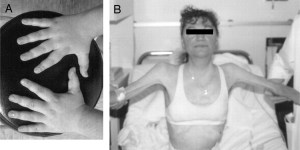
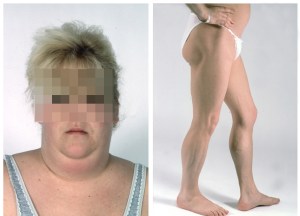
  • Absence of subcutaneous fat from the upper and lower extremities during childhood or puberty. The trunk, arms and legs are affected by fat loss while the neck and face have more than normal fat deposits. A “buffalo hump” can be observed between the shoulder blades.
  • The arms and legs appear very muscular.
  • In women, lack of fat in the buttocks is striking — flat hips.
  • In some patients, excess fat may accumulate in the face and neck, causing them to have a double chin.
  • They usually have high levels of serum triglycerides and low HDL cholesterol levels.
  • Approximately one-third of these patients may have acanthosis nigricans.
  • The onset of glucose intolerance or diabetes mellitus usually occurs after age 20.
  • Some women may have irregular menstrual cycles and polycystic ovaries.
Acquired Generalized Lipodystrophy

Acquired Generalized Lipodystrophy

Synonym
Lawrence Syndrome

Acquired Generalized Lipodystrophy is a rare disease. It is characterized by generalized disappearance of body fat after birth. These patients have normal fat at birth.

The onset of lipodystrophy occurs in the childhood and adolescence and may occur following infections such as varicella, measles, pertussis, diphtheria, pneumonia, osteomyelitis, parotitis, infectious mononucleosis, and hepatitis.

Clinical features

  • Patients lose body fat over a period of months or years. Eventually generalized loss of fat may occur resulting in muscular appearance and prominent superficial veins. Almost all areas of the body can be affected although in some patients some areas may be spared.
  • Increased linear growth may be seen in the children.
  • Dark velvety pigmentation (acanthosis nigricans) may also occur in the axilla and neck.
  • Excess body hair, enlargement of genitalia (clitoromegaly) and occasional ovarian cysts may be seen in the females.
  • These patients also have elevated basal metabolic rate and a voracious appetite.
  • Levels of serum triglycerides are high. Diabetes occurs usually after the onset of lipodystrophy
  • Patients with acquired generalized lipodystrophy may also develop other autoimmune disorders like vitiligo (light-colored spots on skin), sicca syndrome, rheumatoid arthritis, dermatomyositis, thyroiditis and chronic active hepatitis.
  • There is a female preponderance with a male to female ratio of 1:3, respectively.
Familial Partial Lipodystrophy 
Congenital Generalized Lipodystrophy
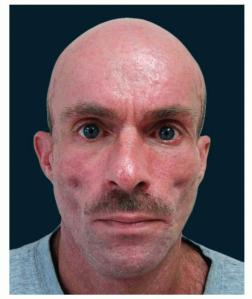
Amphetamines ~ Adverse effects

Adverse effects of Amphetamines

Amphetamine, Dextroamphetamine, Methamphetamine.

Amphetamines are central nervous system stimulant.  Amphetamines  (dexedrine) are being miss used by many.  Psychological dependence and tolerance may occur with amphetamines following prolonged use or high doses.

Amphetamines are used in the treatment of Attention-deficit hyperactivity disorder.

Amphetamines are indicated as an integral part of a total treatment program that includes other remedial measures (psychological, educational, social) for a stabilizing effect in children  with attention-deficit hyperactivity disorder, characterized by moderate to severe distractibility, short attention span, hyperactivity, emotional lability, and impulsivity.

Due to their high potential for abuse, amphetamines are not recommended for use as appetite suppressants. Amphetamines should not be used to combat fatigue or to replace rest in normal subjects.

More frequent adverse effects
CNS stimulation – false sense of well-being; irritability; nervousness; restlessness; trouble in sleeping, drowsiness, fatigue, trembling, or mental depression may follow the stimulant effects.

With prolonged use or high doses
Cardiomyopathy – chest discomfort or pain; difficulty in breathing; dizziness or feeling faint; irregular or pounding heartbeat; unusual tiredness or weakness. Irregular heart beat.

Increase in blood pressure

Psychotic reactions – mood or mental changes

Less frequent adverse effects

Allergic reaction – skin rash or hives

Chest pain, fast or pounding heartbeat; increased sweating

Tourette’s syndrome – uncontrolled movements of the head, neck, arms, and legs

Hyperthermia – extremely high body temperature

Blurred vision

Changes in sexual desire or decreased sexual ability

Constipation, diarrhea loss of appetite nausea stomach cramps or pain, weight loss, vomiting, dizziness lightheadedness headache; dryness of mouth or unpleasant taste.

Symptoms indicating possible withdrawal – after medication is discontinued

Mental depression; nausea stomach cramps or pain vomiting; trembling; unusual tiredness or weakness

Lead Toxicity

LEAD Toxicity

 Lead has been mined and used in industry and in household products for centuries. The dangers of lead toxicity, the clinical manifestations of which are known as plumbism, have been known since ancient times. The twentieth century has seen both the greatest-ever exposure of the general population to lead and an extraordinary amount of new research on lead toxicity.

Populations are exposed to lead chiefly via paints, cans, plumbing fixtures, and leaded gasoline. The intensity of these exposures, while recently decreased by regulatory actions, remains high in some segments of the population because of the deterioration of lead paint used in the past and the entrainment of lead from paint and vehicle exhaust into soil and house dust.
Many other environmental sources of exposure exist, such as leafy vegetables grown in lead-contaminated soil, improperly glazed ceramics, lead crystal, and certain herbal folk remedies.
Many industries, such as battery manufacturing, demolition, painting and paint removal, and ceramics, continue to pose a significant risk of lead exposure to workers and surrounding communities.

Tests for levels of lead in blood have facilitated both research on lead and surveillance of individuals at risk. Measurement of the blood lead levels of children 6 months to 5 years of age is currently mandated by some states in U.S., and the U.S. Occupational Safety and Health Administration (OSHA) requires the testing of workers who may be exposed to lead in the course of their jobs.

METABOLISM

Elemental lead and inorganic lead compounds are absorbed through ingestion or inhalation. Organic lead (e.g., tetraethyl lead, the lead additive to gasoline) is absorbed to a significant degree through the skin as well.Pulmonary absorption is efficient, particularly if particle diameters are <1 um (as in fumes from burning lead paint).Children absorb up to 50 percent of the amount of lead ingested, whereas adults absorb only about 10 to 20 percent.Gastrointestinal absorption of lead is enhanced by fasting and by dietary deficiencies in calcium, iron, and zinc.Lead is absorbed into blood plasma, where it equilibrates rapidly with extracellular fluid, crosses membranes (such as the blood-brain barrier and the placenta), and accumulates in soft and hard tissues. In the blood, around 95 to 99 percent of lead is sequestered in red cells, where it is bound to hemoglobin and other components. As a consequence, lead is usually measured in whole blood rather than in serum.The largest proportion of absorbed lead is incorporated into the skeleton, which contains more than 90 percent of the body’s total lead burden.Lead is excreted mainly in the urine (in a process that depends on glomerular filtration and tubular secretion) and in the feces.

Lead also appears in hair, nails, sweat, saliva, and breast milk.

The half-life of lead in blood is approximately 25 days; in soft tissue, about 40 days; and in the nonlabile portion of bone, more than 25 years. Thus, blood lead levels may decline significantly while the body’s total burden of lead remains heavy.

The toxicity of lead is probably related to its affinity for cell membranes and mitochondria, as a result of which it interferes with mitochondrial oxidative phosphorylation and sodium, potassium, and calcium ATPases. Lead impairs the activity of calcium-dependent intracellular messengers and of brain protein kinase C. In addition, lead stimulates the formation of inclusion bodies that may translocate the metal into cell nuclei and alter gene expression.

CLINICAL FEATURES

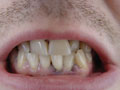
Symptomatic lead poisoning in childhood generally develops at blood lead levels exceeding 3.9 umol/L (80 ug/dL) and is characterized by: Abdominal pain and irritability followed by lethargy, anorexia, pallor (resulting from anemia), ataxia, and slurred speech. Convulsions, coma, and death due to generalized cerebral edema and renal failure occur in the most severe cases. Subclinical lead poisoning [blood lead level >1.4 umol/L (> 30 u g/dL)] can cause mental retardation and selective deficits in language, cognitive function, balance, behavior, and school performance despite the lack of discernible symptoms. In adults, symptomatic lead poisoning usually develops when blood lead levels exceed 3.9 umol/L (80 ug/dL) for a period of weeks and is characterized by: Abdominal pain, headache, irritability, joint pain, fatigue, anemia, peripheral motor neuropathy, and deficits in short-term memory and the ability to concentrate.Encephalopathy is rare. A “lead line” sometimes appears at the gingiva-tooth border after prolonged high-level exposure.Chronic subclinical lead exposure is associated with interstitial nephritis, tubular damage (with tubular inclusion bodies), hyperuricemia (with an increased risk of gout), and a decline in glomerular filtration rate and chronic renal failure.An additional issue for both children and adults is whether lead that has accumulated in bone and lain dormant for years can pose a threat later in life, particularly at times of increased bone resorption such as pregnancy, lactation, and senile osteoporosis. Elevation of the bone lead level appears to be a risk factor for anemia and hypertension. Hyperthyroidism has been reported to cause lead toxicity in adults by mobilizing stores of bone lead acquired during childhood.
LABORATORY FINDINGS

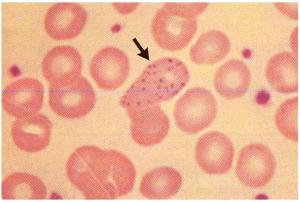
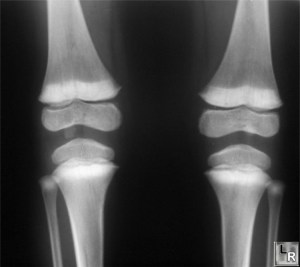
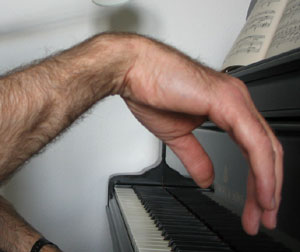
Regular measurement of blood lead in lead-exposed workers and the maintenance of blood lead levels below 1.9 umol/L (40 ug/dL) is advised.Lead-associated anemia is usually normocytic and normochromicand may be accompanied by basophilic stippling. Lead-induced peripheral demyelination is reflected by prolonged nerve conduction time and subsequent paralysis, usually of the extensor muscles of the hands and feet –wrist and foot drop. An increased density at the metaphyseal plate of growing long bones (“lead lines”) can develop in children andresemble those seen in rickets. Children with high-level lead exposure sometimes develop Fanconi’s syndrome, pyuria, and azotemia.Adults chronically exposed to lead can develop elevated serum creatinine levels, decreased creatinine clearance rates, and chronic changes and intranuclear inclusion bodies (detected at renal biopsy). 
TREATMENT

Treatment for lead toxicity involves the use of chelating agents, principally edetate calcium disodium (CaEDTA), dimercaprol, penicillamine, and succimer, which is given orally.

Arsenic Toxicity

ARSENIC Toxicity

 Arsenic is released into the air by volcanoes and is a natural contaminant of some deep-water wells.

Occupational exposure to arsenic is common:

  • In the smelting industry in which arsenic is a byproduct of ores containing lead, gold, zinc, cobalt, and nickel
  • In the microelectronics industry, in which gallium arsenide is responsible.
  • Commercial use of inorganic arsenic compounds in common products such as wood preservatives, pesticides, herbicides, fungicides, and paints.
  • Through the consumption of foods and the smoking of tobacco treated with arsenic-containing pesticides
  • Through the burning of fossil fuels in which arsenic is a contaminant.
  • Arsenic was also a major ingredient of Fowler’s solution and continues to be found in some folk remedies.
Fowler’s solution is a solution containing potassium arsenite that once was prescribed as a remedy or a tonic. A Dr. Fowler of Stafford, England proposed its use in 1786 as a substitute for a patented medicine, It was prescribed in the United States until the late 1950s for a range of ailments including malaria, chorea, and syphilis. In 2001 the U.S. FDA approved a proprietary formula of a solution of arsenic trioxide for acute promyelocytic leukaemia.Fowler’s solution, is a 1% solution of potassium arsenite, KH2AsO3.Because of the poisonous and carcinogenic nature of arsenic compounds, Fowler’s solution is dangerous. Documented side effects of treatment with Fowler’s solution include: cirrhosis of the liver, idiopathic portal hypertension, urinary bladder cancer, skin cancers.
 Metabolism

The toxicity of an arsenic-containing compound depends on its valence state (zero-valent, trivalent, or pentavalent), its form (inorganic or organic), and the physical aspects governing its absorption and elimination. In general, inorganic arsenic is more toxic than organic arsenic, and trivalent arsenite is more toxic than pentavalent and zero-valent arsenic.
The normal intake of arsenic by adults occurs primarily through ingestion and averages around 50 ug/d (range, 8 to 104 ug/d). Most (around 64 percent) of this amount is accounted for by organic arsenic from fish, seafood, and algae; the specific arsenic compounds obtained from these sources are arsenobentaine and arsenocholine, which are relatively nontoxic and are rapidly excreted in unchanged form in the urine. After absorption, inorganic arsenic accumulates in the liver, spleen, kidneys, lungs, and gastrointestinal tract. It is then rapidly cleared from these sites but leaves a residue in keratin-rich tissues such as skin, hair, and nails. Arsenite (+5) undergoes biomethylation in the liver to the less toxic metabolites methylarsenic acid and dimethylarsenic acid; biomethylation can quickly become saturated, however, and the result is the deposition of increasing doses of inorganic arsenic in soft tissues. Arsenic, particularly in its trivalent form, inhibits critical sulfhydryl-containing enzymes. In the pentavalent form, the competitive substitution of arsenic for phosphate can lead to rapid hydrolysis of the high-energy bonds in compounds such as ATP.
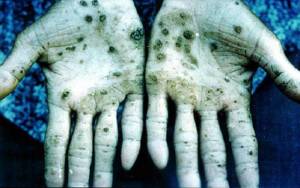
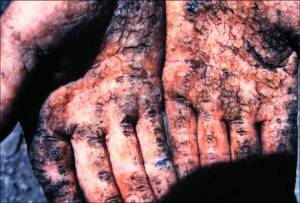
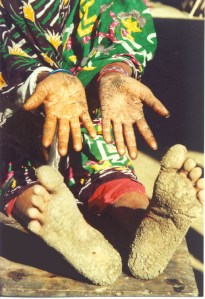
 CLINICAL FEATURESAcute arsenic poisoning from ingestion results in increased permeability of small blood vessels and inflammation and necrosis of the intestinal mucosa; these changes manifest as hemorrhagic gastroenteritis, fluid loss, and hypotension. Delayed cardiomyopathy accompanied by electrocardiographic abnormalities may develop. Symptoms include nausea, vomiting, diarrhea, abdominal pain, delirium, coma, and seizures. A garlicky odor may be detectable on the breath. Acute tubular necrosis and hemolysis may develop. The reported lethal dose of arsenic ranges from 120 to 200 mg in adults and is 2 mg/kg in children. Arsine gas causes severe hemolysis within 3 to 4 h of exposure and can lead to acute tubular necrosis and renal failure.In chronic arsenic poisoning, the onset of symptoms comes at 2 to 8 weeks. Typical findings are skin and nail changes, such as hyperkeratosis, hyperpigmentation, exfoliative dermatitis, and Mees’ lines (transverse white striae of the fingernails); sensory and motor polyneuritis manifesting as numbness and tingling in a “stocking-glove” distribution, distal weakness, and quadriplegia; and inflammation of the respiratory mucosa.Epidemiologic evidence has linked chronic consumption of water containing arsenic at concentrations in the range of 10 to 1820 ppb with vasospasm and peripheral vascular insufficiency culminating in “blackfoot disease – a gangrenous condition affecting the extremities.Chronic arsenic exposure has also been associated with a greatly elevated risk of skin cancer and possibly of cancers of the lung, liver (angiosarcoma), bladder, kidney, and colon.

 LABORATORY FINDINGSWhen acute arsenic poisoning is suspected, an x-ray of the abdomen may reveal ingested arsenic, which is radiopaque. The serum arsenic level may exceed 0.9 umol/L (7 ug/dL); however, arsenic is rapidly cleared from the blood.Electrocardiographic findings may include QRS complex broadening, QT prolongation, ST-segment depression, T-wave flattening, and multifocal ventricular tachycardia. Urinary arsenic should be measured in 24-h specimens collected after 48 h of abstinence from seafood ingestion; normally, levels of total urinary arsenic excretion are less than 0.67 umol/d (50 ug/d).Arsenic may be detected in the hair and nails for months after exposure.Abnormal liver function, anemia, leukocytosis or leukopenia, proteinuria, and hematuria may be detected.Electromyography may reveal features similar to those of Guillain-Barre syndrome.
 TREATMENT

Vomiting should be induced in the alert patient with acute arsenic ingestion.
Gastric lavage may be useful; activated charcoal with a cathartic (such as sorbitol) may be tried.
 Aggressive therapy with intravenous fluid and electrolyte replacement in an intensive-care setting may be life-saving.
Dimercaprol is the chelating agent of choice and is administered intramuscularly at an initial dose of 3 to 5 mg/kg on the following schedule: every 4 hr for 2 days, every 6 hr on the third day, and every 12 hr thereafter for 10 days. (An oral chelating agent may be substituted.)Succimer is sometimes an effective alternative, particularly if adverse reactions to dimercaprol develop (such as nausea, vomiting, headache, increased blood pressure, and convulsions). In cases of renal failure, doses should be adjusted carefully, and hemodialysis may be needed to remove the chelating agent-arsenic complex. Arsine gas poisoning should be treated supportively with the goals of maintaining renal function and circulating red-cell mass.