Gurpreet Kaur’s journey in this world ....
Gurpreet Kaur was a Musician. She was a singer and a composer of music. Her interest was composing and singing Gurbani Shabads in Indian Classical style. She sang Shabads in All the Raags mentioned in Sri Guru Granth Sahib Ji. She also taught Gurmat Sangeet at Gurmat Gian Missionary College, Jawadi, Ludhiana.
Elder child to Pushpinder Kaur and Dr. Brig. Harminder Singh, was born in Amritsar on 13th Jan 1962. She attended various convent schools as a child because her father would get frequent Army postings as a dental surgeon. She graduated with Music Honors from Govt. College for Women, Chandigarh.
Music was her hobby and she composed and sang Raag based Gurbani Shabads. Doing Kirtan was part of growing up nurtured by her parents. She learned music from her father Dr. Brigadier Harminder Singh who was a dental surgeon in Indian Army and a very good singer himself. Gurpreet’s Bhua (father’s sister), Ajit Kaur retied as a Head of Department of Music from Govt. College for Women Ludhiana, and was a renounced Punjabi singer of her time. Gurpreet Kaur also learned nuances of Indian Classical Music from Pandita Sharma.
She was a mother of three children, and a grandmother. Her daughter Keerat Kaur is a Computer Engineer. Her two sons Gurkeerat Singh and Jaskeerat Singh are doctors in USA. Her daughter Keerat Kaur too was part of her group ~ Gurmat Gian Group.
Gurpreet Kaur left this world at the age of 54yrs on 12th Sept 2016 in Baltimore USA.
She had recorded around 25 cds of Gurbani Keertan.
'Raag Ratan' Album (6 CDs) is a Compilation of Shabads in All the 31 Sudh Raags of Sri Guru Granth Sahib Ji.
'Gauri Sagar' Album (3 CDs) is a Compilation of All forms of Raag Gauri in Sri Guru Granth Sahib Ji.
'Nanak Ki Malhaar' ~ ((3 CDs) is an album of Raag Malhar Shabads in various forms of Malhar.
'Gur Parsaad Basant Bana' ~ (3 CDs) is an album of Shabads in Raag Basant sung in various forms of Raag Basant.
Har Ki Vadeyai
Sarni Aayea
Sewa
Priya Kee Preet Piyaree
Mohan Ghar Aavho Karo Jodariya
Mo Kao Taar Le Raama Taar Le
Tere Kavan Kavan Gun Keh Keh Gawan
Mera Baid Guru Govinda
Saajanrraa Mera Saajanrraa
The human papillomavirus (HPV), which is responsible for most cases of cervical cancer, may also cause a form of Oral Cancer.
Researchers from Johns Hopkins University also found some evidence that the throat tumours caused by HPV may be less deadly than forms of the cancer caused by smoking or alcohol. The researchers could not say exactly how HPV, a sexually transmitted disease, would be present in people’s throats, but they said it could be spread through oral sex or even unwashed hands.
HPV related tumours were found to progress less rapidly than the other varieties. This could be because HPV-caused tumours may not invade deep tissues and spread as quickly as other tumours, the researchers say.
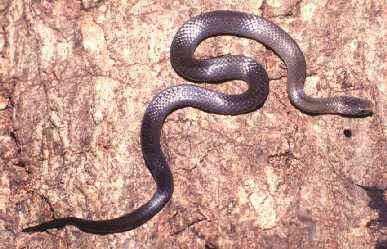
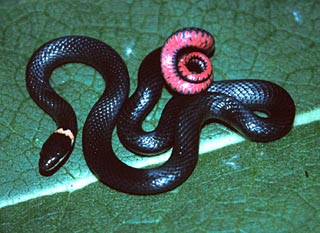
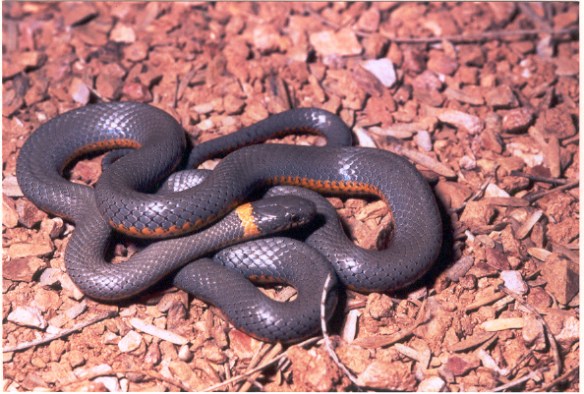
Ring snakes are named so because of a yellow band around the neck. Its back is slate gray, black or brown with smooth scales and a satin-like appearance. They prefer moist woodlands as their habitat.These snakes are found in Canada and Mexico as well as the United States. They are a secretive snake rarely seen in the wild. They are very weak constrictors that feed on worm small salamanders lizards and occasionally small snakes. When threatened they coil up their tails and display their brightly colour under bellies which can be red, yellow and orange they use this as a defensive tactic. There are approximately a dozen different species of the Ring necked snake.
Ringneck Snake
Ringnecks are most likely to end up in someone’s basement. Ringneck snakes rarely bite, but may release a foul musk when handled. Although salamanders make up the bulk of their diet, ringnecks will also feed on earthworms, insects and, on occasion, fish.
Ringneck Snake
Relatively small snakes, they rarely bask in the open and are generally found under cover (rocks, logs, boards, debris) during the day. Like the salamanders on which they prey, ringnecks are usually nocturnal. They are most active in spring and fall and are rarely seen during summer. Females lay eggs.
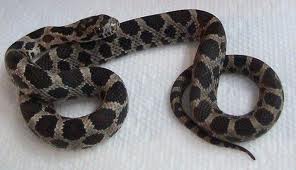
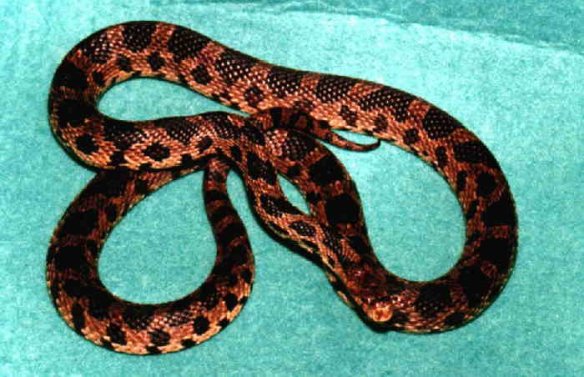
Fox snake is a non poisonous snake. Fox snakes range from 36-54 inches in length when mature. The dorsal surface varies in color from a yellowish color to light brown, with dark blotches ranging in color from chocolate to black.The head also vary in color from brown to a distinctly reddish color. Fox snakes have a yellow colored belly.
The eastern fox snake (Elaphe gloydi) can be found in the marshes bordering Lakes Erie and Huron .
The western fox snake (Elaphe vulpina) lives in farmlands, prairies, stream valleys, woods and dune country directly west of Michigan including Wisconsin, Illinois, and Iowa.The eastern fox snake can be differentiated from the western fox snake by the number of blotches present on the dorsal surface. Eastern fox snakes have fewer blotches (average 34) than do western fox snakes (average 41).
The eastern fox snake feeds on small mammals, frogs, birds, and occasionally bird eggs. Eastern fox snakes are constrictors, which means they kill by wrapping their bodies around the chest of their prey and squeezing until the prey eventually dies. Fox snakes lay anywhere from 7 to 29 eggs in June or July, which hatch in late summer.One of the defence mechanisms of the fox snake is to vibrate its tail as a warning to potential predators. This creates a sound similar to that of a rattlesnake by the rustling of the leaves beneath the snake. For this reason many people mistake the fox snake for a rattlesnake.
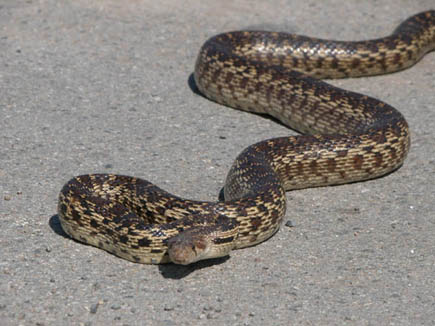
It is harmless snake to humans and feeds on rodents and other reptiles, including venomous snakes and small turtles.It is a common name for eastern indigo snake. It is named gopher because of its habit of laying eggs in mammal or gopher tortoise burrows.
Gopher Snake
It is native to the southeastern U.S.It is a blue-black reptile.It is the longest snake in eastern North America, growing to about 3 m (about 10 ft).
Gopher Snake
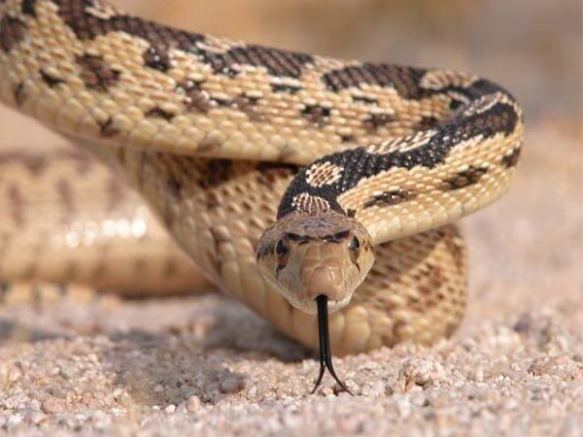
Bull snakes are also sometimes called gopher snake.
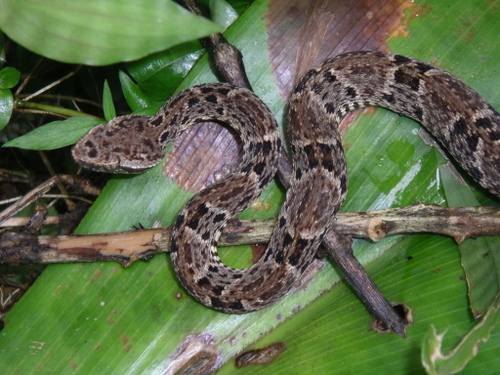
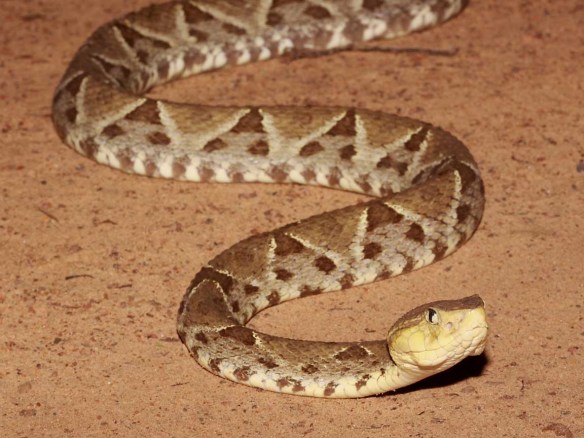
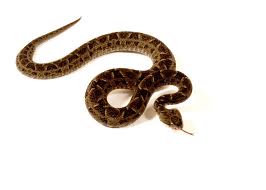
The fer-de-lance is a common Central American snake. It belongs to viper family.It is one of the largest and deadliest of the poisonous snakes. It is a common central American snake and is also found in the south America and West Indies.
Fer-de-lance
It has velvet type of scales and rich brown and gray colour. Its body is marked with irregular, dark crossbands. It has characteristic sharply triangular head. It has a yellow throat. It lives in both wet and dry places. This snake may grow to 8 feet in length. It is the most dangerous and feared snake in Costa Rica.
A fer-de-lance snake strikes swiftly and is an aggressive snake. During the day the snake lies coiled, blending with its surroundings, but it is especially dangerous after sunset, when it wanders in search of prey.
Fer-de-lance
They feed on lizards, frogs, birds and small mammals. There may be more than 70 young in one brood. The baby snakes have fully formed fangs and can give poisonous bite.



 Manbir Online ~ for Health & Fitness