Gurpreet Kaur’s journey in this world ....
Gurpreet Kaur was a Musician. She was a singer and a composer of music. Her interest was composing and singing Gurbani Shabads in Indian Classical style. She sang Shabads in All the Raags mentioned in Sri Guru Granth Sahib Ji. She also taught Gurmat Sangeet at Gurmat Gian Missionary College, Jawadi, Ludhiana.
Elder child to Pushpinder Kaur and Dr. Brig. Harminder Singh, was born in Amritsar on 13th Jan 1962. She attended various convent schools as a child because her father would get frequent Army postings as a dental surgeon. She graduated with Music Honors from Govt. College for Women, Chandigarh.
Music was her hobby and she composed and sang Raag based Gurbani Shabads. Doing Kirtan was part of growing up nurtured by her parents. She learned music from her father Dr. Brigadier Harminder Singh who was a dental surgeon in Indian Army and a very good singer himself. Gurpreet’s Bhua (father’s sister), Ajit Kaur retied as a Head of Department of Music from Govt. College for Women Ludhiana, and was a renounced Punjabi singer of her time. Gurpreet Kaur also learned nuances of Indian Classical Music from Pandita Sharma.
She was a mother of three children, and a grandmother. Her daughter Keerat Kaur is a Computer Engineer. Her two sons Gurkeerat Singh and Jaskeerat Singh are doctors in USA. Her daughter Keerat Kaur too was part of her group ~ Gurmat Gian Group.
Gurpreet Kaur left this world at the age of 54yrs on 12th Sept 2016 in Baltimore USA.
She had recorded around 25 cds of Gurbani Keertan.
'Raag Ratan' Album (6 CDs) is a Compilation of Shabads in All the 31 Sudh Raags of Sri Guru Granth Sahib Ji.
'Gauri Sagar' Album (3 CDs) is a Compilation of All forms of Raag Gauri in Sri Guru Granth Sahib Ji.
'Nanak Ki Malhaar' ~ ((3 CDs) is an album of Raag Malhar Shabads in various forms of Malhar.
'Gur Parsaad Basant Bana' ~ (3 CDs) is an album of Shabads in Raag Basant sung in various forms of Raag Basant.
Har Ki Vadeyai
Sarni Aayea
Sewa
Priya Kee Preet Piyaree
Mohan Ghar Aavho Karo Jodariya
Mo Kao Taar Le Raama Taar Le
Tere Kavan Kavan Gun Keh Keh Gawan
Mera Baid Guru Govinda
Saajanrraa Mera Saajanrraa
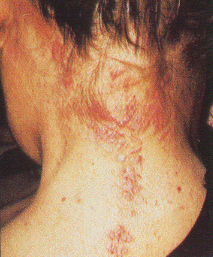
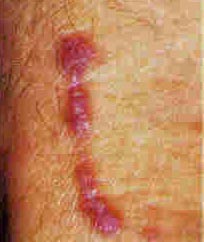
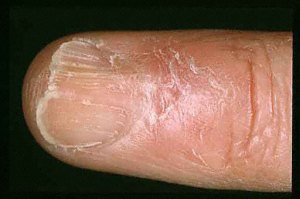
Neurodermatitis or Lichen Simplex chronicus or Scratch dermatitis
It is a skin disorder in which skin becomes irritated causing itching. The itching becomes chronic with uncontrollable scratching.
The cycle of itching and scratching causes the skin to thicken and become scaly. It is seen more in females and affects people between 20 and 50 years of age. The itching and scratching of neurodermatitis can lead to skin damage and secondary bacterial infections.Symptoms are: Itchy skin with Redness, warmth or swelling and Thick and scaly appearance.
Treating neurodermatitis is to break this cycle of itching and scratching. Once you have stopped scratching the affected area, the skin returns to a normal appearance.
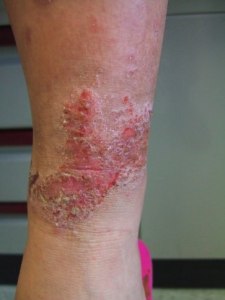
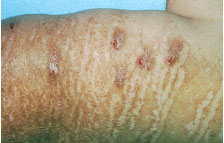
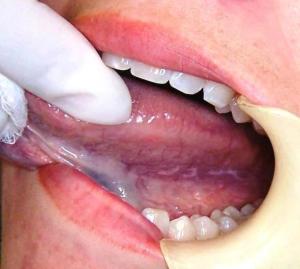
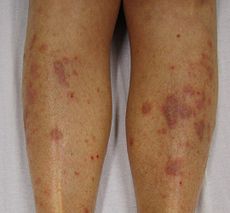
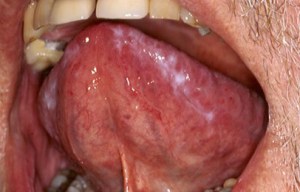
Lichen planus is a disease in which there is an itchy rash on the skin or in the mouth. The exact cause is not known, it is said to be due to an allergic or immune reaction.
It may be associated with exposure to Chemicals, Dyes or some medications. Risk factors also include Hepatitis C. Uncommon in children.
The lesions are Purplish, Itchy, flat topped papule on flexor aspects of forearms, trunk and extensor aspects of legs. Lesions have distinct, sharp borders.
Mouth lesion is: Tender or painful, Located on the sides of the tongue or the inside of the cheek. May be on the gums.
Other symptoms include: Dry mouth, Hair Loss, Metallic taste in the mouth, Ridges in the nails.
Treatment: Topical or Oral corticosteroids. Immune suppressing agents like cyclosporine in severe cases.
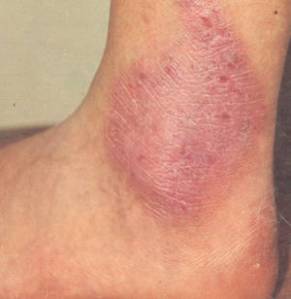
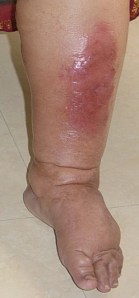
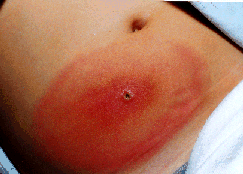
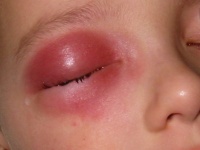
Cellulitis is a bacterial infection of Skin and tissue beneath it. Cellulitis usually begins in a small area and then spreads. The spread of infection may give rise to generalized symptoms of infection. Fever may be a manifestation of the generalized reaction.
Inflammation of subcutaneous tissue would cause local redness, warmth and pain. Tender red streaks may be seen. Regional lymph nodes may be enlarged and tender.
Orbital Cellulitis could be dangerous.
The main bacteria responsible for cellulitis are Streptococcus and Staphylococcus. Other bacteria may also cause cellulitis.
Treatment is by: Systemic antibiotics and anti-inflammatory drugs.
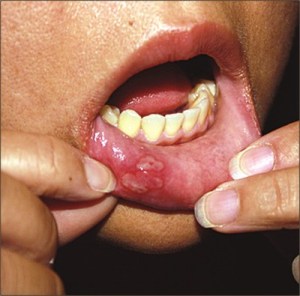
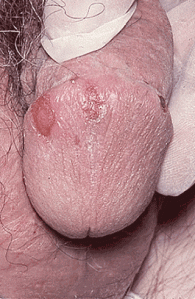
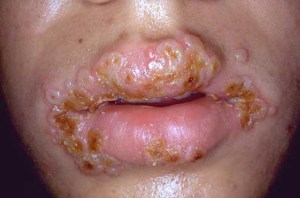
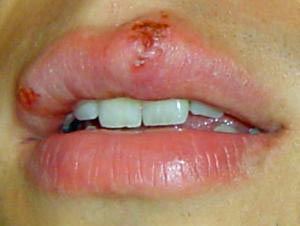
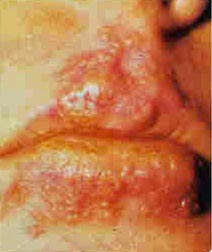
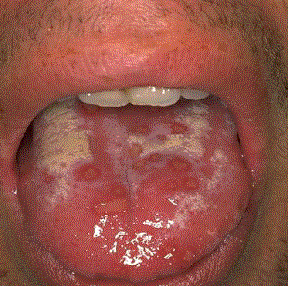
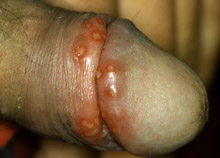
Herpes Simplex is caused by a Herpes Simplex Virus (HSV). HSV-1 & HSV-2. HSV-1 causes Oral Herpes – sores in mouth or face. Cause Infection of the eye. It can also lead to infection of the lining of the brain -meningoencephalitis.HSV-2 causes Genital Herpes – affects genital, buttocks or anal region. Sexually transmitted.
Mothers can infect newborn during vaginal delivery especially if having active disease during childbirth. However, 60 – 80% of HSV infections acquired by newborns occur in women who do not have symptoms of HSV infection or a history of genital HSV infection. The virus can spread even when sores are not present.
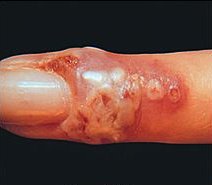
A finger infection, called herpetic whitlow, is another form of HSV infection. It usually affects health care providers who are exposed to saliva during procedures.
Most people have outbreaks several times a year. Over time, you get them less often. HSV is never eliminated from the body, but stays dormant and can reactivate, causing symptoms.
Treatment: Some cases are mild and may not need treatment. Those needing treatment require antiviral medications such as acyclovir, famciclovir, and valacyclovir.
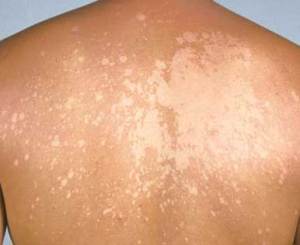
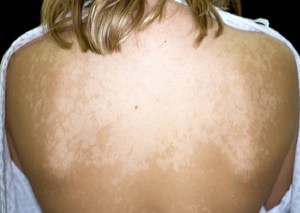
This disease is caused by a fungus Pityrosporum ovale.
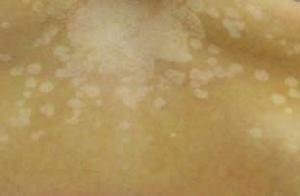
Most common sites are the back, underarms, upper arms, chest, and neck. It is a superficial fungal disease which tends to recur during warm months.The disease looks like patches of discolored skin with sharp borders and fine scales. Often dark reddish-tan, hypopigmented or hyperpigmented patches.
Treatment consist of application of Antifungal medications to skin. These medications include clotrimazole, ketoconazole, and miconazole. Oral medications may also have to be given.Local application of selenium sulfide shampoo 1% or ketoconazole shampoo is also effective.
Oral preparation of ketoconazole and itraconazole are also given and are very effective.