| Hope for a new Fat Control Drug |
|
The scientists, from Johns Hopkins University in Baltimore, US, found a chemical, called C75 that stops the production of a hormone that makes the mice hungry. This compound that appears to switch off appetite in mice may hold clues to a similar drug for humans. It rapidly turns off appetite in mice and causing weight loss similar in many ways to that achieved by fasting.
Scientists have long known that a hormone called Neuropeptide Y is a major appetite regulator – if animals fast, the amount of NPY increases and stimulates appetite. The C75 chemical was given to the mice by injection, and the scientists found that their interest in food ceased suddenly within 20 minutes. The chemical is not thought to be toxic in any other way to mice, although far more rigorous scientific testing would be needed before any similar compound could be used on humans. |
Tag Archives: Obesity
Obesity & Serotonin
| Obesity & Serotonin |
| It is increasingly recognized that obesity is not a failure of will or behaviour, nor is it a disorder of body weight regulation. It is a chronic medical condition, like hypertension or diabetes.In the obese person, body weight is just as carefully regulated as it is in non obese persons, but regulation is around an elevated set point. This homeostatic set point — strongly influenced by genetics and is probably controlled by neurotransmitters that signal hunger or signal satiety.Only those individuals with exceptional will power and the ability to tolerate discomfort are able to defeat this homeostatic mechanism through dietary energy restriction. |
|
| If eating behaviour, like mood and personality, is simply the result of a mixture of neurotransmitters, then a pharmaceutical intervention may be more effective than attempts at behaviour modification, just as antidepressants are generally more effective for clinical depression than a psychiatrist.At one time, amphetamines were being used for weight control, although when the drug was discontinued, the patient gained back all the lost weight. However, if obesity is a chronic medical condition in the same way that hypertension is a chronic medical condition, then weight gain following drug discontinuation is no different from rising blood pressure after the discontinuation of antihypertensive medications. |
| Using serotonin reuptake inhibitors for weight lossIn the early 1980s, clinical investigators discovered a link between serotonin and eating disorders. The discovery was unexpected: during clinical trials of the serotonin reuptake-inhibitor fluoxetine, one side effect noted was weight loss. Even before this, seotonin was implicated in the eating disorders.
The dietary starch is converted to sugar, sugar stimulates the pancreas to release insulin, insulin raises brain levels of the amino acid tryptophan, tryptophan is a precursor of serotonin, and serotonin regulates mood, producing a sense of well-being. Therefore, obese people load up on carbohydrates to elevate mood. In studies with obese women, it was found that a high-carbohydrate snacks improved mood. Subsequent studies showed that serotoninergics helped overeaters lose weight. One agent — dexfenfluramine — was particularly effective for cutting food intake. Dexfenfluramine is the active portion of the anti-obesity agent fenfluramine. Its side effects are dry mouth, diarrrhea, unsteadiness, and memory problems along with cardiac problems.. Because of the seriousness of the valvular heart disease associated with the use of fenfluramine, the medication was withdrawn from the market in September of 1997 According to the National Institutes of Health and the Centers for Disease Control, more than 30% of Americans are 20% or more overweight, and one third of women and more than one quarter of men are trying to lose weight at any given time. |
Overweight people loosing a little bit of weight – gain a lot
Quote

|
Overweight people loosing a little bit of weight -gain a lot |
| Overweight people who manage to lose just a little bit of weight – even just a pound a year – may substantially lower their risk of high blood pressure. The hard part, of course, is keeping the weight off. But a new study shows that surprisingly little weight loss – if it can be sustained – carries a big payoff in better health. |
Obesity ~ Some facts
| Obesity – some facts |
|
Obesity ~ Your Weight or Your Shape ?
| Obesity What is more Important – Your Weight or Your Shape ? |
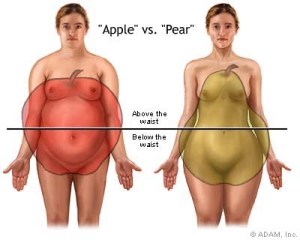
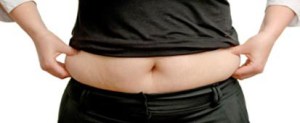
| The ultimate risk of diseases in relation of obesity is not the weight but the shape of the weight your body carries. Now many studies have established the fact that if you have a pear shape – namely carrying most of your fat in your butt and your thighs – you are better off than an apple shape where your waist measurement is beyond your hip measurement. ![]() Here is an eight-year follow-up to the nurse’s health study which began with almost 45,000 women. A definite pattern emerged which tells you that it’s not how much you weigh, but where that weight is that can be critical for heart disease. For woman, risk for dying from heart disease is much greater than the risk of dying from breast cancer and yet, the latter seems to get a lot more attention and fear.To find out what the risks are this simple test would help.First, let’s start with waist-hip ratio.To measure your waist-hip ratio, measure your waist at the level of your belly button and your hips at the largest circumference with a tape measure.On division of waist and hip measures we get the waist -hip ratio which should be somewhere between 0.7 to 1.0.If it’s above one that implies your waist is larger than your hips. That’s not good. |
| Now let’s go for the body mass index. The body mass index, or BMI, is the ratio of your weight in kilograms divided by your height in meters squared. It is now found that even if your BMI is higher than desirable, it doesn’t seem to make as much difference as your waist-hip ratio.BMI’s of less than 25 has been considered desirable, over 25 is considered to be undesirable. |
| It is also to be understood that the risk for women under the age of 60 is more pronounced than women over the age of 60. The risk factors that we are concerned here are mainly for coronary heart disease which includes non fatal heart attacks as well as fatal heart attacks. |
If your waist-hip ratio is 0.72 or below, you are the standard, and don’t at least have to worry about heart attacks based on your body shape.If your waist-hip ratio is 0.72 to .76 and you are under 60, your risk is 1.7 times higher than the standard or 70 percent higher.If your ratio is 0.76 to 0.80, your risk is two and a half times higher.If your ratio is 0.80 to .88, your risk approaches three times higher.If your waist-hip ratio is over 0.88, your risk is four and a half times higher.If you are older than 60, the top category of risk is 1.9 times higher.So you can see that the effects of this are diminished in women over the age of 60, implying that extra abdominal fat is less risky for older woman. Now here is the major point of this study. With minor exceptions, it didn’t matter whether your body mass index was under 25 or over 25. In other words, an overweight woman, if she has more of an hour-glass figure, seems to be protected. In addition, you can look at the absolute waist circumference measurements.At 71.1 centimetres, your waist is fine.At a waist circumference of 81.3 to 86.4 centimetres, your risk is a couple of times higher.If your ratio is over 96 centimetres, and you are under 60, your risk is up four times. If you are over 60, your risk is only up two times. |
|
Obesity Childhood Obesity

large amount of weight within a few days without toiling hard.
attacks based on your body shape.If your waist-hip ratio is 0.72 to .76 and you are under 60, your risk is 1.7 times higher than the standard or 70 percent higher.If your ratio is 0.76 to 0.80, your risk is two and a half times higher.If your ratio is 0.80 to .88, your risk approaches three times higher.If your waist-hip ratio is over 0.88, your risk is four and a half times higher.If you are older than 60, the top category of risk is 1.9 times higher.So you can see that the effects of this are diminished in women over the age of 60, implying that extra abdominal fat is less risky for older woman. Now here is the major point of this study. With minor exceptions, it didn’t matter whether your body mass index was under 25 or over 25. In other words, an overweight woman, if she has more of an hour-glass figure, seems to be protected. In addition, you can look at the absolute waist circumference measurements.