Eating Tips 1

Eating Tips

  • For a nourishing start to your day, choose a whole-grain bran cereal packed with fiber, such as raisin bran or bran flakes.  Add fruit and low-fat milk for the most nutritious beginning.
  • Low-fat popcorn is crunchy, delicious, and a source of whole grain fiber. Plus, you can enjoy a large, filling portion! Look for popcorn made with “94% Fat Free Butter” or air-popped popcorn.
  • Choose light ice creams, or frozen yogurts which are low in fats and calories.
  • Enjoy thin-crust frozen pizza or with grilled chicken or veggies. Avoid the sausage, pepperoni, and extra cheese. Limit your portion to two slices and add a salad to complete the meal.
  • 100% fruit juices are naturally rich in vitamins, minerals, and disease-fighting antioxidants. In fact, they’re the next best thing to eating whole fruit.
    “Fruit juice drinks,” however, are usually packed with sugar and empty calories.
  • Frozen Meals Can Be Healthy, Too!: Look for frozen meals that have lean protein, plenty of vegetables, whole grains, and a low-fat or simple sauce.
  • Avoid fried frozen food, or creamy casseroles. Frozen meals that are baked, grilled, steamed, or sautéed are healthier and lower in calories.
  • Spaghetti – A Healthy Favorite: Try the new whole-wheat pasta blends. Even the kids will like it if you top the spaghetti with your favorite tomato sauce. Macaroni and cheese are low in fiber and loaded with fat and calories.
  • Fat-Free Frozen Shrimp & Prawns: Shrimp are a tastier and healthier alternative to breaded fish sticks. You can buy them already cooked and shelled. Eat them cold with cocktail sauce, grill them, or sauté with veggies.

Anthrax as Biological Weapon

Anthrax as Biological Weapon

  • Anthrax is an imperfect weapon because it is hard to obtain and disperse. 
  • It is extremely difficult to transform the Bacillus anthracis into a weapon for mass destruction.
  • It is one thing to have anthrax and another to infect people with it.
  • To make anthrax into a powder needs sophisticated technology.
  • You cannot contact anthrax by touching a door-nob or stair railing or any other object.
  • Anthrax spores can survive for almost 24 hours in the air when spread as  airborne aerosol. The spores are killed by the sunlight. They may persist for years if buried in the soil. Although the anthrax spores can contaminate the building surfaces for several hours, they would adhere to the surfaces and would be unlikely to re-aerosolised to cause pulmonary infection.  
  • To make the anthrax stain into its most leathal form – pulmonary anthrax the spores have to be of exact size. B. anthracis spores as airborne particles < 5 um in diameter need to be deposited directly into the alveoli or alveolar ducts ( the remote location in the lung ) of the lungs. If the spores are too small they would be exhaled out during breathing and would not be able to do any damage. Larger size spores will not be inhaled and would not reach the exact site of the lung to start the disease process.

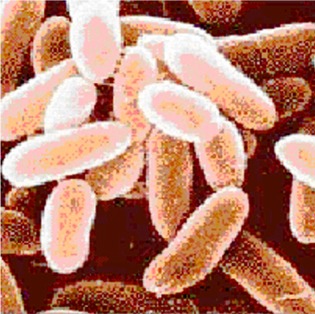
    Anthrax spores

  • Bombs carrying anthrax may not be effective in dispersing the germs because the explosion would destroy them.
  • Spreading the bacterium with aerosol is a hard task. Unless it is in the form of spores it cannot be sprayed. In this context the attempt by Aum Shinrikyo cult of Japan to kill people traveling in the metro trains by spraying mist of Anthrax can be mentioned. The attempt did not succeed. The members of this cult squirted the agent in its liquid form. In this form the bacteria is less likely to reside in the victims’ lungs.     

Anthrax

Anthrax

Anthrax is an acute bacterial infection caused by an organism called Bacillus anthracis. It is mainly a disease of herbivorous animals.

Humans become infected when spores of B. anthracis are introduced into the body by:

  • contact with infected animals
  • contaminated animal products
  • insect bites
  • inhalation
  • ingestion

In human beings the most common form of this infection is Cutaneous Anthrax. It is characterized as a localized skin lesion with a central eschar surrounded by marked edema or swelling.

Other forms are more dangerous –

Anthrax spores

Inhalation Anthrax (woolsorters’ disease) – it involves hemorrhagic mediastinitis, rapidly progressive systemic infection, and a very high mortality rate.

Gastrointestinal Anthrax is rare and is also associated with a high mortality rate.

Approximately 95 percent of human cases of anthrax are the cutaneous form and about 5 percent the inhalation form. Gastrointestinal anthrax is rare. Anthrax meningitis occurs in a small percentage of all cases and is a frequent complication of overwhelming infection with B. anthracis and this is also associated with a high mortality rate.

CUTANEOUS ANTHRAX

Cutaneous anthrax is caused when spores of B. anthracis are introduced into the skin through cuts or abrasions or by biting flies. The spores germinate within hours, and the vegetative cells multiply and produce anthrax toxin. These lesions are more often found on the exposed areas of the body.

Within days a small red macule appears. During the next week, the lesion progresses through papular and vesicular or pustular stages to the formation of an ulcer with a blackened necrotic eschar surrounded by a zone of brawny edema. There may be itching in the early lesion and the fully developed lesion is painless.
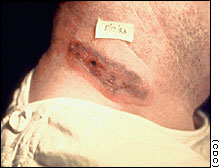
Small satellite vesicles may surround the original lesion, and painful regional lymph nodes may be present. Most patients do not have fever and may have no constitutional symptoms. In severe cases, the edema may be extensive and associated with shock. Spontaneous healing occurs in 80 to 90 percent of untreated cases, but edema may persist for weeks. In the 10 to 20 percent of untreated patients who have progressive infection, bacteremia develops and is often associated with high fever and rapid death.

Other conditions that may be confused with this disease are staphylococcal skin infections, tularemia, plague.

Cutaneous anthrax should be considered when patients have painless ulcers associated with and edema and have had contact with animals or animal products.

INHALATION ANTHRAX

In this form of the disease the spores of the B.anthracis are deposited directly in to the alveoli of the lungs. B. anthracis spores as airborne particles 5 um in diameter need to be deposited directly into the alveoli or alveolar ducts ( the remote location in the lung ) of the lungs. From here the spores are taken up by the phagocytes and carried to the mediastenal nodes where they germinate. Hemorrhagic mediastinitis takes place with necrosis of the nodes. Infection rapidly spreads leading to death.

Clinical presentation of the patient is similar to severe acute viral respiratory infection and diagnosis at early stage is difficult.  After 1 to 3 days, there is increasing fever, dyspnea, stridor, hypoxia, and hypotension usually leading to death within 24 h.

GASTROINTESTINAL ANTHRAX

Gastrointestinal anthrax usually results from ingestion of inadequately cooked meat from animals with anthrax. Primary lesion can be in the intestines or it may be oral and pharynx or at the tonsils.

Symptoms may be fever, nausea and vomiting, abdominal pain, bloody diarrhea, and sometimes rapidly developing ascites. Sore throat and dysphagia may be present in case of lesions in the throat.

TREATMENT

Bacillus.anthracis is highly sensitive to penicillin. Ciprofloxacin is also drug of choice.

PREVENTION

Inhalation anthrax was essentially eliminated in England before 1940 through the development of methods to decontaminate wool and goat’s hair and the improvement of working conditions for handlers of animal products.

Non living vaccine  are used in the United Kingdom and the United States for the immunization of agricultural workers, veterinary personnel, and others at risk of exposure to anthrax.

Live attenuated vaccines containing spores of B. anthracis are used in both developed and developing countries to immunize domestic herbivores animals. These preparations are also used to immunize humans in Russia but not in the United States.

Improved anthrax vaccines for humans are needed. . In addition to agricultural and industrial anthrax, the possible use of B. anthracis as an agent of biological warfare is a stimulus for the development of an improved vaccine. Carcasses of animals that die due to anthrax should be buried intact or cremated. Butchering of infected animals should be avoided.

Anthrax as Biological Weapon

Chronic Traumatic Encephalopathy

Chronic Traumatic Encephalopathy

CTE. Chronic traumatic encephalopathy, is a dementia-like brain disease afflicting athletes exposed to repeated brain trauma.

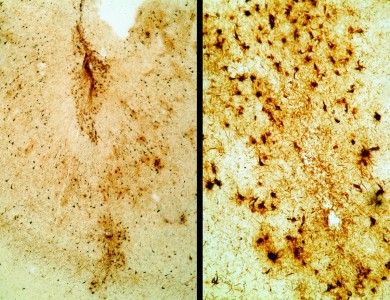
Abundant tau immunoreactive neurofibrillary tangles (dark brown dots) in the cerebral cortex in a pattern unique to chronic traumatic encephalopathy (CTE)

CTE has been found in the brains of 14 of 15 former NFL players thus far studied.

Their cases share a common thread — repeated concussions, sub-concussive blows to the head, or both. The picture beginning to emerge from these cases is that trauma could be causing brain damage.

A brain with CTE is riddled with dense clumps of a protein called tau. Under a microscope, tau appears as brown tangles seen in dementia. But the cases of CTE have shown this progressive, dementia-like array in players well in advance of a typical dementia diagnosis, which typically occurs in the 70s or 80s.

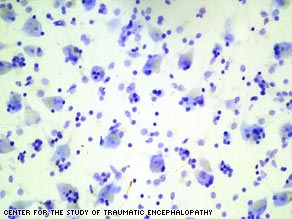
Healthy Brain Tissue

Scientists at Boston University have found evidence of CTE in the brain of an athlete as young as 18.

Symptoms that are common among many cases of CTE including problems with impulse control, an increasingly short fuse and headaches.

The alarming aspect is that we do seem to be seeing an increased rate in athletes who have early and moderate stage CTE.

CTE

Dementia

Breast Cancer ~ Some Facts

Breast Cancer ~ Some Facts

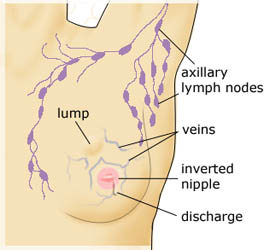
  • A painless lump in the breast is a highly suspicious of cancer breast.
  • Changes in breast size or shape.
  • Swelling in the armpit.
  • Changes in the Nipple or discharge from Nipple.
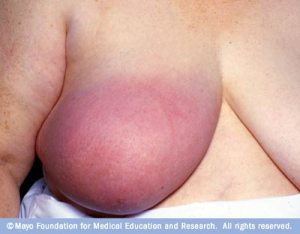
  • Inflammatory breast cancer is a rare, fast-growing type of cancer that often causes no distinct lump. Instead, breast skin may become thick, red, and may look pitted — like an orange peel. The area may also feel warm or tender and have smallbumps that look like a rash.

    Inflammatory Breast Cancer

  • The earlier breast cancer is found, the easier it is to treat and a better prognosis. Mammograms, X-rays of the breast, can detect tumors before they are large enough to feel. The American Cancer Society recommends yearly mammograms beginning at age 40 for women at average risk. While the U.S. Preventive Services Task Force recommends a screening mammogram every two years from age 50 to 74. It also notes that before age 50, each woman should check with a doctor to find out what screening schedule is right for her, considering the potential benefits and harms from screening.
  • Eighty percent of breast lumps are not cancerous. Lumps often turn out to be harmless cysts or tissue changes related to your menstrual cycle. But you should let your doctor know right away if you find anything unusual in your breast. If it is cancer, the earlier it’s found the better. And if it’s not, testing can give you peace of mind.
  • The only sure way to determine whether a lump is cancer is to do a biopsy. This involves taking a tissue sample for further examination in the lab, sometimes through a small needle. Sometimes surgery is done to take part of or the entire lump for testing. The results will show whether the lump is cancer, and if so, what type. There are several forms of breast cancer, and treatments are carefully matched to the type of cancer.
  • Some types of breast cancer are fuelled by the hormones estrogen or progesterone. A biopsy can reveal whether a tumor has receptors for estrogen (ER-positive) and/or progesterone (PR-positive). About two out of three breast cancers are hormone sensitive. There are several medications that keep the hormones from promoting further cancer growth.
  • In about 20% of patients, breast cancer cells have too many receptors for a protein called HER2. This type of cancer is known as HER2-positive, and it tends to spread faster than other forms of breast cancer. It’s important to determine whether a tumor is HER2-positive, because there are special treatments for this form of cancer.
  • Once breast cancer has been diagnosed, the next step is to determine how big the tumor is and how far the cancer has spread. This process is called staging. Doctors use Stages 0-4 to describe whether cancer is localized to the breast, has invaded nearby lymph nodes, or has spread to other organs, such as the lungs. Knowing the stage and type of breast cancer will help your health care team formulate a treatment strategy.
  • The odds of surviving breast cancer are strongly tied to how early it is found. According to the American Cancer Society, 100% of women with Stage 1 breast cancer live at least five years, compared to women without cancer – and many women in this group remain cancer-free for good.  The more advanced the cancer, the lower this figure becomes. By Stage 4, the five-year relative survival rate declines to 20%. But these rates can improve as more effective treatments are found.
  • There are many types of breast cancer surgery, from taking out the area around the lump (lumpectomy or breast-conservation surgery) to removing the entire breast (mastectomy.) It’s best to discuss the pros and cons of each of these procedures with your doctor before deciding what’s right for you.
  • Radiation therapy uses high-energy rays to kill cancer cells. It may be used after breast cancer surgery to wipe out any cancer cells that remain. It can also be used along with chemotherapy for treatment of cancer that has spread to other parts of the body. Side effects can include fatigue and swelling or a sunburn-like feeling in the treated area.
  • Chemotherapy uses drugs to kill cancer cells anywhere in the body. The drugs are often given by IV, but are sometimes taken by mouth or shot. Chemotherapy may be done after surgery to lower the odds of the cancer coming back. In women with advanced breast cancer, chemotherapy can help control the cancer’s growth. Side effects may include hair loss, nausea, fatigue, and a higher risk of infection.
  • Hormone therapy is an effective treatment for women with ER-positive or PR-positive breast cancer. These are cancers that grow more rapidly in response to the hormones estrogen or progesterone. Hormone therapy can block this effect. It is most often used after breast cancer surgery to help keep the cancer from coming back. It may also be used to reduce the chance of breast cancer developing in women who are at high risk.
  • Targeted therapies are newer drugs that target specific properties within cancer cells. For example, women with HER2-positive breast cancer have too much of a protein called HER2. Targeted therapies can stop this protein from promoting the growth of cancer cells. These drugs are often used in combination with chemotherapy. They tend to have milder side effects compared to chemotherapy.
  • There’s no doubt that cancer is a life-changing experience. The treatments can wear you out. You may have trouble managing daily chores, work, or social outings. This can lead to feelings of isolation. It’s crucial to reach out to friends and family for support. They may be able to go with you to treatments, help out with chores, or just remind you that you are not alone. Many people choose to join a support group — either locally or online.
  • Many women who have a breast removed choose to undergo reconstructive surgery. This replaces the skin, nipple, and breast tissue that are lost during a mastectomy. Reconstruction can be done with a breast implant or with tissue from somewhere else in your body, such as the tummy. Some women opt to begin reconstruction at the same time as their mastectomy. But it’s also possible to have reconstructive surgery months or years later.
  • An alternative to breast reconstruction is to be fitted for a breast form. This is a breast-shaped prosthesis that fits inside your bra. Wearing a breast form allows you to have a balanced look when you are dressed — without undergoing additional surgery. Like reconstructive surgery, breast forms are often covered by insurance.
  • The most obvious risk factor for breast cancer is being a woman. Men get the disease, too, but it is about 100 times more common in women. Other top risk factors include being over age 55 or having a close relative who has had the disease. But keep in mind that up to 80% of women with breast cancer have no family history of the illness.
  • Some women have a very high risk of breast cancer because they inherited changes in certain genes. The genes most commonly involved in breast cancer are known as BRCA1 and BRCA2. Women with mutations in these genes have up to an 80 percent chance of getting breast cancer at some point in life. Other genes may be linked to breast cancer risk as well.
  • Being overweight, getting too little exercise, and drinking more than one alcoholic beverage per day can raise the risk of developing breast cancer. Birth control pills and some forms of postmenopausal hormone therapy can also boost your risk. But the risk goes back to normal after these medications are stopped. Among survivors, good lifestyle choices may be helpful. Recent studies suggest that physical activity may help lower the risk of a recurrence and it’s a proven mood-booster.
  • Doctors continue to search for more effective and tolerable treatments for breast cancer.