
Substances that Boost Brain Power !!

Substances that Boost Brain Power !!

Most of us use only 5 percent of our brain power. It may be possible to enhance the brain power by using the remaining part of the brain to increase mental clarity and enhance memory. Many substances have been shown directly or indirectly to affect the brain cells to make them fuction more effficiently. Since ages people had been curious to find out means to increase memory. Some of the substances said to affect the brain power are :-

Alpha Lipoic Acid: It is an antioxidant that fights free radicals in both the watery and fatty areas of the body. Animal-based research demonstrates that ALA protects brain cell membranes from free-radical damage and improves long-term memory in aging animals.

Phosphatidylserine: PS is a vitamin-like substance used by the body to help build and maintain healthy brain cells. It sharpens the mind by helping the brain’s nerve cells function better including generation, storage, transmission and reception of nerve impulses.

Huperzine A: Huperzine A is a naturally occurring compound found in club moss, a plant used in traditional Chinese medicine. In recent years, Chinese researchers have discovered that a purified and standardized extract of Huperzine A enhances memory and learning in animals. In human studies, the compound has been shown to increase clearheadedness, memory and language ability in Alzheimer’s patients.

Acetyl L Carnitine: ALC molecules are found naturally throughout the body. It is thought to improve communication between the right and left hemispheres of the brain, thereby promoting intuitive and balanced thinking.

Coenzyme Q10: This vitamin-like nutrient found in every cell of the body is thought to safeguard sharp thinking by protecting mitochondria (a cell’s power centers). Mitochondria are prime targets of free-radical damage, and CoQ10 may be one of the few nutrients that provide protection for these delicate and important cell structures.

Docosahexaenoic Acid: The brain is more than 40 percent fat, much of it DHA. DHA, found in fish oil, makes brain cell membranes more fluid which may help sharpen mental acuity. In Japan, students frequently take DHA pills before exams to improve their academic performance. DHA is also critical for the early development of the brain especially in the three months prior to and following birth, the time of most rapid brain growth.

Ginko Biloba: Ginko Biloba is supposed to stimulate intellect by increasing the availability of oxygen to the brain. It has benificial effect on many fuctions of brain such as alertness, memory and intellectual capacity.

Brahmi: This traditional ayurvedic herb has been widely used in India for more than 3,000 years to build and improve mental performance. The herb is safe for use by healthy people of all ages. In India, brahmi tea is given to infants starting in their first month of life to encourage optimal mental development.

Ashwagandha: Ashwaganda is believed to nurture and clear the mind while calming and strengthening the nervous system.

GinsengThis powerful herb has been used traditionally to enhance memory and sharpen mental acuity. It is a mild stimulant so it is sometimes recommended for people feeling lethargic or having trouble concentrating.

Rosemary: The long-standing herbal tradition of rosemary for remembrance has persisted for at least five centuries. This may be because rosemary contains more than a dozen antioxidant compounds, and studies show that the herb exerts its antioxidant activity by scavenging free radicals.

Gotu Kola: Ayurvedic physicians in India claim that gotu kola can increase intelligence, memory and longevity.

Antioxidants: Free radicals, implicated in heart disease, cancer and various other serious ailments, also can have a negative effect on the brain. The brain may bear the brunt of free-radical attacks since it is rich in fatty acids, and it uses large quantities of oxygen (a potential source of free radicals). Antioxidant nutrients such as Vitamine C, Vitamin E, Beta Carotene, immobilize dangerous free radicals before they have a chance to damage brain cells.

B- Complex : The B vitamin family is critical to proper brain function.
B1 ( Thiamin ) helps the brain efficiently utilize carbohydrates for mind fuel
B3 ( Niacin ) may help improve memory, protect against stress and blood clotting, and help prevent strokes.
B5 ( Patothenic Acid, calcium pantothenate) may increase stamina as well as help during times of stress.
B6 ( Pyridoxine ) is essential for production of the brain’s chemical messengers (or neurotransmitters): norepinephrine, serotonin and dopamine.
B12 ( Cobalamin ) may relieve stress and fatigue in the brain because it helps release the energy found in food for use by the brain. It is also linked to the production of acetylcholine, the neurotransmitter that affects memory and learning.

Folic Acid: Also known as folate, this important vitamin helps the body produce the category of neurotransmitters called catecholamines. A lack of these chemicals can cause depression, anxiety and an inability to concentrate.

Iron: Iron is essential for clear, uncluttered thinking. By helping the blood form hemoglobin, the substance that carries oxygen from the lungs to the brain, iron enhances memory, learning, reasoning and judgment.
Pomegranate Juice – has Antioxidants

Pomegranate Juice – has Antioxidants

Drinking pomegranate juice may help reduce some of the major risk factors for heart disease, according to results of a study in mice and men. Based on the findings, its recommended, drinking half a glass of pomegranate juice a day.

A team of Israeli researchers found that the juice, which is rich in antioxidants, prevented the build up of plaque in the arteries of mice and inhibited further damaging changes in mice who already had plaque in their arteries.

In a group of healthy males who drank up to 50 ml of pomegranate juice daily for 2 weeks, the juice was found to boost the activity of an enzyme that protects against damaging changes to cells. The juice also reduced the oxidation of LDL (”bad”) cholesterol—a step that encourages the cholesterol particle to stick to artery walls and may lead to heart disease.

The oxidation of LDL is promoted by free radicals, cell-damaging particles that are a by product of normal metabolism. Antioxidants can mop up free radicals and help prevent the oxidation of LDL cholesterol.

In order to increase our defence system against the oxidative stress which we are exposed to every day, we need to consume potent natural antioxidants.

Pomegranate juice provides a superb defence against the harmful effects of free radicals and, hence, protects against cardiovascular diseases.

Contents of Pomegranate

Food Value Minerals and Vitamins
Moisture 78.0% Calcium 10 mg
Protein 1.6% Phosphorus 70 mg
Fat 0.1% Iron 0.3 mg
Minerals 0.7% Vitamin C

Small amounts of Vitamin B Complex

16 mg
Fibre 5.1%
Carbohydrates 14.5%
100%
Calorific Value – 65
*Values per 100 gms edible portion

Chocolate has antioxidants

Chocolate has antioxidants


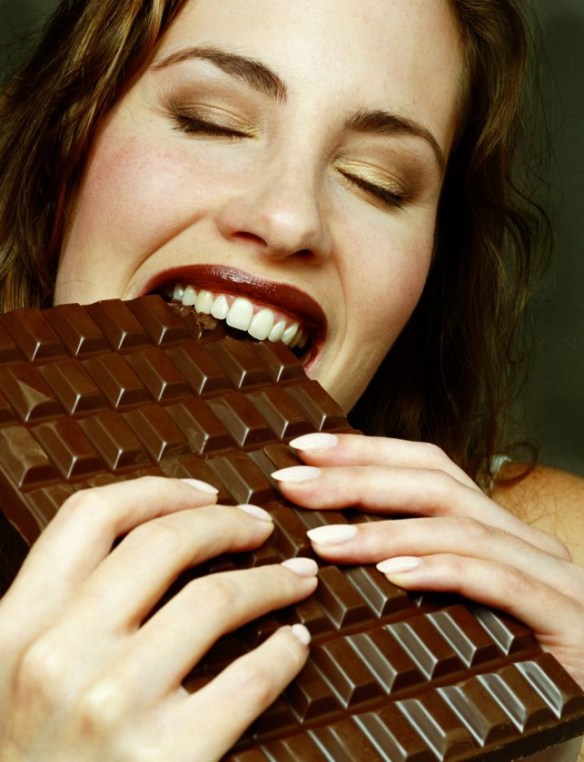
New research published in the Medical Journal “Lancet”, shows that eating chocolate could prevent cancer and heart disease and contrary to popular belief also fights tooth decay.

Research conducted by scientist from Holland’s National Institute of Public Health and Environment shows that chocolates contain antioxidants called Catechins and Phenols. These antioxidants could prevent heart diseases and cancer.

Until now tea was thought to contain the largest amount of these antioxidants but this new research indicates that dark chocolate has four times as much as compared to tea. The researchers found that dark chocolate had 53.5 mg of catechins per 100 gm, milk chocolate contains 15.9 mg per 100 gm, and the black tea contains 13.9 mg per 100 ml.

Chocolate like the red wine – which is said to protect against heart disease, also contains phenols. These reduce the presence of free radicals that damage cells and DNA. Phenols are said to prevent fat like substances in the blood stream from oxidizing and clogging the arteries.

Atherosclerosis, or the formation of plaque in the arteries, is caused by oxidation of LDL (low density lipoproteins ) that ‘s one of the cholesterol particles. At first this leads to subtle damage, and then eventually to the formation of advanced plaque. The build up of plaque can lead to clogging of the arteries, a major cause of heart attack.

By acting as a deoxidizing agent, the phenols prevent clogging of arteries, thus averting heart attacks. The researchers also believe that the cacao plant, from which chocolate and cocoa is derived, boosts the immune system and also restricts the formation of the type of cholesterol which damages heart.

Researchers believe that most of the bad effects of eating chocolate are either overstated or entirely false. For example, chocolate also has not been proven to cause cavities or tooth decay. Rather, it helps thwart mouth bacteria and stop dental decay.

Tooth cavities start when streptococcus mutans bacteria produce a sticky molecule called glucan. This helps the bacteria anchor themselves to teeth and form plaque. These and other bacteria in plaque convert sugar to acids, which eat away the tooth’s surface and lead to cavities.

Research shows that the cocoa butter in the chocolate coats the teeth and may help protect them by preventing plaque from forming. The sugar in the chocolate does contribute to cavities, but no more than the sugar in any other food. Scientists believe that antibacterial agents in cocoa beans offset its high sugar levels. Cocoa bean husk, the outer part of the bean, which usually goes waste in chocolate production in a potent source of these agents. Research has also shown that parts of cocoa bean, the main ingredient of chocolate, thwart mouth bacteria and stop dental decay.

Also, eating chocolate neither causes nor aggravate acne, as is the general belief. In fact recent research has shown that eating chocolate or not eating it does not produce any significant changes in the acne conditions in human beings.

However, as in the case of any other food, eating too much of chocolate may cause health problems. The cocoa butter in chocolate does contain saturated fat, which can increase blood cholesterol levels, and high cholesterol may contribute to heart disease.

Chocolate is high in calories and eating too much therefore make you fat, increasing your risk of heart disease. Over eating of chocolate can also lead to obesity.

Free Radicals and Antioxidants

For a longer life~Hit 50yrs with few Risk Factors

Hit 50 yrs with few Risk Factors – for a longer life

It is said that healthy ageing begins long before your hit old age.

Those hoping to live long and healthy life should aim to reach age 50 with as few risk factors for heart disease and stroke as possible.

  • Not smoking
  • Maintaining healthy weight
  • Without diabetes
  • Without high blood pressure
  • Without high cholesterol
Without these Risk Factors – may drastically reduce your risk of cardiovascular disease and add 10 yrs your life.
Prevention of heart disease needs to begin very early in life because by middle age most of the risk factors are already established.
The need is to focus on young adults, even teens and to create a life style that will prevent cardiovascular diseases to develop or keep them from developing.
It is clear that aggressively treating the cardiovascular diseases risk factors is the best approach to prevent the development of fully developed cardiovascular disease and for a long healthy life.

Coronary Heart Disease in Indians

Coronary Heart Disease in Indians

A report of WHO says that by the end of this century, India would account for more than half of the total heart patients in the world.

Incidence of  CAD in US is 1 %, whereas it was as high as 3 % among Indians and about 7 % among north Indians.

Higher Rate –   2-4 fold higher prevalence of CAD and mortality. Higher rates of clinical events – double than the Whites, 4 fold higher than Chinese.

Greater pre maturity – 5-10 yrs. earlier onset of first myocardial infarction. 5–10 fold higher risk of myocardial infarction and death in the younger age < 40 yrs.

Greater severity – Three vessel disease common even in younger pre menopausal women. Large infarction and greater muscle damage in younger age. 

Lower prevalence of conventional risk factors like hypertension, obesity, cigarette smoking. Cholesterol levels similar to Whites but higher than other Asians.

Higher prevalence of thrombogenic risk factors like – high levels of lipoprotein (a), homocysteine, ApoB, high levels of Triglycerides, fibrinogen, plasminogen activator inhibitor – 1, low levels of HDL.   

The increased incidence of the CAD in the Indians is due to a combination of Nature (genetic predisposition) and Nurture (environmental factors). Because of the genetic predisposition the harmful effects of environmental factors are greatly magnified. Adverse life style factors include those associated with affluence, urbanization and mechanization. When people move from the rural to the urban environment they tend to become sedentary.

Decreased physical activity and increases consumption of calories and saturated fatty acids, insulin resistance and athrogenic dyslipidaemia all add and have synergistic effect on the development of CAD.

Because Indians have higher prevalence of thrombotic risk factors the conventional risk factors become doubly dangerous. 

Lipoprotein(a) elevated levels render many Indians genetically susceptible to CAD as early as childhood. It has been seen that Lp(a) level > 30 mg % is associated with increases

High rate of CAD in Indians are in sharp contrast to  very low rates in other Asians. Despite high rates of smoking and hypertension, CAD rates among both Chinese and Japanese are about 4 fold lower than in US.

The low rate of CAD in Chinese despite high rates of other risk factors is attributed to their highly Anti-Atherogenic Lipid Profile. 

In a study the typical levels in rural China were:

  •  Cholesterol: 127 mg /dl
  • LDL: 63 mg /dl
  • Triglycerides: 100 mg /dl
  • HDL: 44 mg /dl
  • TC/HDL ratio : 2.9

Others have reported cholesterol levels as low as 80 mg /dl in some Chinese communities, where CAD is virtually non existent.

Following are some observations of a Berkeley study: –

Indians around the globe have highest rate of heart disease, usually 2 to 3 times higher than Americans, Europeans, Chinese and Japanese.
Indo Americans are at a higher risk of heat disease in spite of the fact that half of them are vegetarians and lack many of the traditional risk factors related to the heart disease.
About 25 % of the heart attacks among the Indian descent occur when they are younger than 40, unheard of in other populations.
Among those younger than 30 years of age, the coronary artery disease mortality is three fold higher than Whites in UK and 10 fold higher than Chinese in Singapore.