Aging Mechanism

Quote

Aging Mechanism

It is now believed that the mechanism that plays a role in the disease Progeria causing accelerated aging of those suffering from this disease may be playing a role in normal aging as well.A study led by Dr. Francis Collins, director of the National Institute of Health, suggests aging may not simply be a gradual wearing out of cells.

Genome Sequencing helps diagnosing rare disorder

Genome Sequencing helps diagnosing rare disorder
Noah and Beery were diagnosed with cerebral palsy nearly 13 years ago. At the age of 5 yrs they were diagnosed as Dopa-responsive Dystonia (DRD). It is a complex movement disorder involving the loss of the neurotransmitter dopamine.
The muscles of people with dystonia contract and spasm involuntarily. The twins were given L-dopa, which substitutes for the neurotransmitter dopamine they lacked, and they responded quickly. But there were still some lingering symptoms.
6 years ago, Alexis developed a cough that became increasingly debilitation and a massive breathing problem developed.
As luck would have it that the twins’ father had recently taken a job as chief information officer for the Life Technologies, maker of gene sequencing machines.The genomes sequencing of the children were done. When the researchers analyzed raw DNA sequence data from the twins’ genome, they were surprised to find no mutations in the two genes commonly mutated in DRD. Instead the team discovered that the twins carried a mutated gene related to serotonin production that made them deficient in both dopamine and serotonin. Serotonin is another neurotransmitter.
The twins were given a serotonin-inducing supplement called 5-HTP to their Dopamine regimen and this improved their symptoms dramatically within a few weeks.Because of the genome sequencing, and Alexis taking this new amino acid, is able to run on tracks and has been winning races. Seeing them now one would say that there is nothing wrong with them!
The cost of this genome sequencing is not within reach of most of our population. At present it costs $ 10,000 to $ 20,000 per patient. But, companies such as Illumina, Life Technologies Corp and Roche Holding are working to bring down the cost. It is expected that the cost of genome sequencing is going to drop very fast in near future and it is hoped that in very near future the cost may come down within reach of very many patients.

E. Coli

E. Coli                            Escherichia Coli
E. coli was discovered by German pediatrician and bacteriologist Theodor Escherich in 1885.
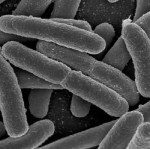
It is a Gram-negative, rod shaped bacterium that is commonly found in the lower intestine of warm blooded organisms. These are typically rod-shaped, and are about 2.0 micrometres (μm) long and 0.5 μm in diameter.  
Most E. coli strains are harmless, but some serotypes can cause serious food poisoning in humans. The harmless strains are part of the normal flora of the gut, and can benefit their hosts by producing vitamin K2, and by preventing the establishment of pathogenic bacteria within the intestine.The Cells of E.Coli are able to survive outside the body for a limited amount of time, and this is a reason for its use as a test or an indicator organisms to test environmental samples for fecal contamination.
E. coli normally colonizes an infant’s gastrointestinal tract within 40 hours of birth, arriving with food or water or with the individuals handling the child.
E.Coli is an important anaerobe of human gastrointestinal tract. Anaerobes are organisms that can grow in either the presence or absence of oxygen.Fecal-oral transmission is the major route through which pathogenic strains of the bacterium cause disease in humans.
Food poisoning caused by E. coli can result from eating unwashed vegetables or undercooked meat.
 E.Coli Strain O157:H7 –  is associated with serious and life-threatening complications such as hemolytic-uremic syndrome.This strain is associated with the 2006 United States E. coli outbreak due to fresh spinach.
Certain strains of E. coli produce potentially lethal toxins.Virulent strains of E. coli can cause:

  • Gastroenteritis
  • Urinary tract infections
  • Neonatal meningitis.

In rare cases:

  • Haemolytic-uremic syndrome
  • Peritonitis
  • Mastitis
  • Septicaemia
  • Gram-negative pneumonia
If E. coli bacteria escape the intestinal tract through a perforation, for example from an ulcer, a ruptured appendix, or due to a surgical error, and enter the abdomen, may cause serious peritonitis.Urinary Tract Infection (UTI):  E. coli is responsible for approximately 90% of urinary tract infections (UTI) seen in individuals with normal urinary tract anatomy. E.Coli also causes ascending infections. Fecal bacteria colonize the urethra and spread up the urinary tract to the bladder as well as to the kidneys causing pyelonephritis. It may also cause infection of the prostate in males. Because women have a shorter urethra than men, they are 14 times more likely to suffer from an ascending UTI.Neonatal meningitis: A type of strain of E.coli which may be present in mother’s vagina gets colonized in the newborn’s intestines, lead to bacteraemia, which leads to meningitis.
Few precautions that may help to prevent infection:

  • Wash your hands carefully with soap before you start cooking and before eating.
  • Cook meat products properly. Do not eat raw meat.
  • Keep raw meat and poultry separate from other foods.
  • Don’t drink raw milk.
  • Keep food refrigerated or frozen.
  • People with diarrhoea should wash their hands carefully and often, using hot water and soap, and washing for at least 30 seconds.
  • People who work in day care centres and homes for the elderly should wash their hands often, too.
  • In restaurants, always order hamburgers that are cooked well.
  • Vegetables that are eaten raw should be thoroughly washed.
  • Peeling off outer layer of fruits and vegetables before eating would prevent infection.
Diseases & Conditions 
Organic food linked to E. coli outbreak

Organic food linked to E. coli outbreak

Organic food linked to E. coli outbreak
In 16 countries across the globe, nearly 3,000 people have been sickened and 29 have died after eating raw vegetables contaminated by a group of bacteria collectively called Escherichia coli ( E. coli).
Initially contaminated Spanish cucumbers were cited as the culprit and now organically grown sprouts are being seen as the most likely cause. The source of the infection still remains a mystery. It is believed that organic sprouts, cucumbers, tomatoes or lettuce have been contaminated.The condition has been caused by a rare toxic mutant of E coli that causes abdominal cramps and bloody diarrhea. In severe cases, it leads to acute kidney failure and even seizure, coma and death.
Organic foods are fertilized with animal manure and that’s where E coli exist.
Germany, where the outbreak originated, has reported 722 cases of kidney failure, including 18 fatalities, says WHO.
The European Centre for Disease Control and Prevention says the E coli outbreak is one of the largest worldwide.
Most of the victims were women and no one knows why.
Organic foods are fertilized with animal manure and that’s where E coli exist.
So, all those who are fond of their eatables from the Organic source, be careful !! It is advisable:

  • to make sure to wash vegetables thoroughly with clean water.
  • one may prefer to avoid eating raw vegetables, at least for the time being.
  • to wash one’s hands after using the toilet and before consuming food.
  • Peeling or cooking fruit and vegetables can also remove these germs.
Even in the past, several studies have found higher levels of E coli on organic vegetables compared to others. In 2006, a large E coli outbreak was linked to an organic spinach farm in California.
E. ColiMedical Tidbits

Zollinger–Ellison syndrome

Zollinger–Ellison syndrome 
First described in 1955 by Robert Zollinger and Edwin Ellison, surgeons at The Ohio State University.
Main features of this syndrome:

  • Gastric acid hypersecretion
  • Severe peptic ulceration
  • Non-beta cell islet tumor of pancreas
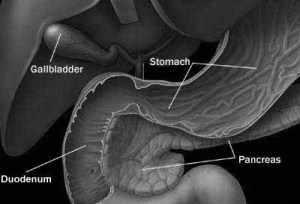
In this syndrome increased levels of the hormone Gastrin are produced, causing the stomach to produce excess hydrochloric acid resulting to severe peptic ulceration. The ulcers are formed in the stomach and in the duodenum. The hormone Gastrin is produced by the Non-beta cell tumor in pancreas. At times this tumorcalled Gastrinoma may be located in the duodenum.Gastrin acts on the parietal cells of the stomach and causes the hyperplasia of the parietal cells resulting to increase in the number of the acid secreting cells. It also acts by causing the increase in the output of the acid by the parietal cells. All this results to increase in the production of acid in the stomach and causes the multiple ulcers in the stomach and the duodenum.Gastrinomas may be single of multiple tumors. They may be malignant tumors and spread to Liver, lymphnode in the abdomen and in the small intestine.Nearly 25 percent of patients with gastrinomas have multiple tumors. Such patients have tumors in their pituitary gland and parathyroid glands in addition to tumors of the pancreas.
Symptoms of this condition consist of: Pain in epigastrium, upper abdomen. Diarrhea, Melina (Blood in stool). Vomiting, Weight Loss.This condition is suspected when the symptoms do not resolve with routine treatment.Tests which help in diagnosing this disease are

  • Upper Gastro intestinal Endoscopy, Measurement of Gastric acid secretion. Normal basal gastric acid secretion is less than 10 mEq/hour, while in Zollinger–Ellison syndrome it is usually more than 15 mEq/hour.
  • Level of hormone Gastrin, especially in fasting state.
  • Secretin stimulation test. This measures the level of gastrin after stimulation.

Secretin is a hormone that controls the secretions into the duodenum, and also water homeostasis  in the body. It is produced in the S cells of the duodenum in the crypts of Lieberkühn. Its effect is to regulate the pH of the duodenal contents via the control of gastric acid secretion.

  • Ultrasound, CT Scans and MRI help in diagnosis.
Treatment consists of Proton Pump inhibitors such as omeprazole, rabiprazole, and H2 receptor antagonists such as famotidine and ranitidine.Tumors have to be removed surgically and chemotherapy may be needed.
 Diseases & Conditions