Tabun

Tabun
It was invented by a German chemist, Gerhard Schrader, in the mid 1930s.It is a colourless or brownish as a liquid and odorless as a vapor. Schrader worked for IG Farben, a company that later used slave labour from the Birkenau concentration camp to produce its products. Another one of Fraben’s invention was Zyklon-B, a type of hydrogen cyanide used by the Nazis to gas victims in those same camps during World War II. Tabun is also an organophosphate like many pesticides and is among the easiest to nerve gases to manufacture. 
 Chemical Weapons

Sarin

Sarin
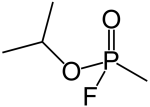
It is a colourless odourless nerve gas. It belongs to organophosphate chemical group. Most of the moderninsecticides too belong to this family of chemicals. 
US, Russia and Iraq had produced Sarin. By the end of World War I, most European powers had integrated gas warfare capabilities into their armies at some level, and nerve gases such as sarin, small amounts of which cause paralysis or death, were developed in Germany between the two world wars. Despite the availability of gases, only Japan used them in China—as World War II became global. After World War II, knowledge of nerve-gas manufacture became widespread.

Soman

Soman : is also a nerve agent. It is a volatile substance effective mainly through inhalation.

 Chemical Weapons


Condoms

Condoms
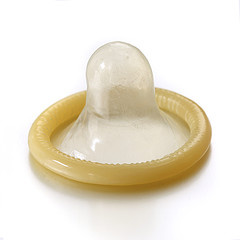
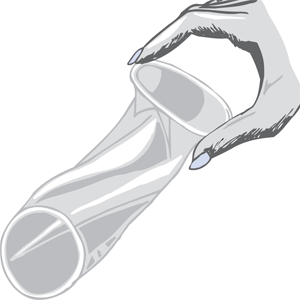
Condoms are a commonly used contraceptive device. It is a sheath or covering which fits over a man’s penis, and which is closed at one end. Mostly it is the male condom that is used. A type of female condom is also available. It is a female condom, or vaginal sheath, which is used by a woman and fits inside the vagina.Use of Condoms is very important in the prevention of Sexually Transmitted Diseases.
Male condom is made of latex or polyurethane. Latex condoms are more reliable. Most of the condoms are lubricated.  Some condoms are not lubricated at all, some are lubricated with a silicone substance, and some condoms have a water-based lubricant. The lubrication on condoms aims to make the condom easier to put on and more comfortable to use. It can also help prevent condom breakage. Some condoms and lubricants contain spermicide.
 
When using only put on a condom once there is a partial or full erection. If the penis is not circumcised, pull back the foreskin before rolling on the condom. You need to use a new condom every time you have sexual intercourse. Never use the same condom twice. When you have ejaculated or finished having sex, withdraw the penis before it softens. Make sure you hold the condom against the base of the penis while you withdraw, so that the semen doesn’t spill.All used condoms should be wrapped in tissue or toilet paper and thrown in the bin. Condoms should not be flushed down the toilet as they may cause blockages in the sewage system.
 Contraception

Fish has cardiovascular benefits

Fish has cardiovascular benefits
It was always known that Fish in diet has high benefit to health. Now it has been shown in a study that Fish indeed has cardiovascular benefits, but there are few buts:


  • How fish is cooked can make a dramatic difference in the heart benefits it provides. Compared with women who rarely or never ate fish, those who ate five or more servings per week had a 30% lower risk of developing heart failure — but only if the fish was baked or broiled.
  • If the fish was fried, it appeared to be harmful, not healthy.
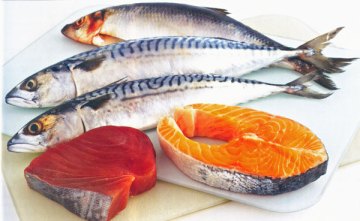
  • Some types of fish appear to be healthier than others. Eating dark, oily fish such as salmon and mackerel was associated with a lower risk of heart failure, whereas eating tuna fish or white fish such as sole and cod were not.
  • These types of fish may beneficial due to its high content of omega-3 fatty acids, good fats that appear to reduce the risk of heart disease by lowering inflammation, blood pressure, and cell damage. But it seems that the real benefit is not solely due to only the omega-3 but the benefit is from the whole Fish.
  • Pills of Omega-3 certainly are not going to give the same benefit.
Fish Fat fights Alzheimer’s disease 
Nutrition 
Medical Tidbits

Do not befriend the Betel-Nut

Do not befriend the Betel-Nut
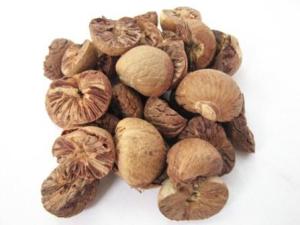
Millions of people in India chew the betel-nut (areca). It is a favourite after dinner stimulant and digestive. It is so popular that it forms an essential ingredient of many religious ceremonies.Betel-nut is chewed either alone, as mawa (mixture of lime, tobacco and betel-nut), in commercial preparations, or wrapped in pan. Many believe it to be a benign alternative to tobacco or alcohol. However, there is growing evidence that betel- nut chewing is a risk factor and may cause oral sub mucous fibrosis (OSF), a pre-malignant condition associated with oral cancer. Betel- nut chewing is also being implicated as a risk factor for cardiovascular diseases and in asthma.
Oral Submucous Fibirosis:  A recent house-to-house survey conducted in Bhavnagar district of Gujarat by the Tata Institute of Social Sciences, Mumbai, revealed that out of 164 cases of OSF identified, 160 chewed the betel-nut. Nearly 11 per cent of mawa users suffered from this condition. Nearly 85 per cent of those found to be chewing betel-nut and those with OSF were below 35 years of age!Researchers calculated that the age-adjusted relative risk amongst betel-nut users was about 60. This means that after considering age (as age is also a risk factor for OSF), the incidence of OSF among betel- nut users is 60 times higher than amongst non-users. The relative risk increased to about 75 times in mawa users as it contains tobacco, a known carcinogen. Thus, chewing betel-nut with tobacco further increases the risk of oral cancer.According to a report in British Medical Journal, the amount of copper found in betel-nut preparations is 10 times higher than the amount found in nuts (such as peanuts). This high copper content could be the reason why betel-nut is associated with OSF. Researchers tested the saliva of people who chewed a commercial betel-nut preparation and concluded that regular chewers would have up to 5 mg of copper released in their mouth every day. That is five times the amount of copper normally available in food. Ideally, daily diet should not contain more than 1.5 to 3 mg of copper. Although it is not clear how high copper levels can induce fibrosis, it is known that copper is associated with other fibrotic diseases such as seleroderma and liver fibrosis.Cardiovascular Diseases:

A study in the Asian population in London found raised homocysteine and reduced folate concentrations in 170 betel-nut chewers. High homocysteine levels is a known cardiovascular risk factor. A metabolite of the amino acid methionine, homocysteine in high levels can damage the inner lining of arteries and promote atherosclerosis. High levels of copper in betel-nut can also increase the activity of an enzyme known aslysyl oxidase which has a role in the formation of atheromatous plaques in major blood vessels. Alkaloids in betel-nut, such as arecoline, may play a contributing role in coronary artery spasm and predisposing to myocardial infarction.

Asthma:  The alkaloid arecoline is a major constituent of betel-nut and causes euphoric effects. Its high concentration in the circulation while chewing betel-nuts is believed to cause broncho-constriction in some asthmatic patients. Laboratory tests have revealed that arecoline causes dose-related contraction of human bronchial smooth muscle strips. In a double-blind study, inhalation of arecoline caused bronchoconstriction in all the asthmatic patients and in five controls.In Britain, the rate of hospital admission for acute asthma is higher among Asians than other groups in the population; betel-nut chewing is being perceived as one of the several factors that affect asthma control and severity of attacks.With these observations being made, there is a need to educate people about the problems they are likely to encounter if they befriend the betel-nut.