In vitro fertilization

In vitro fertilization
A technique by which an ovum is fertilized with sperm in a laboratory dish and subsequently implanted in a uterus for gestation is known as in vitro fertilization..In the late 1970s the widely publicized use of in vitro fertilization (IVF) gave new hope to many women with defective Fallopian tubes; in IVF, an ovum taken from the woman’s body is fertilized by the man’s sperm in the laboratory and then returned to the woman’s uterus. Use of this method has been growing rapidly.Women have also been implanted with the ovum of another woman after it was fertilized by IVF or regular artificial insemination techniques. In the 1990s, IVF was used to enable women well past menopause to become pregnant, with an egg donated by a younger woman; through this method a 63-year old woman in the U.S. gave birth in 1996.In the practice known as surrogate mothering a second woman is inseminated with the sperm of a man whose wife is infertile, to bear a child for the couple.
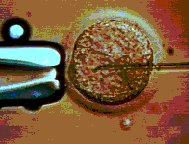
Patrick Christopher. 1913–1988. British physician with physiologist Robert Edwards perfected in vitro fertilization of the human egg, resulting in the birth (July 25, 1978) of world’s first “test-tube baby.” Later credited with over a thousand such births.

Lie detector Test

Lie detector Test
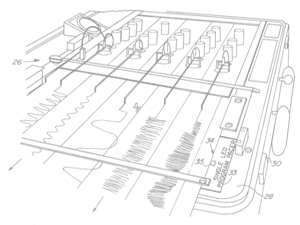
The first modern “lie detector” – Polygraph test was developed by John A. Larson, a medical student at the University of California in the USA, in collaboration with a police officer. It is called a polygraph because it is capable of recording blood pressure, pulse and respiration continuously and simultaneously.The police first used the polygraph as an interrogation device in 1924.

It is considered that physiological phenomenon such as blood pressure, pulse and respiration  are affected by a person’s emotional condition. These phenomenon are not generally under voluntary control.

A pneumograph tube is fastened around the subject’s chest. A blood pressure cuff is strapped around his arm. The operator puts questions to the the subject, changes in the physiological phenomenon are recorded on a moving graph paper as in an ECG machine. A long questionnaire is prepared in which loaded questions are mingled with a large number of innocuous questions.

Experts then analyze the data and correlate the subject’s response to specific questions. Then the experts decide on which questions the subject had lied and where he was truthful.

Though in use for almost for 80 years, the polygraph test’s reliability is not accepted universally. The results are not always judicially acceptable.

Garter Snake

Garter Snake

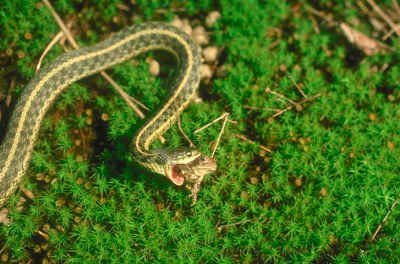
Garter SnakeA group of harmless snakes, the most common snakes in the U.S. Twelve species are widely distributed in the U.S.; garter snakes are also common in Canada and most of Mexico.Garter snake may attain a length of 1 m (3 ft) and a diameter of 2.5 cm (1 in).

The best-known garter snakes in the U.S. are the common garter snake and the ribbon snake.

The ribbon snake differs from other garter snakes in several ways. Its coloration is more intense; it is extremely slender, less than 1.2 cm (0.5 in) in diameter; it is always found near water; and it rarely produces more than 12 young in a litter.

 
They can be found in developed areas in parks, vacant lots, or backyards. Garter snakes have coarse, ridged scales and are named for the garter like pattern on the skin: Three stripes run the length of the dark brown or black body, one on either side and one along the back. They bear their young alive, averaging 20 in a litter.

Snake Bite

Bull Snake

Bull Snake

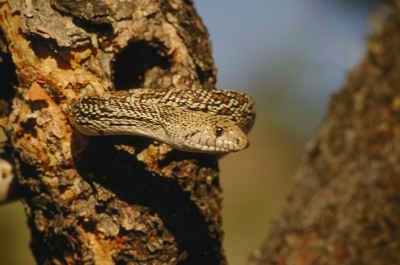
Bull Snake is a harmless snake and is named for its distinctive hiss, which sounds like a bull grunting.They are found in agricultural areas of the U.S., where they prey on rodents that destroy crops. They are whitish to pale brown with dark blotches and from 1.5 to 2.4 m (5 to 8 ft) long.

Three types of bull snakes are the common bull snake of the central U.S., the western bull snake of the West Coast, and the pine snake of the East and Gulf coasts.

Bull snakes are also sometimes called Gopher snake.

Family – Colubridae


Snake Bite

King Snake

King Snake – Constricting snake 

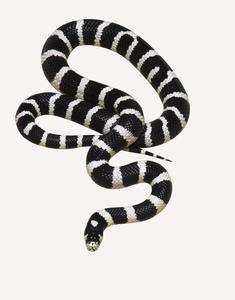
King Snake – Constricting snakeThese snakes squeeze their prey to death by coiling around it. They eat rodents, birds, and other snakes, including poisonous ones. Curiously, they are not affected by the venom of vipers. A common king snake is the chain snake, named for its chainlike yellow or white markings.
King snakes have Vertical contrasting stripes, rounded head, gentle disposition, eats other snakes. The most famous characteristic of the King Snake is its habit of eating rattlesnakes.
 

Snake Bite