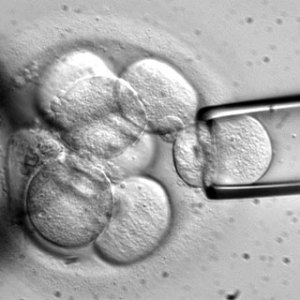
Stem Cell

Stem Cell

Stem cells are unique in a sense they are capable of developing and can give rise to almost all of the cells types of the body, such as muscle, nerve, heart, blood. Thus they hold great promise for both research and health care.  

While every cell has genetic information, the egg cell derived from a female after fertilization with a sperm is capable of developing into an entire human being. When the fertilized egg cell divides the first few cells are capable of growing into any part of the body. 

There are 220 different cell types found in the body of human beings. It is the biochemical signals that decide whether the stem cells are destined to become heart, brain or kidney. These ‘specialized’ cells with age and further multiplication loose this ability. Thus if captured at an early stage they can be manipulated in various ways to grow and form different types of tissues. A medical revolution can be created by manipulating the genes at this stage to correct diseases.

This research was conducted on early-stage embryos donated voluntarily by couples undergoing fertility treatment in an in vitro fertilization (IVF) clinic or from non-living fetuses obtained from terminated first trimester pregnancies. 

Stem Cell – Future prospects

  • Imagine a day when doctors can order up body parts from a lab to replace our ailing organs.
  • Imagine the possibility of doctors injecting special “smart” cells into a patient’s diseased heart to replace dying tissue.
  • Patients suffering from Parkinson’s disease, Alzheimer’s and juvenile-onset diabetes, multiple sclerosis may some day be treated of the basic defect of the underlying organ by implanting cells generated from the stem cells into the organ. In Alzheimer’s patients, for instance, large masses of diseased brain cells die off, and the patient loses the ability to function. From tests in mice, researchers know that by injecting stem cells into the brain, they can replace the dead tissue, which then takes over the functions of the old cells.
  • One of the oldest and deepest-held tenets of medicine is that nerve damage is permanent — no hope of recovery from spinal cord injury or stroke. Now molecular biology is proving this false. Several promising neural stem cells therapies have shown great hopes and are near clinical trials. Patients with accident spinal cord injury and brain cells damage due to stroke may one day be treated with much better result.
Scientists at Advanced Cell Technology in Worcester, Massachusetts, took a skin from Cow A, cloned it (by injecting the nucleus into a cow egg whose nucleus had been removed), then implanted the embryo in the uterus of Cow B. That embryo clone grew into a fetus, which, had it been born, would have been Cow C. But it was not born. The fetus was removed from the uterus and harvested for its tissues. These tissues from the clone were then put back into the original Cow A. It worked !!. These cells from the clone were not rejected by Cow A ! These cells organized themselves into functioning tissue such as kidney.

Its an amazing success. 

By this technology the advocates of cloning research are promising great possibilities for incurable diseases like Alzheimer’s disease, Parkinson’s disease, Spinal-cord injuries and innumerable conditions which stand incurable today.

All this is causing a big concern among those who consider this as “Manipulating Humanity”. We do not know where all this would lead us to. That day may not be far when humans too would be treated the same way as the Cows and Dogs.  

Stem Cells turned into Blood Cells

Scientists for the first time have been able to form blood cells from human embryonic stem cells. This advancement eventually may offer safe and inexhaustible source of blood for transfusion and also new treatment for many blood diseases.

This was done by researchers at University of Wisconsin in Madison. They could manage to direct the immature cells to form every type of regular blood cells – red blood cells, white blood cells and platelets. Because embryonic cells can be expanded without apparent limit the cell derived blood products could be created in virtually unlimited amounts. 

There is growing excitement in the field of stem cells research. The stem cells have the potential of transforming into any kind of tissue in the body. This may eventually lead to new ways of treatment for host of diseases. In the case of blood cells they could be used to treat illnesses such as leukemia and anemia.

The benefit of this research is not going to be available in a very near future, but certainly a big step has be taken towards something which we could not think about in recent past. Theoretically the new technology may eventually eliminate the shortage of blood transfusion.

 Stem Cells as biological pacemakersJohns Hopkins University researchers have found the first evidence that genetically engineered heart cells derived from human embryonic stem cells might one day turn out to be a promising biological alternative to electronic pacemakers used by hundreds of thousands of people worldwide.

Human embryonic stem cells were genetically engineered by the researchers to make a green protein, grown in the lab and then encouraged to become heart cells. They then selected clusters of the cells that beat on their own accord, indicating the presence of pacemaking cells.

These clusters when implanted into hearts of guinea pigs, triggered regular beating of the heart itself.

These implanted cells also responded appropriately to drugs used to slow or speed the heart rate, which electronic pacemakers can’t do.

But many challenges remain before this technique could be used for patients.

Chronic Granulomatous Disease 
Pancreas Cell Transplants
Teeth created from Stem Cells

HPV And Oral Cancer

HPV And Oral Cancer
The human papillomavirus (HPV), which is responsible for most cases of cervical cancer, may also cause a form of Oral Cancer.

Researchers from Johns Hopkins University also found some evidence that the throat tumours caused by HPV may be less deadly than forms of the cancer caused by smoking or alcohol.  The researchers could not say exactly how HPV, a sexually transmitted disease, would be present in people’s throats, but they said it could be spread through oral sex or even unwashed hands.

HPV related tumours were found to progress less rapidly than the other varieties. This could be because HPV-caused tumours may not invade deep tissues and spread as quickly as other tumours, the researchers say.

Genital Warts & HPV

Ringneck snake

Ringneck snake                                                                  Diadophis punctatus
Ring snakes are named so because of a yellow band around the neck. Its back is slate gray, black or brown with smooth scales and a satin-like appearance. They prefer moist woodlands as their habitat.These snakes are found in Canada and Mexico as well as the United States. They are a secretive snake rarely seen in the wild. They are very weak constrictors that feed on worm small salamanders lizards and occasionally small snakes. When threatened they coil up their tails and display their brightly colour under bellies which can be red, yellow and orange they use this as a defensive tactic. There are approximately a dozen different species of the Ring necked snake.  Ringneck Snake
Ringnecks are most likely to end up in someone’s basement. Ringneck snakes rarely bite, but may release a foul musk when handled. Although salamanders make up the bulk of their diet, ringnecks will also feed on earthworms, insects and, on occasion, fish.  Ringneck Snake

Relatively small snakes, they rarely bask in the open and are generally found under cover (rocks, logs, boards, debris) during the day. Like the salamanders on which they prey, ringnecks are usually nocturnal. They are most active in spring and fall and are rarely seen during summer. Females lay eggs.  Ringneck Snake

Snake Bite

Fox Snake

Fox Snake
Fox snake is a non poisonous snake. Fox snakes range from 36-54 inches in length when mature. The dorsal surface varies in color from a yellowish color to light brown, with dark blotches ranging in color from chocolate to black. The head also vary in color from brown to a distinctly reddish color. Fox snakes have a yellow colored belly.  
The eastern fox snake (Elaphe gloydi) can be found in the marshes bordering Lakes Erie and Huron .  
The western fox snake (Elaphe vulpina) lives in farmlands, prairies, stream valleys, woods and dune country directly west of Michigan including Wisconsin, Illinois, and Iowa.The eastern fox snake can be differentiated from the western fox snake by the number of blotches present on the dorsal surface. Eastern fox snakes have fewer blotches (average 34) than do western fox snakes (average 41).  
 The eastern fox snake feeds on small mammals, frogs, birds, and occasionally bird eggs. Eastern fox snakes are constrictors, which means they kill by wrapping their bodies around the chest of their prey and squeezing until the prey eventually dies. Fox snakes lay anywhere from 7 to 29 eggs in June or July, which hatch in late summer.One of the defence mechanisms of the fox snake is to vibrate its tail as a warning to potential predators. This creates a sound similar to that of a rattlesnake by the rustling of the leaves beneath the snake. For this reason many people mistake the fox snake for a rattlesnake.

Snake Bite

Gopher Snake

Gopher Snake                                                   Family Colubridae
It is harmless snake to humans and feeds on rodents and other reptiles, including venomous snakes and small turtles.It is a common name for eastern indigo snake. It is named gopher because of its habit of laying eggs in mammal or gopher tortoise burrows.  Gopher Snake 
It is native to the southeastern U.S.It is a blue-black reptile.It is the longest snake in eastern North America, growing to about 3 m (about 10 ft).  Gopher Snake
Bull snakes are also sometimes called gopher snake.  Gopher Snake

Snake Bite