Familial Partial Lipodystrophy

Familial Partial Lipodystrophy

Familial partial lipodystrophy – Dunnigan Variety is a rare genetic disease. It is transmitted as an autosomal dominant trait. Both males and females of several generations may be affected. The possibility of transmission from an affected person to the offspring is 50 %.

There is another variety of FPLD called Kobberling variety. In this Loss of fat is limited to the extremities with normal amounts of fat in the face and normal or even excess fat in the truncal area.

Clinical features

  • Normal appearance at birth.
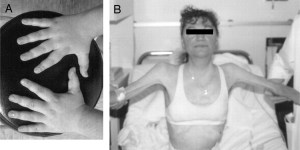
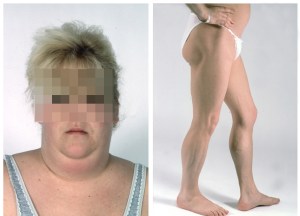
  • Absence of subcutaneous fat from the upper and lower extremities during childhood or puberty. The trunk, arms and legs are affected by fat loss while the neck and face have more than normal fat deposits. A “buffalo hump” can be observed between the shoulder blades.
  • The arms and legs appear very muscular.
  • In women, lack of fat in the buttocks is striking — flat hips.
  • In some patients, excess fat may accumulate in the face and neck, causing them to have a double chin.
  • They usually have high levels of serum triglycerides and low HDL cholesterol levels.
  • Approximately one-third of these patients may have acanthosis nigricans.
  • The onset of glucose intolerance or diabetes mellitus usually occurs after age 20.
  • Some women may have irregular menstrual cycles and polycystic ovaries.

Sickle cell anemia

Sickle cell anemia

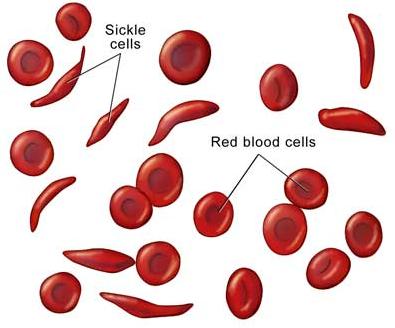
Sickle cell anemia is an inherited disease in which the Red Blood Cells get deformed to abnormal crescent shape.
Haemoglobin is a protein inside red blood cells that carries oxygen. Sickle cell anemia is caused by an abnormal type of hemoglobin called hemoglobin S. Hemoglobin S distorts the shape of red blood cells, especially when exposed to low oxygen levels. Hemoglobin S distorts the shape of red blood cells, especially when exposed to low oxygen levels. The distorted red blood cells are shaped like crescents or sickles. These fragile, sickle-shaped cells deliver less oxygen to the body’s tissues. They can also clog more easily in small blood vessels, and break into pieces that disrupt healthy blood flow.
Sickle cell disease is much more common in people of African and Mediterranean descent. It is also seen in people from South and Central America, the Caribbean, and the Middle East. This disease is inherited from both parents. Someone who inherits the hemoglobin S gene from one parent and normal hemoglobin (A) from the other parent will have sickle cell trait. People with sickle cell trait do not have the symptoms of true sickle cell anemia.
In several sections of Africa, the prevalence of sickle cell trait (heterozygote) is as high as 30%.
The sickle cell disease gene is present in approximately 8% of black Americans. More than 2 million people in the United States, nearly all of them of African American ancestry, carry the sickle gene.
Sickle cell disease is present mostly in blacks. But is also found, with much less frequency, in eastern Mediterranean and Middle East populations.
The male-to-female ratio is 1:1.
It is a lifelong condition. It first manifests in the second half of the first year of life and persists for the entire lifespan.

Symptoms
The abnormality of the RBCs in this disease results in serious infections, chronic anemia, and damage to body organs. Each person can have different forms of complications from the disorder. Some children remain relatively healthy, while others are frequently hospitalized.

The presenting symptoms of this disease involve pain and anemia.
For the first 6 months of life, infants are protected largely by elevated levels of Hb F (fetal haemoglobin). Patients have painful episodes lasting for hours or days. These episodes affect bones of back, long bones and chest. Some patients have episodes every few years and some have many episodes every year.

The most common clinical picture during adult life is vasoocclusive crisis. The crisis begins suddenly, sometimes because of some infection or temperature change, such as an air-conditioned environment during a hot summer day. Severe deep pain is present in the long bones. The abdomen is affected with severe pain resembling acute abdomen. Pain may be accompanied by fever, malaise, and leukocytosis (high white cell count ). The crisis may last several hours to several days and terminate as abruptly as it began.
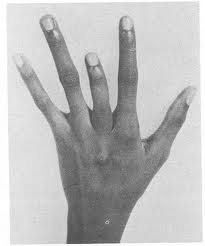
Shortened finger of African Adult male with sickle cell Disease

During childhood and adolescence, the disease is associated with growth retardation, delayed sexual maturation. The spleen enlarges in the latter part of the first year of life. The spleen may undergoes repeated infarction. Over time, the spleen becomes fibrotic and shrinks. Another problem occurring in infancy is hand-foot syndrome. This is a painful swelling of the dorsum of the hand and foot.

Central nervous system involvement may cause stroke with neurological deficit.

The heart is involved due to chronic anemia and and microinfarcts may damage it. Repeated Blood transfusion causes hemosiderin deposition in the myocardium.
Formation of Bile Stones due to chronic hemolysis with hyperbilirubinemia may cause Cholicystitis.

The lungs develop areas of microinfarction. The resulting areas that lack oxygenation aggravate the sickling process. Pulmonary hypertension may develop.
Leg ulcers are a chronic painful problem. They result from minor injury to the area around the malleoli.
Priapism (painful erection of penis) is a troubesome complication and tends to occur repeatedly. When it is prolonged, it may lead to impotence.
Spontaneous abortions may occur those who get pregnant.

Treatment

No cure is available for this disease.

The goals of treating sickle cell anemia are to relieve pain, prevent infections, organ damage, and strokes, and control other complications.
Children who are diagnosed with this disease need antibiotics to prevent infections and their parents need to be educated in managing the child.
Mild pain can be treated at home but for severe pain hospital treatment is needed. Dehydration and infections have to be managed. Oxygen therapy may be needed.

Hydroxyurea: can be used in patients of Sickle Cell Anaemia. It prompts the body to make fetal hemoglobin. Fetal hemoglobin, or hemoglobin F, is the type of hemoglobin that newborns have. In people who have sickle cell anemia, fetal hemoglobin helps prevent red blood cells from sickling and improves anemia. Given daily, hydroxyurea reduces how often painful sickle cell crises and acute chest syndrome occur. Many people taking hydroxyurea also need fewer blood transfusions and have fewer hospital visits.

Blood Transfusion is needed to treat anaemia and complications.
Infections can be a major complication of sickle cell anemia throughout life, but especially during childhood. Infection in children can be managed by giving daily doses of antibiotics.
All routine vaccinations (including a yearly flu shot), plus the pneumococcal vaccine is important.
Sickle cell anemia can damage the blood vessels in the eyes and the retinas. Regular eye checkup is needed.
Leg ulcers due to sickle cell anemia can be very painful. Ulcers can be treated with cleansing solutions and medicated creams or ointments.
Gallbladder surgery may be needed if the presence of gallstones leads to gallbladder disease.
Priapism (a painful erection in males) can be treated with fluids, medicines, or surgery.
Young children who have sickle cell anemia should have regular checkups with a hematologist.

New Treatments: Research on blood and marrow stem cell transplants, gene therapy, and new medicines for sickle cell anemia is ongoing. The hope is that these studies will provide better treatments for the disease.

New Medicines:

Decitabine, like hydroxyurea, this medicine prompts the body to make fetal hemoglobin.

Adenosine A2a receptor agonists, these medicines may reduce pain-related complications.

5-HMF. This natural compound binds to red blood cells and increases their oxygen. This helps prevent the red blood cells from sickling.

Patau Syndrome

Patau Syndrome

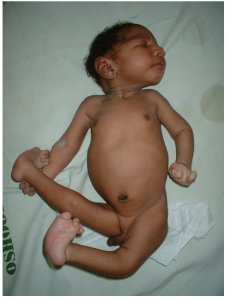
Patau syndrome is the least common and most severe of the viable autosomal trisomies. It is a genetic disorder in which a person has three copies of genetic material from chromosome 13, instead of the usual two copies.

Trisomy 13 occurs in about 1 out of every 10,000 newborns. Most cases are not inherited. Instead, the events that lead to Trisomy 13 occur in either the sperm or the egg that forms the fetus.

A significant number of cases that are trisomic for chromosome 13 end in spontaneous abortion, foetal demise, or stillbirth. More than 80% of children with trisomy 13 die in the first month.  Only one in 20 children survive longer than 6 months.

Symptoms

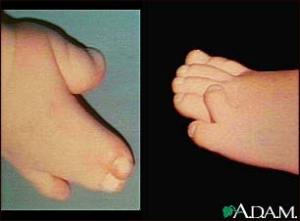
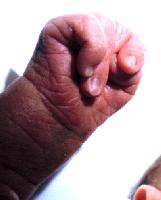
  • Extra fingers or toes (polydactyly). Clenched hands with outer fingers on top of the inner fingers.
  • Deformed feet, known as rocker-bottom feet
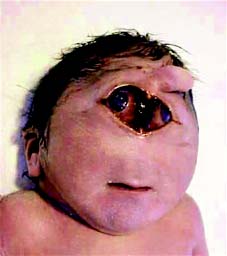
  • Severe mental deficiency. Small head, failure of the brain to divide into halves during gestation.
  • Facial defects such as small eyes, absent or malformed nose, cleft lip and/or cleft palate
  • Heart defects in 80% of individuals.
  • Kidney defects
  • Hernias: umbilical hernia, inguinal hernia.
  • Undescended testicle.

Edward's syndrome

Edward’s syndrome

Edward’s syndrome was named after Dr. John Edward
Also called Trisomy 18. It is a form of rare genetic disorder where a portion of a person’s chromosome 18 is duplicated. Children with the syndrome inherit three instead of two, copies of chromosome eighteen.

The majority of people with the syndrome die during the foetal stage. Infants who survive experience serious defects and commonly live for short periods of time. Approximately 5-10% of children with Edward’s syndrome survive beyond their first year of life and these have severe developmental disabilities.

The syndrome occurs in about 1 in 5000 births. Edward’s syndrome affects more boys than girls. Women older than the age of thirty have a greater risk of bearing a child with the syndrome.

Ninety-five percent of children with Edward’s syndrome have what is referred to as, ‘full-trisomies,’ while two-percent are due to translocations where only a portion of an extra chromosome is present. Three-percent of children with Edward’s syndrome have what is referred to as, ‘mosaic tristomies,’ where the extra chromosome is there, but not in every one of the child’s cells.

Most cases of trisomy 18 are not inherited, but occur as random events during the formation of eggs and sperm. An error in cell division called nondisjunction results in a reproductive cell with an abnormal number of chromosomes.

Symptoms

.

.

.

.

.

.

Majority die during the foetal stage.

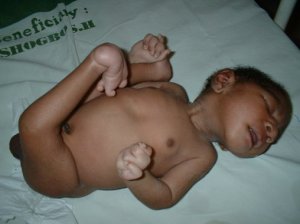
  • Heads are unusually small, while the back of their head is prominent. Their ears are low-set and malformed, and their mouths and jaws are small.
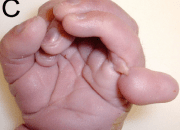
  • Hands are often clenched into fists, with their index finger overlapping their other fingers.
  • Feet may be clubfeet, as well as toes that may be fused or webbed.
  • Many types of congenital heart disease like atrial septic defect, ventricular septal defect, or patent ductus arteriosus may be present.
  • Inguinal or umbilical hernia, abnormalities of their urogenital system, malformed kidneys, or undescended testicles in males may be seen.

Dementia

Dementia


All of us gradually slow down both physically and mentally with the passage of time as we get older.

There is a difference between occasional forgetfulness and many diseases which are cause of Dementia. Some indications are helpful in differentiating the conditions.

Dementia is a clinical syndrome characterized by loss of previously acquired intellectual functions in the absence of impairment of consciousness.

The term dementia is mostly associated with elderly but some disorders occur in the mid life which have Dementia as a prominent feature. Such diseases are also collectively called Pre-senile Dementia and these diseases also have a strong familial disposition.

Main features of Dementia
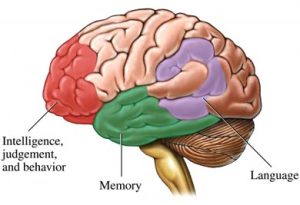
  • Loss of general intelligence
  • Memory impairment
  • Personality changes
  • Emotional changes

Loss of general intelligence:

Judgment and problem solving ability is reduced. Thinking is slow.

Memory impairment:

Minor degree of memory impairment is often the first sign of this disease. Forgetfulness in relation to day to day work and concerning personal possessions is prominent. People’s names are forgotten, appointments are missed. Declining memory may lead to secondary delusions.

Personality changes:

Decline in personal manner and social awareness. Behavior may become rude, tactless, and may be insensitive to feeling of others. Episodes of aggression, sexual indiscretion or even infringement of law may be seen. Deterioration in personal hygiene, urinary and fecal incontinence are common. General decline in interest of the surroundings. Patient may sit for hours without initiating any purposeful activity.

Emotional changes: Mood changes, depression, anxiety, irritability may be prominent in the early stages. In advanced dementia the emotional reaction may be blunted and patients becomes incapable of responding to emotionally charged events in their environment.

Things to look for:

  • Family history:  Some diseases run in families.  Some diseases have genetic predisposition.
  • Signs of memory loss and language difficulties. Is the person losing words, or forgetting the names of common objects? Has he or she forgotten how to do simple mathematics?
  • Is the loss of memory for recent events only?
  • Confusion and loss of attention span. Is the person unable to focus on a normal conversation?
  • Inappropriate behaviour and impaired judgment. If the person begins to act inappropriately or significantly out of character in social situations.
  • Physical coordination problems and physical confusion. People with senile dementia often forget how to do simple learned tasks that have been part of their daily life for many years.

Talking to the person and taking detailed history helps in differentiating and diagnosing the cause of dementia.

Causes of Dementia

Degenerative diseases:

Space occupying lesions:

  • Cerebral tumour
  • Subdural haematoma

Infections:

AIDS, Cerebral syphilis, Viral encephalitis

Others:

Post Traumatic dementia, Boxer’s encephalopathy, Secondary to Head Injury. Chronic Traumatic Encephalopathy
Cerebrovascular disease, Cerebral emboli.
Hypothyroidism, Hypopituitarism.
Liver disease, Renal failure, Alcoholism
Vitamin deficiency: Folic acid, B12

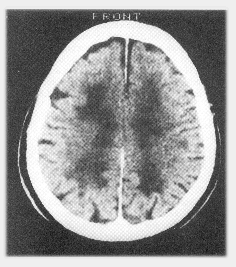
Cerebrovascular dementia: CT brain scan showing multiple diffuse areas of cerebral infarction.

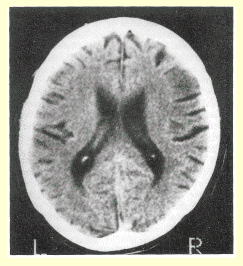
Alzheimer's disease: CT scan of brain showing cortical atrophy, widened sulci, and enlarged lateral ventricles.

Drug Therapy in Dementia

Dementia is a complex disorder which causes impairment in all areas of mental functions

  • Memory and intellectual impairment ( cognitive )
  • Anxiety and depression ( mood )
  • Paranoia and Hallucination ( perception )
  • Agression or withdrawal.

Various neurotransmitters are said to be involved in the causation of Dementia –

  • Acetylcholine
  • Dopamine
  • Serotonin

Drugs for Cognitive and functional impairments in Dementia

These drugs increase the availability of Acetylcholine.
Tacrine
Rivastigmine
Donepezil
Newer drugs in future – Venlacrine,Galanthamine,Hyperazine.

Brain blood flow enhancers

These drugs increase blood perfusion and redistribute blood in the deficient areas.
Cyclandelate
Hydergine

Miscellaneous Drugs

Piracetam – a metabolic enhancing agent of the brain.
Selgilne- a MAOinhibitor, which is used in Parkinson’s disease is also useful in Alzheimer’s disease.
Aspirin and Other Anti inflammatory agents (NSAIDS) have also been shown to slow down the process of dementia.
Oestrogen replacement therapy may be helpful in postmenopausal women with dementia.
Ginkgo biloba
Brahmi
Ashwagandha
Researchers found that taking vitamins C and E might help protect the aging
mind from decline in cognitive function, and some kinds of dementia.

Chronic Traumatic Encephalopathy
Inability to detect Sarcasm may be early sign