Ecthyma

Ecthyma
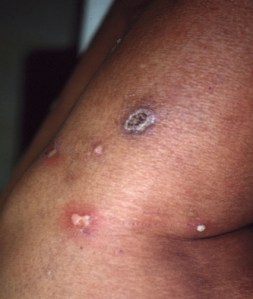
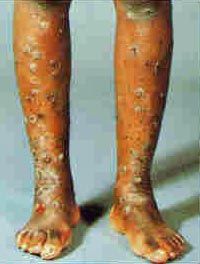
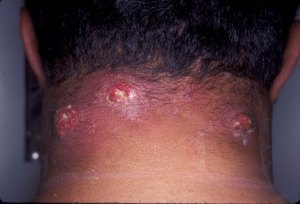
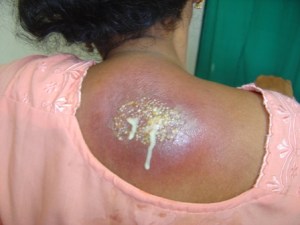
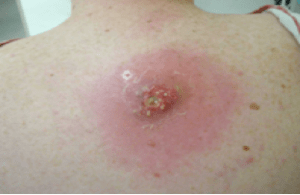
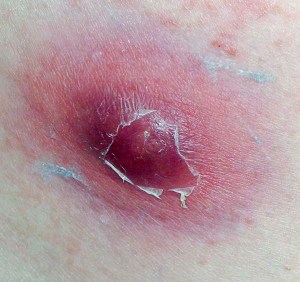
Ecthyma is a skin infection similar to impetigo. It is often called “deep impetigo” because it occurs deep inside the skin. Ecthyma extends into the dermis. Ecthyma is most often caused by the bacteria streptococcus.
   
The lesion looks like small blister with a red border that may be filled with pus. The blister is similar to that seen in persons with impetigo, but the infection spreads much deeper into the skin. There is permanent skin damage with scarring in case of Ecthyma.Treatment consists of local and systemic Antibiotics.
Skin Diseases
Impetigo

Furunculosis

Furunculosis
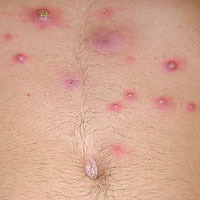
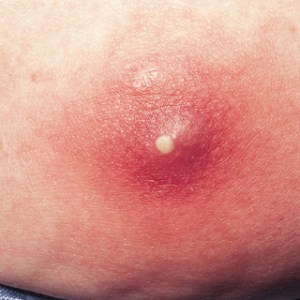
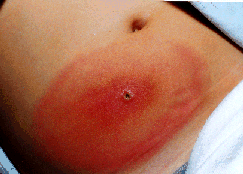
 A boil or furuncle is infection of hair follicle. It is almost always caused by infection by the bacterium Staphylococcus aureus, resulting in a painful swollen area on the skin caused by an accumulation of pus and dead tissue.
   
Boil is a pus filled lump around hair follicle and is tender and very painful. They can be very small or may be very large of golf ball size. Yellowish point is seen at the centre of the lump when it is about to discharge of pus. A recurring boil is called chronic furunculosis. A carbuncle occurs when a group of hair follicles next to each other become infected. It is like multiple boils.
   
If you develop recurring boils, your may have to be investigated to look for an underlying cause. For example, to check if you have a poor immune system or are you a Diabetic? Diabetics are prone to get a Carbuncle.
   
Most of the furunculosis are mild infections and resolve easily. At times the infection may spread through blood stream and may cause serious problems. Abscess of the skin, spinal cord, brain, kidneys, or other organs may occur.Boils should not be preferably squeezed especially those on the face. If large, incision and drainage of pus may have to be done especially in case of a Carbuncle. Antibiotics have to be given. 

Cellulitis

Cellulitis
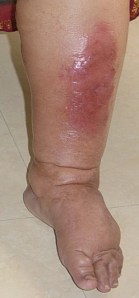
Cellulitis is  a bacterial infection of Skin and tissue beneath it. Cellulitis usually begins in a small area and then spreads. The spread of infection may give rise to generalized symptoms of infection. Fever may be a manifestation of the generalized reaction.

Inflammation of subcutaneous tissue would cause local redness, warmth and pain. Tender red streaks may be seen. Regional lymph nodes may be enlarged and tender.

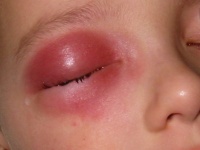
Orbital Cellulitis could be dangerous.

The main bacteria responsible for cellulitis are Streptococcus and Staphylococcus. Other bacteria may also cause cellulitis.

Treatment is by: Systemic antibiotics and anti-inflammatory drugs.


 Skin Diseases

Herpes Simplex

Herpes Simplex
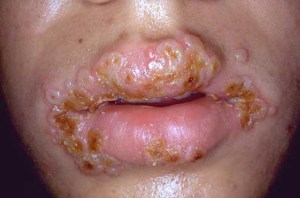
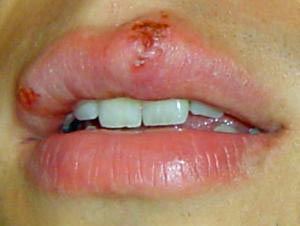
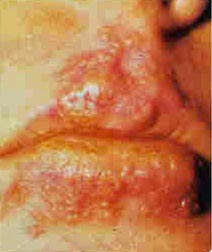
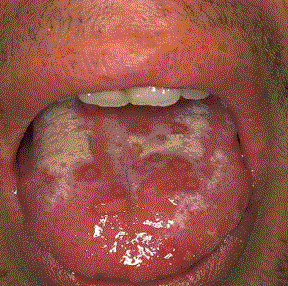
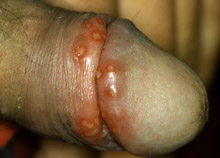
Herpes Simplex is caused by a Herpes Simplex Virus (HSV). HSV-1 & HSV-2. HSV-1 causes Oral Herpes – sores in mouth or face. Cause Infection of the eye. It can also lead to infection of the lining of the brain -meningoencephalitis.HSV-2 causes Genital Herpes – affects genital, buttocks or anal region. Sexually transmitted.
   
Mothers can infect newborn during vaginal delivery especially if having active disease during childbirth. However, 60 – 80% of HSV infections acquired by newborns occur in women who do not have symptoms of HSV infection or a history of genital HSV infection. The virus can spread even when sores are not present.
   
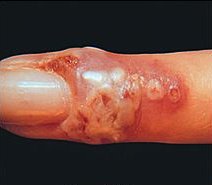
A finger infection, called herpetic whitlow, is another form of HSV infection. It usually affects health care providers who are exposed to saliva during procedures.
   
Most people have outbreaks several times a year. Over time, you get them less often. HSV is never eliminated from the body, but stays dormant and can reactivate, causing symptoms.

Treatment: Some cases are mild and may not need treatment. Those needing treatment require antiviral medications such as acyclovir, famciclovir, and valacyclovir.

 Skin Diseases
Herpes simplex virus type 2 infection was one of the strongest risk factors for HIV acquisition among men who have sex with men.

Tinea Versicolor

Tinea Versicolor, Pityriasis Versicolor
This disease is caused by a fungus Pityrosporum ovale.   
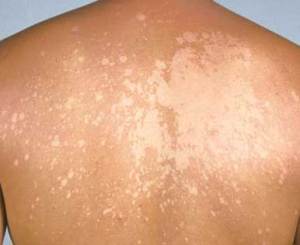
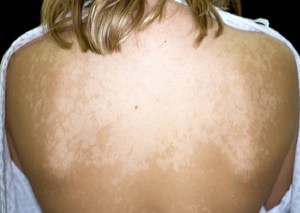
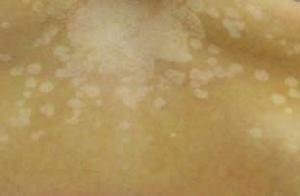
Most common sites are the back, underarms, upper arms, chest, and neck. It is a superficial fungal disease which tends to recur during warm months.The disease looks like patches of discolored skin with sharp borders and fine scales. Often dark reddish-tan, hypopigmented or hyperpigmented patches.  
Treatment consist of application of Antifungal medications to skin. These medications include clotrimazole, ketoconazole, and miconazole. Oral medications may also have to be given.Local application of selenium sulfide shampoo 1% or ketoconazole shampoo is also effective.

Oral preparation of ketoconazole and  itraconazole are also given and are very effective.

 
 Skin Diseases