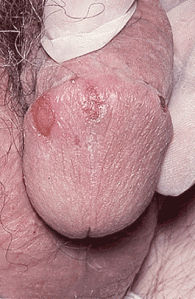
Lyme disease

Lyme disease
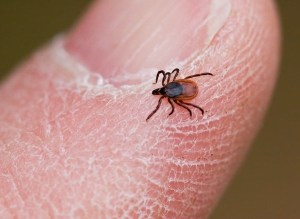
Lyme disease discovered in 1975. Lyme disease is a serious illness caused by pin-sized ticks that live in wooded and grassy areas.
Organism causing this disease is Borrelia burgdorferi
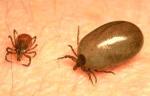
Lyme bacterium needs no iron.
The bacterium that causes Lyme disease has been identified as the first disease-causing germ that does not need to take iron from the blood stream of its host. Other bacteria that cause disease have evolved a strategy to scavenge from the blood of victims the iron that is essential to their survival. Although iron is abundant in humans, the amount of free iron is well below the levels required to support the growth of most bacteria. But Borrelia burgdorferi, which causes Lyme disease, apparently evolved a biological strategy that does not need iron, thus avoiding the problems that other bacteria have in getting iron from the blood stream. In fact, iron is extremely toxic to it.
How does it present ?
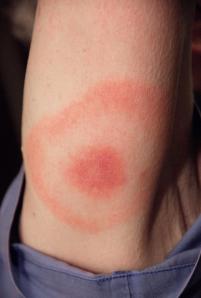
Starts with a typical bull’s-eye rash. Then comes fatigue, chills, fevers and joint pain that can persist for weeks. Some people develop serious arthritis. If untreated, Lyme disease also can severely damage the heart and nervous system.
The disease can even present with cardiac and neurological problems like carditis or Cranial nerve palsies, Chronic Lymphocytic Meningitis, Motor or Sensory Rediculitis, Encephalitis or Myelitis.
How Best to Protect
Until now, doctors’ best advice was: Use insecticide containing the chemical DEET. Check yourself and your children regularly for ticks. Wear long sleeves and pants tucked into socks or boots when venturing into tick-prone areas like unmowed grass or bush.
But that last bit of advice is unrealistic. Ticks are most active in the summer when people are stripping down to shorts and bare feet. And it’s not just campers, hikers or utility workers stomping through the bush who are at risk. Many people in Lyme-plagued areas are exposed in their own well-manicured back yards, just sitting in the grass or weeding the garden.
Till recently there was no other preventive measure to secure protection against Lyme disease.
Vaccine for Lyme disease: In December 1998, the Food and Drug Administration approved the world’s first Lyme vaccine, SmithKline Beecham’s LYMErix. Now doctors are advising anyone age 15 to 70 who lives in Lyme-endemic states and spends time outdoors to consider being vaccinated.It requires two shots given about a month apart, and then a third shot a year later. After the three-shot series, LYMErix offers about 80 percent protection from Lyme disease. But after just the first two shots, the vaccine is only about 50 percent protective.
Tick checks recommended in high risk areas.
Don’t panic if you get bitten by a tick without being vaccinated. All ticks don’t carry Lyme, and they have to feed on you for about 48 hours before they can transmit the disease. It takes that long for the Lyme bacteria hibernating in a tick’s gut to activate and move into the salivary glands, where it’s injected into a person. If you do regular tick checks each day and remove them, chances are you won’t be infected. The bite itself is not enough.The vaccine, blocks Lyme by creating antibodies that recognize an outer protein of the bacteria in the tick’s saliva, neutralizing it at skin level.
Treatment: Early cases can be treated with Tetracycline or Erythromycin. Late cases or those with Neurological involvement need treatment with Cephalosporin like Cefotaxime.
 Diseases & Conditions

Cystic Fibrosis

Cystic Fibrosis
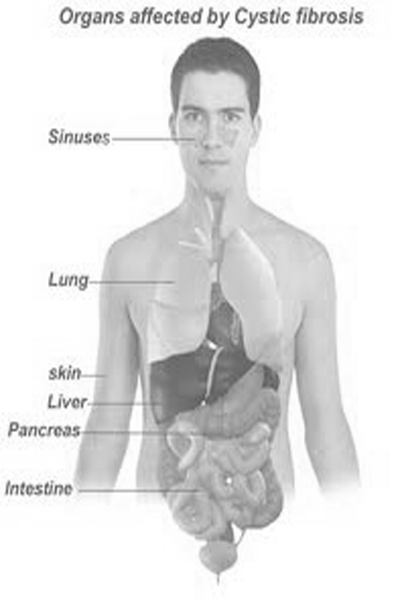
Cystic Fibrosis is an inherited disease of secretory glands that make mucus and sweat. Cystic fibrosis mostly affects the lungs, pancreas, liver, intestines, sinuses, and sex organs. In this disease the mucus made by glands is thick and sticky.
The mucus in the lungs blocks the airways and causes repeated bacterial infections to damage the lungs. Over time, these infections can severely damage the lungs.
The secretions of pancreas gland too become thick and block the ducts in the gland thus preventing the flow of the digestive enzymes to the intestines where they have to help in the digestive process. Thus the digestion of food in the intestines is hampered resulting to deficient absorption of proteins and fats and causing vitamin deficiency and malnutrition because nutrients leave your body unused. It also can cause bulky stools, intestinal gas, a swollen belly from severe constipation, and pain or discomfort.
Cystic Fibrosis causes the sweat to become too salty and as a result the body loses too much of salt while sweating causing dehydration, weakness, low blood pressure and many related problems due to loss of salt.
Infertility in men, Diabetes, osteoporosis are also problems in this disease. It also makes harder for women to get pregnant.
Those who have this disease need to inherit faulty genes from both their patents.A defect in the CFTR gene causes cystic fibrosis. This gene makes a protein that controls the movement of salt and water in and out of body’s cells. In people who have cystic fibrosis, the gene makes a protein that doesn’t work right. This causes thick, sticky mucus and very salty sweat.Every person inherits two CFTR genes—one from each parent. Children who inherit a faulty CFTR gene from each parent will have cystic fibrosis.Children who inherit a faulty CFTR gene from one parent and a normal CFTR gene from the other parent will be “CF carriers.” Cystic fibrosis carriers usually have no symptoms of cystic fibrosis and live normal lives. However, carriers can pass the faulty CFTR gene on to their children.Cystic fibrosis is one of the most common inherited diseases among Caucasians.

Symptoms

  • Most children with CF are diagnosed by age 2. A small number, however, are not diagnosed until age 18 or older. Symptoms differ from person to person depending upon the severity of the disease.
  • Symptoms in new born include: No bowel movements in first 24 to 48 hours of life. Salty tasting skin.

  • Severe constipation and pain abdomen. Increased gas, bloating of abdomen. Nausea and loss of appetite. Pale or clay coloured stool, foul smelling, have mucus. Stool float in water.
  • Weight loss
  • Frequent bouts of bronchitis and pneumonia. Lung infections caused by unusual germs that don’t respond to standard antibiotics. Lung infection with Pseudomonas is more common in patients of Cystic Fibrosis. As cystic fibrosis gets worse, more serious complications develop, such as pneumothorax , or collapsed lung; or bronchiectasis.
  • They develop nasal polyps.
  • As cystic fibrosis gets worse, other complications may occur like: Pancreatitis, Rectal prolapse, Liver disease , Diabetes, Gallstones.
  • Men who have cystic fibrosis are infertile because they’re born without a vas deferens. This is the tube that delivers sperm from the testicle to the penis.
  • A woman who has cystic fibrosis may have a hard time getting pregnant because of mucus blocking her cervix or other cystic fibrosis complications.
  • Because of excessive salt loss: Dehydration , Increased Heart Rate, tiredness, weakness, decreased blood pressure.
  • Low bone density causing osteoporosis. Late in disease, Clubbing of fingers and toes.

Tests

  • A genetic test shows whether a newborn has faulty CFTR genes.
  • Tests to show the functions of pancreas.
  • Sweat Test: It measures the amount of salt in sweat. Sweat is collected on a pad or paper and then analyzed. High salt levels confirm a diagnosis of cystic fibrosis.
  • If you’re pregnant, prenatal genetic tests can find out whether your foetus has cystic fibrosis. These tests include amniocentesis and chorionic villus sampling.

Treatment

Consists of managing the various problems created by this disease.

Chest Infection needs special attention. Various measures towards softening the mucus in the lungs have to be taken. Chest Physical Therapy (CPT) is directed towards helping in softening the mucus in the lungs so as to help in coughing it out. Breathing techniques also help dislodge mucus so you can cough it up.

Oral pancreatic enzymes to help you digest fats and proteins and absorb more vitamins.

Supplements of vitamins A, D, E, and K to replace the fat-soluble vitamins that the intestines can’t absorb.

High-calorie and High Salt diet.

Most cystic fibrosis patients born today live to their mid-30s, but that’s an average. Some succumb to the disease before their 10th birthday, while others live into their 50s.

We already know which gene causes cystic fibrosis, but to a large extent that gene does not by itself explain how severe the condition will be.

Recently, researchers were able to identify two genes on chromosome 11 and also five genes on chromosome 20 linked to severe cases of the disease.

The study was published in Nature Genetics

Pityriasis alba

Pityriasis alba
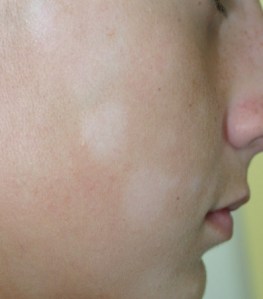
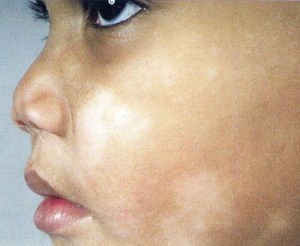
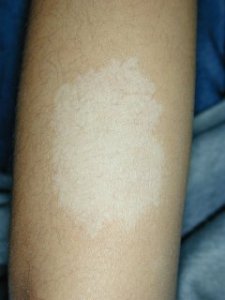
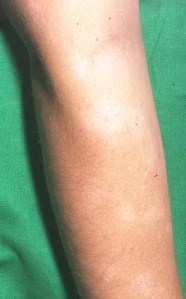
Pityriasis alba is a common skin condition mostly occurring in children and usually seen as dry, fine-scaled, pale patches on the face.
   
The condition mostly lasts for a year or so. It may resolve when the child reaches puberty.  The exact cause is not known. Expected reasons are heat, humidity, detergents or soaps. Children at higher risk for pityriasis alba include those with: Asthma, Hayfever (allergic rhinitis), Eczema (atopic dermatitis) and Dry skin (xerosis).
   
Treatment: Use non-soap cleansers or moisturizing soaps. Apply moisturizers. To use petroleum jelly like Vaseline. To avoid sun exposure and wear sunscreen.  Over-the-counter hydrocortisone cream may be applied sparingly for 3–7 days.
 Skin Diseases

Melasma

Melasma or Chloasma or Pregnancy mask
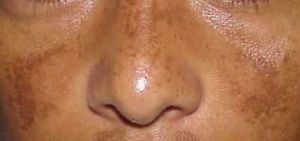
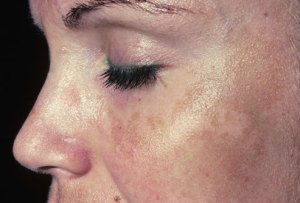
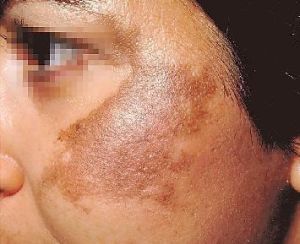
Melasma is a very common patchy brown, tan, or blue-gray facial skin discoloration.
   
Women with brownish skin tones are more prone to get it. It is especially common in pregnant women, women who are taking birth control pills, and women taking hormone replacement therapy during menopause. Sun exposure is also a strong risk factor for melasma. The condition is particularly common in tropical climates.
   
Melasma does not cause any other problem except cosmetic reasons for a women to get rid of it. A uniform brown color is usually seen over the cheeks, forehead, nose, or upper lip. It is mosty symmetrical.Treatment: Melasma goes of its own after pregnancy or after stopping the oral contraceptive pills.Creams containing tretinoin, kojic acid, have been shown to improve the appearance of melasma. 2% hydroquinone creams, Sunscreen, Sun avoidance all help.
Skin Diseases

Lichen Planus

Lichen Planus
Lichen planus is a disease in which there is an itchy rash on the skin or in the mouth. The exact cause is not known, it is said to be due to an allergic or immune reaction.
   
It may be associated with exposure to Chemicals, Dyes or some medications. Risk factors also include Hepatitis C. Uncommon in children.
   
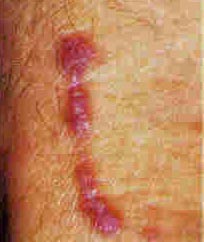
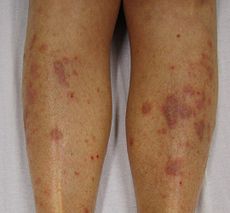
The lesions are Purplish, Itchy, flat topped papule on flexor aspects of forearms, trunk and extensor aspects of legs. Lesions have distinct, sharp borders.
   
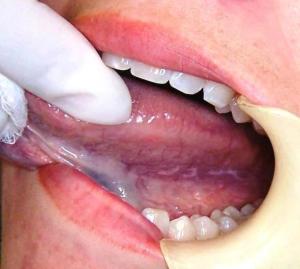
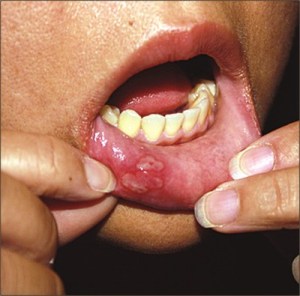
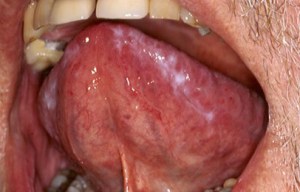
Mouth lesion is: Tender or painful, Located on the sides of the tongue or the inside of the cheek. May be on the gums.
   
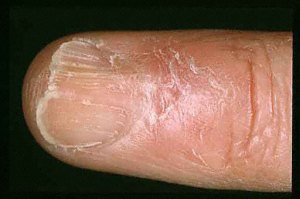
Other symptoms include: Dry mouth, Hair Loss, Metallic taste in the mouth, Ridges in the nails.

Treatment: Topical or Oral corticosteroids. Immune suppressing agents like cyclosporine in severe cases.

 Skin Diseases