
| Chlorine |
Chlorine was Discovered in 1774 by Carl Wilhelm Scheele.Chlorine gas is two and one half times as heavy as air, has an intensely disagreeable suffocating odor, and is exceedingly poisonous. In its liquid and solid form it is a powerful oxidizing, bleaching, and disinfecting agent.In nature it is only found combined with other elements chiefly sodium in the form of common salt – NaClIt is an essential microutrient for higher plants. Growth suffers if the amount of chloride in the soil fall below 2 ppm. air, has an intensely disagreeable suffocating odor, and is exceedingly poisonous. In its liquid and solid form it is a powerful oxidizing, bleaching, and disinfecting agent.In nature it is only found combined with other elements chiefly sodium in the form of common salt – NaClIt is an essential microutrient for higher plants. Growth suffers if the amount of chloride in the soil fall below 2 ppm. |
Chlorine is an important chemical in water purification. Chlorine is also used widely in the manufacture of many products and items directly or indirectly:
|
| Exposure to chlorine can occur in the workplace. People who use laundry bleach and swimming pool chemicals containing chlorine products are usually not exposed to chlorine itself. Chlorine is generally found only in industrial settings.Chlorine enters the body breathed in with contaminated air or when consumed with contaminated food or water. It does not remain in the body, due to its reactivity.Effects of chlorine on human health depend on how the amount of chlorine that is present, and the length and frequency of exposure. Effects also depend on the health of a person or condition of the environment when exposure occurs.Breathing small amounts of chlorine for short periods of time adversely affects the human respiratory system. Effects differ from coughing and chest pain, to water retention in the lungs. Chlorine irritates the skin, the eyes, and the respiratory system. These effects are not likely to occur at levels of chlorine that are normally found in the environment. |
|
As a Chemical Weapon The German Army first used chlorine gas cylinders in April 1915 against the French Army at Ypres. French soldiers reported seeing yellow-green clouds drifting slowly towards the Allied trenches. They also noticed its distinctive smell which was like a mixture of pineapple and pepper. At first the French officers assumed that the German infantry were advancing behind a smoke screen and orders were given to prepare for an armed attack. When the gas arrived at the Allied front-trenches soldiers began to complain about pains in the chests and a burning sensation in their throats. Chlorine gas destroyed the respiratory organs of its victims and this led to a slow death by asphyxiation. |
| Chemical Weapons |
Chlorine
Reply
 A chemical weapon is a device that uses chemically formulated substances to inflict death or harm to humanbeings. They are classified as weapons of mass destruction, and have been “condemned by the civilized world”. They have been used in past conflicts and it is anticipated that their potential for future use is always possible. Numerous international agreements are in force with regard to chemical weapons.
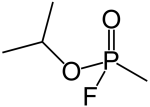 It is a colourless odourless nerve gas. It belongs to organophosphate chemical group. Most of the moderninsecticides too belong to this family of chemicals.
  Manbir Online ~ for Health & Fitness