
Alzheimer’s disease
This disease, Alzheimer’s disease was first described by a German physician Alois Alzheimer more than 90 years ago. He first demonstrated the typical microscopic changes in the autopsy of a woman in her 50s who had suffered what seemed to be a mental illness. Through microscope he saw brain cells filled with twisted strands of fiber, surrounded by dense deposits – these features are the hallmarks of Alzheimer’s disease. In this disorder gradual decline of brain function leads inevitably to death, anywhere from 3 to 20 years after the disease is diagnosed. 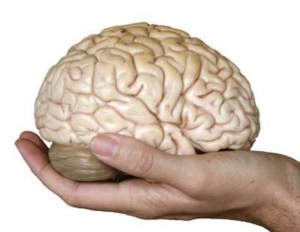
Some Facts about Alzheimer’s Disease:
- Alzheimer’s disease is a chronic degenerative disease causing dementia and associated with certain characteristic changes in the brain. It is one of group of brain diseases that lead to the loss of mental and physical functions.
- Dementia seen as a normal part of aging is not Alzheimer’s disease.
- Alzheimer’s disease is not yet curable or reversible.
- A very small minority of Alzheimer’s patients are under 50 years of age. However, most are over 65.
- The prevalence of dementia doubles with each 5 years increase in age, from 3 % among all those aged 60, to 4-5 % among all aged 65 and 30-40 % among those over the age of 80 years
- By the 2020 over 75 % of all people with dementia in the world will be living in the developing countries, mainly India, China, and Latin America.
- The onset of Alzheimer’s disease is usually very slow and gradual
- Problems of memory, particularly recent or short-term memory, are common early in the course of the disease.
- The average course of the disease from the time it is recognized to death is about 6 to 8 years, but it may range from under 2 years to over 20 years.
- Research has suggested that women who take estrogen are less likely to develop Alzheimer’s. But new study found that once the mind-robbing disease sets in, the female hormone offers no benefit.
- Herbs that have been used for Alzheimer’s Disease are gingko biloba, ashwaghandha, Asian ginseng, astragalus, and Siberian ginseng.
Alzheimer’s disease is a progressive Dementing disorder characterised by the neuropathological findings of loss of cerebral neurons accompanied by senile plaques and neurofibrillary tangles.
Symptoms of Alzheimer’s disease:
- The earliest symptoms of AD is usually insidiously progressive disorder of memory.
- Disturbances of judgement occur frequently and at times leading to disastrous personal and financial losses.
- Gross behavioral disturbances may be caused like : –
suspiciousness progressing to frank paranoia.
hallucinations, both visual and auditory. - Disturbances of motor activity – wandering, purposeless movements, inappropriate acts, aggressiveness.
- Reversal of day and night – wandering during the night.
- Unexplained phobias and anxieties.
- In later stages – incontinence of urine and stool.
- A small percentage of AD patients develop myoclonus and seizures.
- Patients of AD may develop symptoms of Parkinson’s disease like bradykinesia, rigidity, hypokynetic speech, slow shuffling gait. Usually these symptoms show poor response of Levodopa in contrast to excellent response in PD.
- According to a new study, Loneliness may be a neuropsychiatric symptom relevant to preclinical Alzheimer’s disease. Loneliness, as a growing condition of aging, itself contribute in any way to development of dementia and/or AZ ! Clinical experience seems to confirm loneliness with forgetfulness and other symptoms of cognitive decline.
Warning Signs for Alzheimer’s disease:
- Recent memory loss: May forget things more often, and may not remember them when reminded.
- Difficulty performing familiar tasks: May continue to prepare a meal, but forget to serve it or forget that they made it.
- Problems with language: May forget simple words or substitute inappropriate words, making sentences incomprehensible.
- Disorientation in time and space: May become lost on a nearby street and not know how to get back home.
- Poor judgment: May forget responsibilities, such as caring for a child.
- Problems with abstract thinking: May have trouble with simple mathematical calculations such as balancing a checkbook.
- Misplacing things: May put things in inappropriate places, such as placing an iron in the freezer.
- Changes in mood and behavior: May exhibit rapid mood swings for no apparent reason.
- Changes in personality: These may include confusion, suspicion, and fearfulness.
- Loss of initiative: May become passive and lose interest in activities.
Genetics of Alzheimer’s
Familial, or early-onset, Alzheimer’s has been linked to defects in genes on chromosomes 1, 14, or 21. All are involved in processing the sticky protein that forms the dense deposits known as amyloid plaques seen in the brains of people with the disease.
Researchers discovered a link between late-onset Alzheimer’s disease and a gene on chromosome 19 called ApoE. One variant, called ApoE4, is much more common in Alzheimer’s patients than in those without the disease.
Testing for ApoE4 is available, but experts don’t recommend it for people who don’t have signs of dementia.
However, testing may be useful in pinning down or ruling out a diagnosis of Alzheimer’s in people with dementia symptoms. And for those whom doctors strongly suspect have the disease, the test results may indicate how well certain drugs will work.
New Alzheimer’s Gene Located.
A new study has located a Gene at a new place on chromosome 12. The study has shown increased risk of late onset Alzheimer’s with this gene. A study conducted at university of Toronto showed that APOE gene located on chromosome 19, the one most commonly associated with late onset Alzheimer’s, accounted for much, but not all, the risk in those with this disease. They also found that the gene on chromosome 12 seems to play a role in the Alzheimer’s risk.
Alzheimer’s attacks the brain and destroys chemical messengers that brain cells use to communicate with one another. A progressive, degenerative disease, it frequently starts with trouble remembering recent events or names of familiar people. The principle symptom is loss of recent memory — old events are often retained in crystal-clear detail, but today and yesterday are obscure.
While techniques have improved, no single test yet provides a definitive diagnosis, except for an examination of brain tissue after death. Nevertheless, physicians trained in the latest techniques can accurately diagnose the condition nine times out of 10 times.
Steps in the diagnosis of Alzheimer’s
- Detailed medical history
- Physical exam (including blood tests),
- Neurological exam
- Mental ability tests, which involve performing simple mental exercises, memorizing words and copying designs.
- Psychiatric evaluation to check for depression.
- CT scans or MRIs are used to rule out tumors, brain injuries and other possible causes of symptoms. Some investigators think they may be able to identify Alzheimer’s by using MRI scans to measure the size of structures in the brain.
- Some use biomarkers, measurements of biochemical substances such as brain protein. The brain-protein test shows promise, but it’s still considered experimental by the Alzheimer’s Association.
- Testing for ApoE4, a gene linked to late-onset Alzheimer’s. A major study cautioned against using the test to predict Alzheimer’s in people who do not have symptoms. The test identifies people who carry the high-risk gene, but many people with the gene do not go on to develop the disease. Thus, testing positive isn’t conclusive, but it is sure to generate worry as well as cause potential problems.
- A new brain-imaging techniques offer promise as a way to spot early brain changes leading to the disease. A method known as single photon emission computed tomography, or SPECT, studied people with memory problems and correctly identified 80 percent of those who went on to develop Alzheimer’s.
- CT Scan spots Alzheimer’s
Computed Tomography scanning may provide the diagnostic test for Alzheimer’s disease. Researchers changed the angle routinely used for head scan and measured the width of the medial temporal lobe directly on the CT images of 44 people subsequently shown by histology to have Alzheimer’s disease. The region was nearly half the width in 75 control patients. Follow-up showed that the test was positive in most patients affected by Alzheimer’s disease for at least a year.
Common conditions which could also cause Memory Impairment.
- Thyroid Deficiency
- Anaemia
- Depression
- Tumors
- Stroke
- Nutritional disorders
- Infectious Diseases
There are few diseases which have as bleak a future as Alzheimer’s disease. The disease has devastating effect on the personality of a person. Imagine a man with plundered memories, frayed personality and lost identity. Even a century after a German physician first described the condition, we still do not have definite answer to many questions, and we have no cure.
In recent years scientists have made advances and we know lot about this disease. It is now possible to diagnose the disease with as much as 90-percent certainty.
It is identified in three progressively worsening stages: mild, moderate and severe.
Homocystine linked to Alzheimer’s
Researchers found high levels of Homocystine and lower levels of nutrients that reduce homocystine levels – folic acid and vitamin B12 in people diagnosed with Alzheimer’s disease.
High levels of homocystine has been repeatedly linked with cardiovascular diseases. Also, cardiovascular disease has been established as a major risk factor for Alzheimer’s disease.
Drugs for Alzheimer’s disease
There is No Miracle available for patients with AD, But Some Drugs
that fight Alzheimer’s and have been approved by FDA.
Tacrine: The drug prevents the breakdown of acetylcholine, a brain chemical needed for normal memory and learning. It frequently produces a modest improvement in symptoms, increasing alertness and thinking skills. However, it’s temporary — the drug doesn’t significantly alter the course of disease — and it commonly causes gastrointestinal side effects, such as nausea, vomiting and diarrhea. More worrisome, it can cause liver damage. Patients must have regular blood monitoring to avoid liver problems.
Donezepil: Like tacrine, it boosts acetylecholine, with equally effective results. In addition, it produces fewer GI side effects, doesn’t cause liver damage and is taken once a day vs. the bothersome four-times-a-day regimen of tacrine. Consequently, almost all patients now start out on Aricept.
Memantine: (Namenda) is another type of drug approved for treating AD. Possible side effects include agitation or anxiety.
Other Medications
Vitamin E
Vitamin E — 2,000 IUs daily — prevented declines in functioning for about seven months. The study showed middle-stage patients maintained their ability to perform “activities of daily living” — bathing, dressing, and using the toilet.
NSAIDs
A study has suggested that middle-aged people who used Ibuprofen, a nonsteroidal anti-inflammatory drug, or NSAID, for two years or more had as much as a 60 percent lower risk of Alzheimer’s. Other reports suggest that people with Rheumatoid Arthritis, who often take high doses of these drugs, have lower than average rates of the disease.
Estrogen
Several studies suggest estrogen guards against Alzheimer’s in women. In one study of 1,124 postmenopausal women, those who took estrogen had a 30 to 40 percent lower risk of developing Alzheimer’s.
Gingko biloba
A study showed that this plant extract aided memory and improved daily-living functions. Many medical experts have criticized the study’s design and want more research.
Lithium
Lithum has been used for treatment of Manic depression. New research shows it may also help those with Alzheime’s disease. It is found that abnormal glutamate receptors play a role in manic depression. Since glutamate receptors are implicated in the brain cell death in Alzheimer’s disease along with Huntington’s and Parkinson’s disease. It raises the possibility of lithium being useful in the treatment of these neurodegenerative disorders.
Possible Risk & Protective Factors for Alzheimer’s
| Risk Factors for Alzheimer’s | Protective Factors for AD |
|
|







 (mutations) that occur randomly for no apparent reason. A rare form of Russell-Silver Syndrome is thought to be inherited as an X-linked dominant genetic trait.
 Manbir Online ~ for Health & Fitness