Edward's syndrome

Edward’s syndrome

Edward’s syndrome was named after Dr. John Edward
Also called Trisomy 18. It is a form of rare genetic disorder where a portion of a person’s chromosome 18 is duplicated. Children with the syndrome inherit three instead of two, copies of chromosome eighteen.

The majority of people with the syndrome die during the foetal stage. Infants who survive experience serious defects and commonly live for short periods of time. Approximately 5-10% of children with Edward’s syndrome survive beyond their first year of life and these have severe developmental disabilities.

The syndrome occurs in about 1 in 5000 births. Edward’s syndrome affects more boys than girls. Women older than the age of thirty have a greater risk of bearing a child with the syndrome.

Ninety-five percent of children with Edward’s syndrome have what is referred to as, ‘full-trisomies,’ while two-percent are due to translocations where only a portion of an extra chromosome is present. Three-percent of children with Edward’s syndrome have what is referred to as, ‘mosaic tristomies,’ where the extra chromosome is there, but not in every one of the child’s cells.

Most cases of trisomy 18 are not inherited, but occur as random events during the formation of eggs and sperm. An error in cell division called nondisjunction results in a reproductive cell with an abnormal number of chromosomes.

Symptoms

.

.

.

.

.

.

Majority die during the foetal stage.

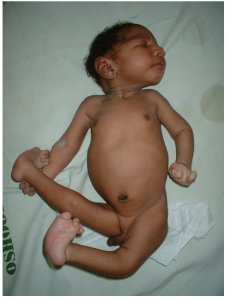
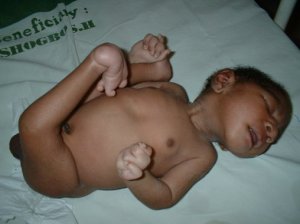
  • Heads are unusually small, while the back of their head is prominent. Their ears are low-set and malformed, and their mouths and jaws are small.
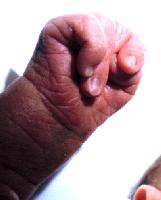
  • Hands are often clenched into fists, with their index finger overlapping their other fingers.
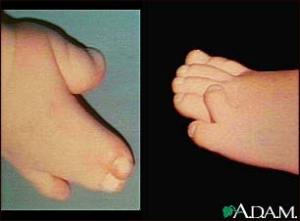
  • Feet may be clubfeet, as well as toes that may be fused or webbed.
  • Many types of congenital heart disease like atrial septic defect, ventricular septal defect, or patent ductus arteriosus may be present.
  • Inguinal or umbilical hernia, abnormalities of their urogenital system, malformed kidneys, or undescended testicles in males may be seen.

Pick's Disease

  Pick’s Disease

Synonym: Primary Progressive Aphasia

Arnold Pick, first described the disease in 1892

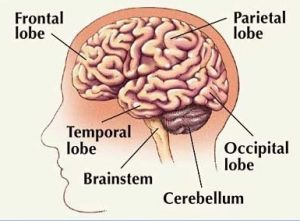
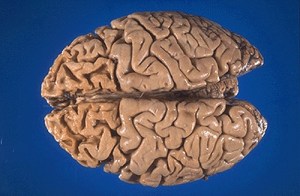
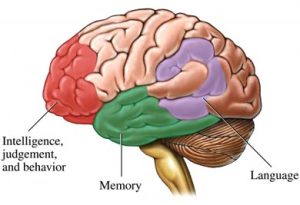
Pick’s disease is a rare disorder that affects the frontal and temporal lobes of the brain, which control speech and personality. These areas of brain undergo slow atrophy. It is therefore classified as a Frontotemporal dementia. 

Pick’s disease is a rare and permanent form of dementia that is similar to Alzheimer’s disease, except that it tends to affect only certain areas of the brain.

In Alzheimer’s disease memory loss is the predominate and early sign.

Patients with Pick’s initially exhibit marked personality and behavioural changes, and then a decline in the ability to speak coherently.

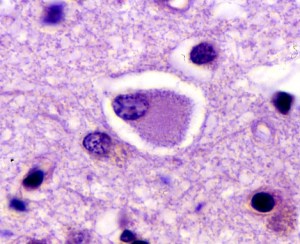
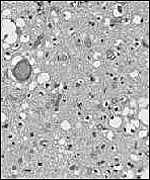
This disease is the result of a build-up of protein in the affected areas of the brain. The accumulation of abnormal brain cells, known as Pick Cells or Pick’s bodies, eventually leads to changes in character, socially inappropriate behaviour, and poor decision making, progressing to a severe impairment in intellect, memory and speech.

Pick Cells have characteristic of ballooned neurons with dissolution of chromatin.

Age of onset is between 40 and 60.

Frontal lobes of brain are responsible for rational emotional responses and the way we act in response to the world around us. In Pick’s Disease it is these frontal lobes that are involved in the disease process. These areas of brain are also responsible for speech and the use of language. As Pick’s disease involves this area of the brain these thinking processes are abnormal in the patients of Pick’s disease.

The earliest symptoms are usually changes in behaviour, mood, or personality. The person does not behave his or her usual self.

Some specific features:

  • Impulsivity and poor judgment in usually cautious person.
  • Sexual exhibitionism or promiscuity
  • Repetitive or obsessive behaviour
  • Rudeness, impatience, or aggression
  • Easily distracted; poor attention span
  • Lack of warmth, concern, or empathy
  • Loss of vocabulary, Speech problems: The person may have trouble finding the right word. His or her sentences may be incomplete or organized strangely.
  • Difficulty speaking or understanding speech.
  • Repeating words others say.
  • Weak, uncoordinated speech sounds.
  • Decrease in ability to read or write.
  • Complete loss of speech.
  • Changes in eating habits: The person may begin overeating, eating greedily, eating excessive amounts of sweets, or drinking large amounts of alcohol. He or she may gain weight.

Diagnosis

Only way to diagnose definitely is by a Biopsy of brain tissue. This can be done by a neurosurgeon. Otherwise the disease can be suspected on the basis of symptoms.

Single-photon emission computed tomography (SPECT) or positron-emission tomography (PET) scan: This scans are used in certain cases when the diagnosis is doubtful. They are especially good at detecting abnormal brain function. SPECT and PET scans are available only at some large medical centres.

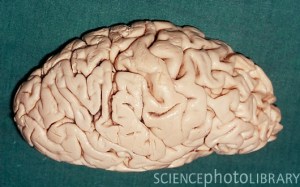
Brain specimens showing Frontal Lobes thinning in Pick's Disease


There is no cure for Pick disease. Treatment for the patients of this disease can be aimed at improving behaviour and mood problems and relieving other symptoms. For example, a speech therapist may be able to help the person improve his or her ability to communicate. Medication is helpful in many patients in easing mood and emotional difficulties.

Dementia
Parkinson’s Disease
Alzheimer’s disease

Creutzfeldt-Jakob Disease

Creutzfeldt-Jakob Disease (“CJD”) is a rare, fatal brain disorder which causes a rapid, progressive dementia and associated neuromuscular disturbances

Incidence of this disease is One in per million people per year.
Affects both men and women of diverse ethnic backgrounds usually between the ages of 50 to 75 years. The disease occurs world wide.

Cause of the Disease

There had been much debate on the cause of the disease. Now it is accepted that that a transmissible agent is responsible for causing Creutzfeldt-Jakob Disease, as shown by experiments involving the injection of CJD-affected brains into the normal brains of healthy animals. The identification of this transmissible agent has been the subject of much scientific inquiry and debate.

Prion

The agent responsible is either a slow virus or Prion.

In 1996, scientists confirmed that they had discovered a new strain or variant of the disease among young people This is now referred to as vCJD.

The emergence of vCJD came after the biggest ever epidemic of BSE in cattle. Since that epidemic was in the UK and most vCJD victims lived in the UK, most scientists believed the two were linked.

They say the most likely cause of vCJD in humans was eating BSE-infected beef between the years of 1986 and 1989, when contaminated meat probably got into the food chain in large quantities.

Mode of Transmission

There appear to be three general categories for classifying the means through which CJD may be acquired.
First, the disease can occur sporadically.
Second, the disease can be inherited.
Third, the disease can be transmitted through infection.

Sporadic Creutzfeldt-Jakob Disease

Sporadic CJD refers to those cases in which there is no known infectious source and no evidence of the disease in the prior or subsequent generations of the patient’s family. Most CJD cases occur sporadically, thereby leaving their origins a mystery.

Inherited Creutzfeldt-Jakob Disease

Approximately 10 to 15 per cent of CJD cases are inherited. These familial cases exhibit a mutation in the gene coding for the prion protein. Genetic factors are thought to be responsible for the elevated numbers of CJD cases in some communities in Czechoslovakia and Chile, as well as among Libyan-born Jews.

Creutzfeldt-Jakob Disease Through Infection

Although CJD can be aquired by a transmissible agent it is not a contagious disease. The family members do not have increased risk of contracting the disease.
Iatrogenic transmission of CJD has occurred in cases involving
corneal transplants,
implantation of electrodes in the brain,
duramater grafts,
contaminated surgical instruments
and the injection of natural human growth hormone derived from cadaveric pituitaries.

Thus, one may become infected with CJD from direct contamination with infected neural tissue.

Studies are currently being conducted to determine if CJD is transmitted to humans through blood. The infectious agent has been found in blood but there have been no documented cases of blood transmission of CJD in humans.

In Britain, scientists have struggled to ascertain if there is a connection between bovine spongiform encephalopathy (“BSE”) and CJD. BSE or “mad cow disease” was initially discovered in Britain in 1986 and thought to have resulted from the use of cattle feed containing ground offal from scrapie-infected sheep.
It is now believed that here was a possible link between BSE and CJD. This new acknowledgement arose from the identification of an apparently new strain of CJD which was discovered in 10 people under the age of 42, including some teenagers. Additionally, five of the people were associated with the meat and livestock industry. Scientists decided that the most likely explanation for this unusual outbreak was the consumption of beef from diseased cattle before 1989, when regulations were adopted for the disposal of potentially infectious cattle offal, including brains, and the use of sheep entrails as feed ceased.

Dementia

Dementia


All of us gradually slow down both physically and mentally with the passage of time as we get older.

There is a difference between occasional forgetfulness and many diseases which are cause of Dementia. Some indications are helpful in differentiating the conditions.

Dementia is a clinical syndrome characterized by loss of previously acquired intellectual functions in the absence of impairment of consciousness.

The term dementia is mostly associated with elderly but some disorders occur in the mid life which have Dementia as a prominent feature. Such diseases are also collectively called Pre-senile Dementia and these diseases also have a strong familial disposition.

Main features of Dementia
  • Loss of general intelligence
  • Memory impairment
  • Personality changes
  • Emotional changes

Loss of general intelligence:

Judgment and problem solving ability is reduced. Thinking is slow.

Memory impairment:

Minor degree of memory impairment is often the first sign of this disease. Forgetfulness in relation to day to day work and concerning personal possessions is prominent. People’s names are forgotten, appointments are missed. Declining memory may lead to secondary delusions.

Personality changes:

Decline in personal manner and social awareness. Behavior may become rude, tactless, and may be insensitive to feeling of others. Episodes of aggression, sexual indiscretion or even infringement of law may be seen. Deterioration in personal hygiene, urinary and fecal incontinence are common. General decline in interest of the surroundings. Patient may sit for hours without initiating any purposeful activity.

Emotional changes: Mood changes, depression, anxiety, irritability may be prominent in the early stages. In advanced dementia the emotional reaction may be blunted and patients becomes incapable of responding to emotionally charged events in their environment.

Things to look for:

  • Family history:  Some diseases run in families.  Some diseases have genetic predisposition.
  • Signs of memory loss and language difficulties. Is the person losing words, or forgetting the names of common objects? Has he or she forgotten how to do simple mathematics?
  • Is the loss of memory for recent events only?
  • Confusion and loss of attention span. Is the person unable to focus on a normal conversation?
  • Inappropriate behaviour and impaired judgment. If the person begins to act inappropriately or significantly out of character in social situations.
  • Physical coordination problems and physical confusion. People with senile dementia often forget how to do simple learned tasks that have been part of their daily life for many years.

Talking to the person and taking detailed history helps in differentiating and diagnosing the cause of dementia.

Causes of Dementia

Degenerative diseases:

Space occupying lesions:

  • Cerebral tumour
  • Subdural haematoma

Infections:

AIDS, Cerebral syphilis, Viral encephalitis

Others:

Post Traumatic dementia, Boxer’s encephalopathy, Secondary to Head Injury. Chronic Traumatic Encephalopathy
Cerebrovascular disease, Cerebral emboli.
Hypothyroidism, Hypopituitarism.
Liver disease, Renal failure, Alcoholism
Vitamin deficiency: Folic acid, B12

Cerebrovascular dementia: CT brain scan showing multiple diffuse areas of cerebral infarction.

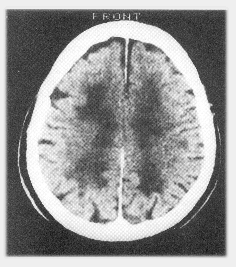
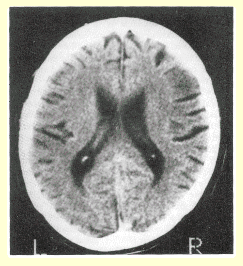
Alzheimer's disease: CT scan of brain showing cortical atrophy, widened sulci, and enlarged lateral ventricles.

Drug Therapy in Dementia

Dementia is a complex disorder which causes impairment in all areas of mental functions

  • Memory and intellectual impairment ( cognitive )
  • Anxiety and depression ( mood )
  • Paranoia and Hallucination ( perception )
  • Agression or withdrawal.

Various neurotransmitters are said to be involved in the causation of Dementia –

  • Acetylcholine
  • Dopamine
  • Serotonin

Drugs for Cognitive and functional impairments in Dementia

These drugs increase the availability of Acetylcholine.
Tacrine
Rivastigmine
Donepezil
Newer drugs in future – Venlacrine,Galanthamine,Hyperazine.

Brain blood flow enhancers

These drugs increase blood perfusion and redistribute blood in the deficient areas.
Cyclandelate
Hydergine

Miscellaneous Drugs

Piracetam – a metabolic enhancing agent of the brain.
Selgilne- a MAOinhibitor, which is used in Parkinson’s disease is also useful in Alzheimer’s disease.
Aspirin and Other Anti inflammatory agents (NSAIDS) have also been shown to slow down the process of dementia.
Oestrogen replacement therapy may be helpful in postmenopausal women with dementia.
Ginkgo biloba
Brahmi
Ashwagandha
Researchers found that taking vitamins C and E might help protect the aging
mind from decline in cognitive function, and some kinds of dementia.

Chronic Traumatic Encephalopathy
Inability to detect Sarcasm may be early sign 

Parkinson’s Disease

Parkinson’s Disease

Is a chronic degenerative disorde. Its cause is still unknown.

Average age of onset: 57 years.

The disease was first identified in 1817.

Approximately 40,000 new American patients are diagnosed each year. In many cases the general “slowness” attributed to old age, may be an early symptom of PD.

People in rural areas are at higher risk of developing the disease than those in urban areas, perhaps because of exposure to pesticides, fungicides or herbicides through contaminated well water.

There is also a microorganism in the soil — Nocardia — that may damage dopaminergic neurons. Other high-risk environments include regions surrounding petroleum plants and pharmaceutical manufacturing plants.

Epidemiologists have noted that most PD patients have never smoked, and at least one study found a marked increase in the incidence of the disease among individuals with a history of mumps compared with those who never had mumps.

PD is not generally regarded as a genetic disease, although patients may inherit a predisposition. Some 14% of PD patients have one or more first-degree relatives who have the disease or a related disorder, compared to 5% of controls. Onset before age 40 is more often associated with a family history.

Low prevalence of Parkinsons’s disease among Indians is said to be due to the presence of some protective factors in the brain that inhibit the pathological changes leading to Parkinson’s disease.

Prevalence ratio:

North Americans: 280/100,000

Africans: 59/100,000

Chinese: 44/100,000

Indians: 19/100,000. Parsis living in India have the highest recorded prevalence rate of 328/100,000. (Parsis migrated to India from Persia now Iran.)

Parkinsonism is a syndrome consisting of three main components:
Tremor
Muscular Rigidity
Hypokinesis

(Hypokinesis is slowness in initiating & repeating voluntary movements)

Overall prevalence is about 1 / 1000 of the general population. There is a low prevalence of this disease among Indians. It is more common in elderly, the prevalence rising to 1% of those over 60 years.

Aetiology

The cause of the disease is not known. Genetic factors are not important in a typical case.
Environmental toxins may be a contributing factor.
Country areas frequently sprayed by herbicides show increased incidence of parkinsonism. Chemicals such as (MPTP) methyl-phenyl-tetrahydopyridine, paraquet have been implicated.

Clinical Features

Both sexes are affected equally. Onset of the disease is usually after 50 years. Very occasionally the symptoms may start in 3rd & 4th decade. Initially the classical symptoms may be absent. The disease may start as Tiredness, aching limbs, mental slowness, depression and small handwriting.
Face gives appearance of Expressionless face, Greasy skin, Fixed posture.

Tremor: Tremor at rest affecting one or both hands may be the first symptom. Tremor may also affect tongue, legs, mouth. Tremor may remain the only symptom for many years. Tremor is intermittent present at rest and when distracted. It diminishes on action.
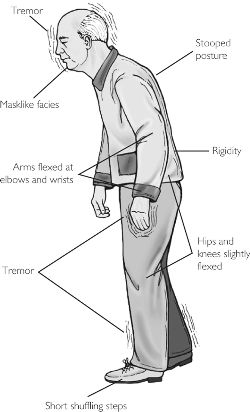
Hypokinesis: Difficulty in initiating rapid fine movements, slowness of gait, difficulty in tasks such as fastening buttons and writing.
Gait is typical – slow to start walking, shortened stride, rapid small steps, tendency to run, reduced arm swinging, and impaired balance on turning.

Rigidity of muscular tone: causes stiffness and flexed posture. Gradually the speech becomes softer and indistinct. Postural balance is disturbed because of impairment in the reflexes responsible for maintaining balance. Such patients are prone to falls. Rigidity is known as Cogwheel type in upper limbs and Plastic lead pipe type in the lower limbs.

Features of parkinsonism may be unilateral in the beginning but gradually they become bilateral. Muscle strength and reflexes remains normal. Facial reflexes are enhanced. Tapping of the forehead causes rapid blinking known as Glabellar tap sign. Intellectual faculties are not markedly affected. Some patients may get depressed and there may be some cognitive impairment as the disease advances.

Management

Drug therapy

L-DOPA

The rationale for using L-DOPA is that the enzyme step converting the precursor DOPA to Dopamine is dependent on the concentration of the substrate. Although in parkinsonism the number of dopamine releasing terminals in the striatum is diminished it is possible to overdrive the remaining neurons to produce more dopamine by administering DOPA.
More than 90% of the orally taken L-DOPA is decarboxylated in the gastrointestinal tract to dopamine and only a small amount reaches the brain. If L-DOPA is used alone there is high incidence of side effects such as nausea, vomiting, vasodilatation. This problem is solved by giving a peripherally acting decarboxylase inhibitor. This combination therapy permits use of low dose of L-DOPA.

L-DOPA + Carbidopa
L-DOPA + Benserazide
The combination should be started with low dose and gradually increased. Tremor, Rigidity and hypokynesis are improved.
With the progression of the disease there is loss of capacity to store dopamine. Late deterioration in response to L-DOPA therapy occurs after 3-5 years in 1/3 to 1/2 of patients.
Selegiline and Bromocriptine may be helpful at this stage.

Bromocriptine is preferably used as a low dose combination with L-DOPA. Especially in young patients who need treatment for many years.

Surgery

Stereotactic thalamotomy is occasionally performed in patients with severe unilateral tremors not responding to drugs.
Implantation of Fetal mid brain or Adrenal cells into the basal ganglion in parkinsonian patients has been tried.

Physiotherapy and Speech therapy is needed to reduce rigidity and to correct posture.

 Other drug:

Benxhexol 1-5 mg tid
Orphenadrine 50-100 mg tid

Have useful effect on tremor and rigidity. Do not help hypokynesis. They should be used in early stage of the disease when hypokynesis is not a problem.

Side effects: dryness of mouth, blurring of vision, difficulty in micturation and constipation.

Amantidine 100mg bid or tid

It has mild short lived action on hypokinesis.

Side effects: oedema, confusion, seizures.

Ropirinol – Requip – ( SmithKline Beecham )
Pramipexole – Mirapex – ( Pharmacia & Upjohn )
Tolcapone – Tasmar – ( Roche )

Disorders that may mimic Parkinsons disease

Benign essential or familial tremor, a slowly progressive condition that usually develops in the fourth and fifth decades.
Symptoms include a tremulous voice and shaky hands and/or head (the head may bob side to side or up and down).
The typical parkinsonian rigidity, stiffness and bradykinesia do not occur.

Hyperthyroidism can also cause tremor.

Other more serious conditions that may mimic PD include Progressive Supranuclear Palsy, Shy-Drager Syndrome.

Parkinson’s Gene
Parkinson’s Disease – Genetic & Environmental etiology
Coffee and Parkinson’s disease