Normal Electrocardiogram

Normal Electrocardiogram

ECG or Electrocardiogram, is recording of electrical activity in the heart.
The elctrocardiography is based on two basic principles.
1. When the electromagnetic force flows towards the positve electrode of a lead, the ecg would record an upward or positive deflection.
2. When the electomegnetic force flows away from the positve electrode of a lead or towards the negative electrode the ecg would record a downward or negative deflecton.
The electrocardiografic deflections are termed as P, QRS, T, and U.

Diagramatic representation of basic electrocardiografic deflections

The P wave represents atrial activation, the QRS complex represents ventricular activation, T wave represents ventricular recovery. The interpretation of U wave is uncertain. The ST segment, T wave and U wave together represent the ventricular recovery. The other significant portions of the ecg deflection are PR interval, QRS duration, ST segment.
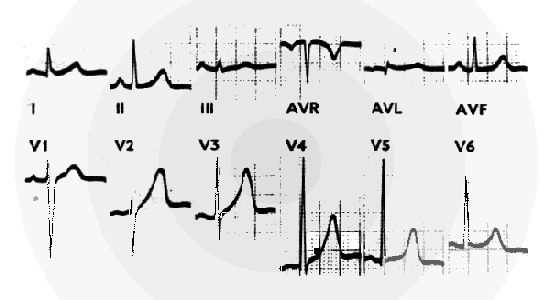
A routine electrocardiogram consists of 6 Limb leads and 6 Chest leads. The Limb Leads are marked as I, II, III, aVR,aVL, aVF and the Chest Leads are V1, V2, V3, V4, V5, V6. The limb leads are placed on the four limbs and the chest leads are put on the mid chest and the left half of the chest.
Normal pattern of electrocardiografic deflections in various leads
Angina Pectoris
Stress induced Electrocardiogram in a patient of Angina Pectoris
TMT

Angina Pectoris

Angina Pectoris

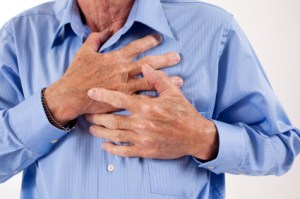
Angina Pectoris is the name given to a clinical syndrome used to describe discomfort due to transient myocardial ischaemia. The underlying cause may be Coronary atheroma. Spasm of coronary artery may also be underlying cause.

Factors that worsen Angina

  • Exercise
  • Anaemia
  • Hypertension
  • Hyperthyroidism
  • Tachycardia (increased heart rate)
  • Aortic valve disease

Features of of Angina
It is usually experienced as a sense of oppression or tightness in the middle of the chest ‘like a band round the chest’. It is induced by exertion and relieved by rest and lastsfor a few minutes.
The pain may be accompanied by discomfort in the arms more commonly in the left arm or even wrist or hands. The pain may radiate to neck or jaw or it may be present in the upper abdomen (epigastric region) or even back (interscapular region).
Situations precipitating Angina
Physical exertion like walking, or walking against wind, or while having a bath.
Cold exposure
Intense emotions
Heavy meals
Violent dreams
Lying flat

Relief of pain with Glyceryl trinitrate helps in diagnosis of Angina Pectoris.

Conditions that may mimic Angina Pectoris
Musculoskeleton pains: of the chest and back may at times confuse and create difficulty in the diagnosis of Angina. The pain of muscular origin is not totally relieved by rest and may persist even after rest. Local tenderness is present in case of pain of musculoskeletal in nature.
Pericardial pain: Pain of acute pericarditis is typically in the retrosternal region and often radiates to the neck and shoulders. It may be made worse by deep breath, movement or change of posture. A friction rub known as Pericardial Rub is diagnostic, and is best heard by a stethoscope at the left of lower sternum.
Oesophageal pain: Pain due to oesophagitis has a burning quality and is relieved by taking Antaacids. Oesophagial spasm pain may at times be indistinguishable from angina.

Risk Factors for Coronary Heart Disease

  • Smoking
  • Hyperlipidaemia
  • Hypertension
  • Diabetes Mellitus
  • Sedentary Lifestyle
  • Obesity
  • Diet defficient in Polyunsaturated fatty acids
  • Low Vitamin E & C
  • Blood Coagulation Factors Fibrinogen & Factor VII
  • High levels of lipoprotein (a), homocysteine, ApoB
Smoking has a definite dose related relationship with Ischaemic heart disease. The risk of death for smokers is highest in younger population.
Hereditary Hypercholesterolaemia ( Raised blood level of Cholesterol) : Patients with hereditary hypercholesterolaemia have high incidence of Coronary disease. Reduction of blood cholesterol has a definite effect in the reduction of morbidity and death from coronary heart disease.
It is estimated that the development of Ischaemic heart disease is controlled by both Genetic and Environmental factors, could be in the ratio of 40:60.
Major manifestations of Coronary Heart disease are Angina Pectoris & Myocardial Infarction

Normal Electrocardiogram

Anthrax

Anthrax

Anthrax is an acute bacterial infection caused by an organism called Bacillus anthracis. It is mainly a disease of herbivorous animals.

Humans become infected when spores of B. anthracis are introduced into the body by:

  • contact with infected animals
  • contaminated animal products
  • insect bites
  • inhalation
  • ingestion

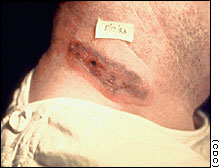
In human beings the most common form of this infection is Cutaneous Anthrax. It is characterized as a localized skin lesion with a central eschar surrounded by marked edema or swelling.

Other forms are more dangerous –

Anthrax spores

Inhalation Anthrax (woolsorters’ disease) – it involves hemorrhagic mediastinitis, rapidly progressive systemic infection, and a very high mortality rate.

Gastrointestinal Anthrax is rare and is also associated with a high mortality rate.

Approximately 95 percent of human cases of anthrax are the cutaneous form and about 5 percent the inhalation form. Gastrointestinal anthrax is rare. Anthrax meningitis occurs in a small percentage of all cases and is a frequent complication of overwhelming infection with B. anthracis and this is also associated with a high mortality rate.

CUTANEOUS ANTHRAX

Cutaneous anthrax is caused when spores of B. anthracis are introduced into the skin through cuts or abrasions or by biting flies. The spores germinate within hours, and the vegetative cells multiply and produce anthrax toxin. These lesions are more often found on the exposed areas of the body.

Within days a small red macule appears. During the next week, the lesion progresses through papular and vesicular or pustular stages to the formation of an ulcer with a blackened necrotic eschar surrounded by a zone of brawny edema. There may be itching in the early lesion and the fully developed lesion is painless.

Small satellite vesicles may surround the original lesion, and painful regional lymph nodes may be present. Most patients do not have fever and may have no constitutional symptoms. In severe cases, the edema may be extensive and associated with shock. Spontaneous healing occurs in 80 to 90 percent of untreated cases, but edema may persist for weeks. In the 10 to 20 percent of untreated patients who have progressive infection, bacteremia develops and is often associated with high fever and rapid death.

Other conditions that may be confused with this disease are staphylococcal skin infections, tularemia, plague.

Cutaneous anthrax should be considered when patients have painless ulcers associated with and edema and have had contact with animals or animal products.

INHALATION ANTHRAX

In this form of the disease the spores of the B.anthracis are deposited directly in to the alveoli of the lungs. B. anthracis spores as airborne particles 5 um in diameter need to be deposited directly into the alveoli or alveolar ducts ( the remote location in the lung ) of the lungs. From here the spores are taken up by the phagocytes and carried to the mediastenal nodes where they germinate. Hemorrhagic mediastinitis takes place with necrosis of the nodes. Infection rapidly spreads leading to death.

Clinical presentation of the patient is similar to severe acute viral respiratory infection and diagnosis at early stage is difficult.  After 1 to 3 days, there is increasing fever, dyspnea, stridor, hypoxia, and hypotension usually leading to death within 24 h.

GASTROINTESTINAL ANTHRAX

Gastrointestinal anthrax usually results from ingestion of inadequately cooked meat from animals with anthrax. Primary lesion can be in the intestines or it may be oral and pharynx or at the tonsils.

Symptoms may be fever, nausea and vomiting, abdominal pain, bloody diarrhea, and sometimes rapidly developing ascites. Sore throat and dysphagia may be present in case of lesions in the throat.

TREATMENT

Bacillus.anthracis is highly sensitive to penicillin. Ciprofloxacin is also drug of choice.

PREVENTION

Inhalation anthrax was essentially eliminated in England before 1940 through the development of methods to decontaminate wool and goat’s hair and the improvement of working conditions for handlers of animal products.

Non living vaccine  are used in the United Kingdom and the United States for the immunization of agricultural workers, veterinary personnel, and others at risk of exposure to anthrax.

Live attenuated vaccines containing spores of B. anthracis are used in both developed and developing countries to immunize domestic herbivores animals. These preparations are also used to immunize humans in Russia but not in the United States.

Improved anthrax vaccines for humans are needed. . In addition to agricultural and industrial anthrax, the possible use of B. anthracis as an agent of biological warfare is a stimulus for the development of an improved vaccine. Carcasses of animals that die due to anthrax should be buried intact or cremated. Butchering of infected animals should be avoided.

Anthrax as Biological Weapon

Sickle cell anemia

Sickle cell anemia

Sickle cell anemia is an inherited disease in which the Red Blood Cells get deformed to abnormal crescent shape.
Haemoglobin is a protein inside red blood cells that carries oxygen. Sickle cell anemia is caused by an abnormal type of hemoglobin called hemoglobin S. Hemoglobin S distorts the shape of red blood cells, especially when exposed to low oxygen levels. Hemoglobin S distorts the shape of red blood cells, especially when exposed to low oxygen levels. The distorted red blood cells are shaped like crescents or sickles. These fragile, sickle-shaped cells deliver less oxygen to the body’s tissues. They can also clog more easily in small blood vessels, and break into pieces that disrupt healthy blood flow.
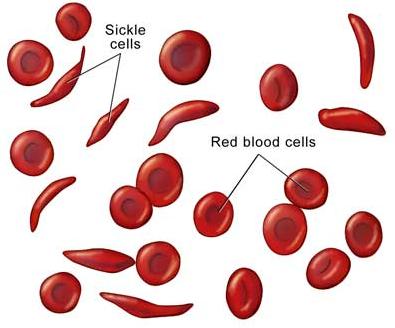
Sickle cell disease is much more common in people of African and Mediterranean descent. It is also seen in people from South and Central America, the Caribbean, and the Middle East. This disease is inherited from both parents. Someone who inherits the hemoglobin S gene from one parent and normal hemoglobin (A) from the other parent will have sickle cell trait. People with sickle cell trait do not have the symptoms of true sickle cell anemia.
In several sections of Africa, the prevalence of sickle cell trait (heterozygote) is as high as 30%.
The sickle cell disease gene is present in approximately 8% of black Americans. More than 2 million people in the United States, nearly all of them of African American ancestry, carry the sickle gene.
Sickle cell disease is present mostly in blacks. But is also found, with much less frequency, in eastern Mediterranean and Middle East populations.
The male-to-female ratio is 1:1.
It is a lifelong condition. It first manifests in the second half of the first year of life and persists for the entire lifespan.

Symptoms
The abnormality of the RBCs in this disease results in serious infections, chronic anemia, and damage to body organs. Each person can have different forms of complications from the disorder. Some children remain relatively healthy, while others are frequently hospitalized.

The presenting symptoms of this disease involve pain and anemia.
For the first 6 months of life, infants are protected largely by elevated levels of Hb F (fetal haemoglobin). Patients have painful episodes lasting for hours or days. These episodes affect bones of back, long bones and chest. Some patients have episodes every few years and some have many episodes every year.

The most common clinical picture during adult life is vasoocclusive crisis. The crisis begins suddenly, sometimes because of some infection or temperature change, such as an air-conditioned environment during a hot summer day. Severe deep pain is present in the long bones. The abdomen is affected with severe pain resembling acute abdomen. Pain may be accompanied by fever, malaise, and leukocytosis (high white cell count ). The crisis may last several hours to several days and terminate as abruptly as it began.
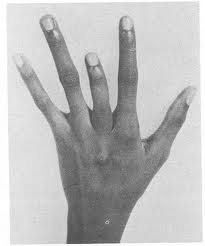
Shortened finger of African Adult male with sickle cell Disease

During childhood and adolescence, the disease is associated with growth retardation, delayed sexual maturation. The spleen enlarges in the latter part of the first year of life. The spleen may undergoes repeated infarction. Over time, the spleen becomes fibrotic and shrinks. Another problem occurring in infancy is hand-foot syndrome. This is a painful swelling of the dorsum of the hand and foot.

Central nervous system involvement may cause stroke with neurological deficit.

The heart is involved due to chronic anemia and and microinfarcts may damage it. Repeated Blood transfusion causes hemosiderin deposition in the myocardium.
Formation of Bile Stones due to chronic hemolysis with hyperbilirubinemia may cause Cholicystitis.

The lungs develop areas of microinfarction. The resulting areas that lack oxygenation aggravate the sickling process. Pulmonary hypertension may develop.
Leg ulcers are a chronic painful problem. They result from minor injury to the area around the malleoli.
Priapism (painful erection of penis) is a troubesome complication and tends to occur repeatedly. When it is prolonged, it may lead to impotence.
Spontaneous abortions may occur those who get pregnant.

Treatment

No cure is available for this disease.

The goals of treating sickle cell anemia are to relieve pain, prevent infections, organ damage, and strokes, and control other complications.
Children who are diagnosed with this disease need antibiotics to prevent infections and their parents need to be educated in managing the child.
Mild pain can be treated at home but for severe pain hospital treatment is needed. Dehydration and infections have to be managed. Oxygen therapy may be needed.

Hydroxyurea: can be used in patients of Sickle Cell Anaemia. It prompts the body to make fetal hemoglobin. Fetal hemoglobin, or hemoglobin F, is the type of hemoglobin that newborns have. In people who have sickle cell anemia, fetal hemoglobin helps prevent red blood cells from sickling and improves anemia. Given daily, hydroxyurea reduces how often painful sickle cell crises and acute chest syndrome occur. Many people taking hydroxyurea also need fewer blood transfusions and have fewer hospital visits.

Blood Transfusion is needed to treat anaemia and complications.
Infections can be a major complication of sickle cell anemia throughout life, but especially during childhood. Infection in children can be managed by giving daily doses of antibiotics.
All routine vaccinations (including a yearly flu shot), plus the pneumococcal vaccine is important.
Sickle cell anemia can damage the blood vessels in the eyes and the retinas. Regular eye checkup is needed.
Leg ulcers due to sickle cell anemia can be very painful. Ulcers can be treated with cleansing solutions and medicated creams or ointments.
Gallbladder surgery may be needed if the presence of gallstones leads to gallbladder disease.
Priapism (a painful erection in males) can be treated with fluids, medicines, or surgery.
Young children who have sickle cell anemia should have regular checkups with a hematologist.

New Treatments: Research on blood and marrow stem cell transplants, gene therapy, and new medicines for sickle cell anemia is ongoing. The hope is that these studies will provide better treatments for the disease.

New Medicines:

Decitabine, like hydroxyurea, this medicine prompts the body to make fetal hemoglobin.

Adenosine A2a receptor agonists, these medicines may reduce pain-related complications.

5-HMF. This natural compound binds to red blood cells and increases their oxygen. This helps prevent the red blood cells from sickling.


Patau Syndrome

Patau Syndrome

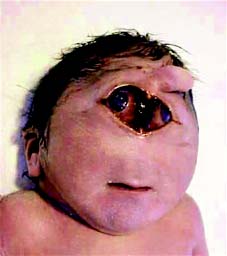
Patau syndrome is the least common and most severe of the viable autosomal trisomies. It is a genetic disorder in which a person has three copies of genetic material from chromosome 13, instead of the usual two copies.

Trisomy 13 occurs in about 1 out of every 10,000 newborns. Most cases are not inherited. Instead, the events that lead to Trisomy 13 occur in either the sperm or the egg that forms the fetus.

A significant number of cases that are trisomic for chromosome 13 end in spontaneous abortion, foetal demise, or stillbirth. More than 80% of children with trisomy 13 die in the first month.  Only one in 20 children survive longer than 6 months.

Symptoms

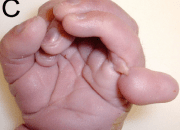
  • Extra fingers or toes (polydactyly). Clenched hands with outer fingers on top of the inner fingers.
  • Deformed feet, known as rocker-bottom feet
  • Severe mental deficiency. Small head, failure of the brain to divide into halves during gestation.
  • Facial defects such as small eyes, absent or malformed nose, cleft lip and/or cleft palate
  • Heart defects in 80% of individuals.
  • Kidney defects
  • Hernias: umbilical hernia, inguinal hernia.
  • Undescended testicle.