Managing Back Pain

Managing Back Pain

Most of the patients with lower back pain improve with minimal treatment in a matter of days. However, if back problems persist, doctors generally prescribe one or more of the following treatments: proper exercise, rest, heat and cold, posture training, weight loss, stress management and relaxation exercises, medication, spinal manipulation and/or surgery.

Proper exercise

For many people, the key to a healthy back is proper exercise. Some exercises are designed to strengthen your back and stomach muscles, while other exercises are designed to improve your posture. A 30 minute aerobic conditioning program three times a week is ideal for overall fitness. Walking and/or water exercise are highly recommended for most people with back problems.

Techniques for Good Posture

When sitting 

  • Sit in a firm chair with armrests to relieve pressure in your back and shoulders.
  • Keep your upper back straight and shoulders relaxed. Keep stomach muscles pulled in, and maintain the proper curve in your lower back. You can do this by tightening your stomach and buttocks. Some people are more comfortable sitting with the back of the chair at a 15- to 20-degree angle. A small cushion behind the lower back to maintain the natural curve of the back also can be quite helpful.
  • Keep your knees slightly higher than your hips.
  • Use a footstool or book under your feet if necessary.
  • Keep your feet flat on the floor or other surface.
  • Don’t sit for a long period of time. Stand up every now and then to stretch tight muscles and give them a chance to relax.

When Standing:

  • Stand with weight equal on both feet.
  • Avoid locking your knees.
  • Ease tension in your back by placing one foot on a footstool.
  • If you stand for long periods of time, wear flat or low-heeled shoes.
  • Keep your back straight by tightening your stomach muscles and buttocks.

When Sleeping:

  • Lie on your side with your knees bent.
  • If more comfortable, place a pillow between your knees while sleeping on your side.
  • If you sleep on your back, placing pillows under your knees would help your lower back pain.
  • Use a firm mattress.

Body Mechanics: To keep good posture while in motion is to use good body mechanics. In lifting, this means that the object lifted is held close to the body and that lifting is done with your legs. The normal back curves are maintained, the legs lift the load. Avoidance of twisting, particularly when carrying a load, is also important for good body mechanics. Move your feet, do not twist your torso.

When bending down to lift an object, bend with your knees instead of your back.

  • Hold the object close to you.
  • Straighten your legs to lift the object.
  • Get help with an object that is too heavy.

The type of shoes you wear can also affect your posture. High heels may put more stress on your lower back by changing your posture. You might find it more comfortable to wear low or flat heels. Cushioned-soled shoes also provide “shock absorbency” for your spine.

Weight Loss

The best way to lose weight is with a balanced diet along with regular exercise. Be sure to avoid fad diets or fast weight-loss programs.

Stress Management

Every day of our lives is filled with some kind of stress. In fact, any situation can cause stress such as work, personal relationships, raising children, paying bills, the death of a loved one or a new experience. Even very happy occasions such as a family wedding, birth of a new baby or family vacation can be stressful. For many people with back pain, the greatest stress comes from unwanted changes in their lives caused by the pain itself. Try to learn to relax your mind and body.

Learn to Relax

Coping successfully with arthritis includes both physical factors such as the right posture and gentle exercise as well as a positive mental attitude. Pain can cause stress which in turn aggravates the discomfort. Learning to relax is an important step in preventing and reducing both stress and pain. Certain yogic asanas such as dhyana or meditation are very helpful. Or try the famous Relaxation Response which is based on the principles of meditation.

  • Lie down or sit quietly in a comfortable position. The room should be cool, clean and quiet.
  • Close your eyes but not tightly.
  • Starting with your feet and slowly progressing up to your face, deeply relax all your muscles. Stay relaxed.
  • Breathe in deeply but gently through your nose. Be aware of your breathing.
  • While breathing out through your mouth, say the word – one -silently to yourself. Empty all thoughts from your mind and concentrate on saying the word, one.
  • Carry on for 10 to 20 minutes. If you like, you could open your eyes to cheek the time but don’t get up or set an alarm or timer.
  • When you have finished, continue lying down or sitting quietly for about five minutes, eyes closed at first. Then get up slowly. Let relaxation occur naturally. Don’t force the pace. If a distracting thought comes into your mind, ignore it and again repeat the word, Practice the Relaxation Response once or twice a day but not within two hours after a meal, as the process of digestion can affect your success.

Surgery

People with sciatica or spinal stenosis often need surgery. A few people with tumors within the spinal canal require it.

New Treatment Helps Back Pain

A new study shows electrical nerve stimulation is an effective way to provide short-term pain relief of lower back pain.
Researchers at the University of Texas Southwestern Medical Center in Dallas compared the effectiveness of exercise therapies to percutaneous electrical stimulation (PENS) and transcutaneous electrical stimulation (TENS) in 60 patients. PENS involves inserting thin needles into the soft tissue of the lower back while TENS involves placing four electrode pads on the back. All study participants received all three therapies as well as the control group therapy, which included placing the needles in the same areas as the PENS treatment, but without the electrical stimulation. Each treatment was given individually for three weeks during the four-month study.
Study results showed PENS was more effective than TENS or the exercise therapy in delivering short-term pain relief while also improving physical function in 91 percent of the patients, researchers reported in the Journal of the American Medical Association.
The PENS therapy was also significantly more effective in improving physical activity, quality of sleep and sense of well-being.
Lower back pain is one of the biggest physical complaints in the United States, which is why there is a growing interest in non-pharmacological treatments such as acupuncture and spinal manipulation.

Back Pain
Exercise
Tips for Back care
Handling Everyday Tasks



Free Radicals and Antioxidants

Free Radicals and Antioxidants

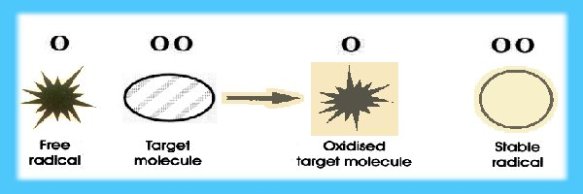
A free radical is a substance that contains one or more unpaired electrons, which is capable of independent existance. They are highly reactive molecules. They may be formed physiologically as in neutropils during intracellular killing or micro organisms or may be formed pathologically in an atherosclerotic plaque.
A stable molucle has no unpaired electron in its electron orbit. In afree radical however the presence of unpaired electron makes it energetically unstaable. It will quickly pair with an electron in the surrounding molecule to give it stability. This oxidises the surrounding molecule. This oxidation has two effects on the taaget molecule – it is chemically modified and it will also become reactive as it now has an unpaired electron. This will lead to oxidation of another surrounding molecule ans a chain reaction will set in generating and regenerationg free radicals, thus destroying large number of cell components.

Free radicals are very short lived. Most of the free radicals are formed in the body from oxygen.

  • Superoxide (O2) ion

  • Hydroxyl group (OH)

  • Nitric Oxide (NO)

  • Singlet oxygen (O)

  • Peroxyl radicals (ROO)

  • Hydrogen Peroxide (H2O2)

Free radicals are being constantly formed in the body because of endogenous metabolic processes or due to environmental exposures – smoking, pollution.

Free radicals are generated in any of the three major cell types of the arterial wall : – endothelial cells, smooth muscle cells and macrophages. The free radicals and the LDL ( Low density lipids ) are involved in processes which finally lead to the formation of ‘Foam Cells‘ from which atherosclerotic plaques evolve.
Oxidised LDL also exerts other actions that add to the development of atherosclerosis. Free radicals also stimulate production of prostaglandins that cause vaso-constriction and also help in the aggregation of the platelets.

Although high levels of native LDL are associated with atherosclerosis, it is the oxidation of LDL by the free radicals that is crucial to its initiation and progression.

Antioxidants

We know that the free radicals are formed in the body constantly. Surely the body has mechanisms to take care of the oxidative stress. All cells have defences against the free radicals and these defences are antioxidants.
There are three types of natural antioxidants :-
1. Antioxidant enzymes : superoxide dismutase, catalase, glutathiaone peroxidase.
2. Preventive antioxidants : transferrin, lactoferrin, ceruloplasmin.
3. Scavenging antioxidants : vitamin C, E,A.

The antioxidants particitipate in reducing the oxidative stress by themselves getting oxidised, thereby protecting the target cells. The free radicals attempt to react with the target cells but in the presence of the antioxidants they react with the antioxidants.

Important Antioxidants
Vitamin A ( ß – carotene )
Vitamin E ( Alpha – tocopherol )
Vitamin C (Ascorbic acid )
Selenium

Alpha lipoic acid

Alpha lipoic acid is a sulfur-containing fatty acid that has recently become very popular as a dietary supplement. It is found inside each of the body’s cells where it helps generate the energy that keeps us alive and functioning.

Important characteristics of alpha lipoic acid :

  • Alpha lipoic acid functions as a powerful Antioxidant.

  • Unlike other antioxidants that work only in water or fatty tissues, alpha-lipoic acid is unusual in that it functions in both water and fat. This gives alpha lipoic acid an unusually broad spectrum of action.

  • Alpha lipoic acid may improve the effects of insulin and help lower blood sugar and prevent or slow nerve damage.

  • Alpha lipoic acid in high doses is more potent than vitamin E.

Atherosclerosis
Natural sources of Antioxidant Vitamins and Minerals
Chocolate has antioxidants
Pomegranate Juice – has Antioxidants

Atherosclerosis

Atherosclerosis

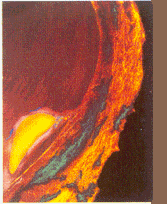
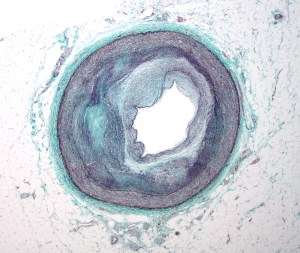
Atherosclerosis is a common form of hardening of the arteries due to plaque deposition. The arteries are the vessels that carry oxygen and other nutrients from heart to the other parts of body. Plaques are patches of fatty tissue that collect in the arteries and damage artery walls. As the fatty deposits accumulate, they reduce the elasticity of the blood vessels and narrow the passageway, thus interfering with the blood flow. The Atherosclerotic vascular disease leads to decreased circulation in the blood vessels of the brain, heart and extremities.

Signs and symptoms of Atherosclerosis

Symptoms are often absent until atherosclerosis reaches advanced stages. Symptoms depend on which part of the body has decreased blood flow, and the extent of the disease.

Presentations of atherosclerosis:-

  • Angina pectoris (Cardiac pain)
  • Myocardial infarction (Heart attacks)
  • Transient ischemic attacks (TIA)
  • Strokes (Brain attacks)
  • Intermittent claudication which may progress to gangrene of the organ / site involved.

Risk factors for atherosclerosis

  • High blood pressure
  • High cholesterol levels
  • Positive family history
  • Diabetes mellitus
  • Cigarette smoking
  • Obesity
  • Sedentary lifestyle
  • Stress
  • Oxidative Stress
  • High levels of plasma homocysteine

Oxidative stress

Oxygen, the most critical nutrient for life, is the main source of free radicals. Free radicals are highly reactive oxygen fragments which are created by normal chemical processes in the cells. During cellular respiration (the process which creates energy), some oxygen molecules are converted into “free radicals” – when one of the electrons in the molecule is lost. This turns our “friend” oxygen into a hyperactive chemical that cannot rest until it gets an electron back. The only way it can replace the missing electron is to take it from another molecule. Now, if that other molecule happens to be a part of one of your healthy cells, then the cell will be damaged possibly leading to a number of diseases or worse inducing it to grow uncontrollably and form a tumor. Increased production of free radicals in the body is known as oxidative stress.
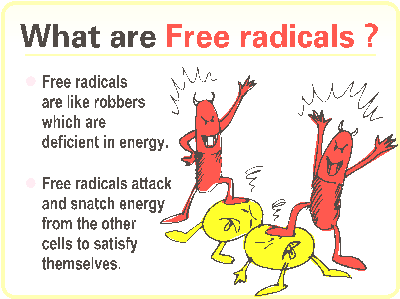
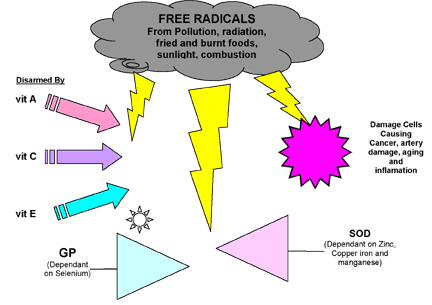
Free radicals are continuously formed as a consequence of many oxidative biochemical reactions in the body. In addition, the environment is also a source of free radicals. These include:

  • lonizing radiation-Sun
  • Ozone and Nitrous oxide – Automobile exhaust
  • Heavy metals – Mercury, Cadmium, Lead etc.
  • Cigarette smoke
  • Alcohol consumption
  • Emotional stress

Damages caused by free radicals

Free radicals attack, damage and ultimately destroy almost any material. The rusting of metal, the browning of a fresh cut apple, or the hardening of paint are all examples of the constant bombardment of free radicals and the resultant damage.

Free radicals are inherently unstable, since they contain ‘extra’ energy. To reduce their energy load, free radicals, react with certain cells in the body, interfering with the cells’ ability to function normally. Free radicals if left undestroyed would quickly enter into oxidative reactions with different vital cellular components containing lipids, proteins, nucleic acids and carbohydrates.
Free radicals attack blood fats which may lead to heart and blood vessel diseases. The body contains two main types of cholesterol – The “Good” cholesterol (HDL) and the ‘Bad’ cholesterol (LDL). When the LDL type of cholesterol reacts with free radicals, it becomes damaged (oxidized), and this may lead to atherosclerosis. Undamaged (native) LDL cholesterol does not seem to be as harmful. Thus, the free radical mediated oxidation of LDL cholesterol is a critical link between high blood cholesterol and build up of vessel-blocking plaques. In addition, free radicals may lower the levels of HDL cholesterol, which protect against cardiovascular diseases.

Free radicals have the capacity to alter cell architecture and metabolism causing a variety of disabling and life threatening disorders. Free radicals may be involved in the following:

  • Loss of transparency of the lenses of the eye, leading to cataracts
  • Inflammatory responses seen in rheumatoid arthritis and asthma
  • Cancer
  • Nerve and brain damage as seen in Parkinson’s disease

Normal Body response to the free radicals

The human body which has to endure the constant production of free radicals also has natural protection from their harmful (oxidizing) effects – antioxidants. The body makes a series of antioxidant enzymes which can neutralize these free radicals. In addition to these enzymes, many vitamins and minerals act as antioxidants in their own right; these include Vit.C, Vit.E,Vit.A and Selenium. These may stop the free radical from forming in the first place, or interrupt an oxidizing chain reaction to minimize the damage due to free radicals. However, these natural enzymes and vitamins are not always enough to overcome today’s continuous onslaught of natural and environmental free radicals.

Protection from free radicals

To have protection from free radicals there are two ways in which one can reduce the damage caused by free radicals. Avoid factors which encourage the production of free radicals. These include substances such as cigarette smoke, ultra violet radiation from the sun, excessive pollution etc. The second course of action is to make sure that we receive plenty of antioxidants in our daily diet.

Adequate quantities of antioxidants require at least five servings of fruits and vegetables.

Angina Pectoris
Free Radicals and Antioxidants 
Natural sources of Antioxidant Vitamins and Minerals 

TMT

TMT

TMT is the most widely used test in the diagnosis of ischemic heart disease. It  involves recording the 12-lead ECG before, during, and after exercise on a treadmill.
The test consists of a standardized gradual incremental increase in external workload while the patient’s ECG, symptoms, and arm blood pressure are continuously being  monitored. The test is discontinued upon evidence of chest discomfort, severe shortness of breath, dizziness, fatigue, ST-segment depression of greater than 0.2 mV (2 mm), a fall in systolic blood pressure exceeding 10 mmHg, or the development of a ventricular tachyarrhythmia.
This test helps to discover any relation between exercise and chest discomfort and the typical ECG signs of myocardial ischemia.
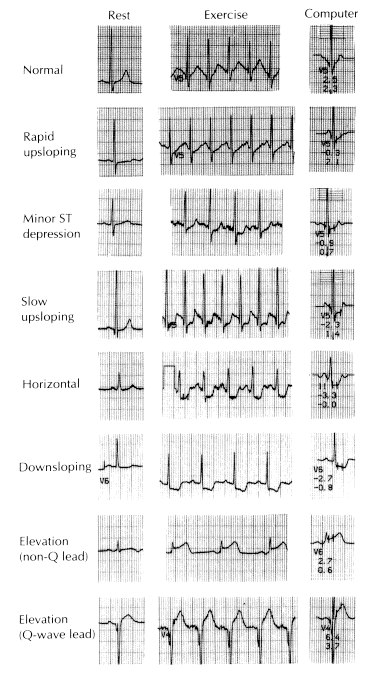
The ischemic ST-segment response is generally defined as flat depression of the ST segment of more than 0.1 mV below the baseline and lasting longer than 0.08 s. This type of depression is designated “square wave” or “plateau” and is flat or downsloping. Upsloping or junctional ST-segment changes are not considered characteristic of ischemia and do not constitute a positive test.
Although T-wave abnormalities, conduction disturbances, and ventricular arrhythmias that develop during exercise should be noted, they are also not diagnostic.
Negative exercise tests in which the target heart rate (85 percent of maximal heart rate for age and sex) is not achieved are considered to be nondiagnostic.
Overall, false-positive or negative results can occur in 15 percent of cases. However, a positive result on exercise indicates that the likelihood of CAD is 98 percent in males over 50 years of age with a history of typical angina pectoris who develop chest discomfort during the test. The likelihood decreases progressively and significantly if the patient has atypical or no chest pain. The incidence of false-positive tests is significantly increased in asymptomatic men under the age of 40 or in premenopausal women with no risk factors for premature atherosclerosis. It is also increased in patients taking cardioactive drugs such as digitalis and quinidine.
Since the overall sensitivity of exercise stress electrocardiography is only about 75 percent, a negative result does not exclude CAD, although it makes the likelihood of three-vessel or left main CAD extremely unlikely.
The physician should be present throughout the exercise test, and it is important to measure total duration of exercise, the times of the onset of ischemic ST-segment change and chest discomfort, The depth of the ST-segment depression and the time needed for recovery of these ECG changes are also important.
Because the risks of exercise testing are small but real estimated at one fatality and two nonfatal complications per 10,000 tests¾equipment for resuscitation should be available.
The normal response to exercise includes a progressive increase in heart rate and blood pressure. Failure of the blood pressure to increase or an actual decrease in blood pressure with signs of ischemia during the test is an important adverse prognostic sign, since it may reflect ischemia-induced global left ventricular dysfunction. The presence of pain or severe (>0.2 mV) ST-segment depression at a low workload and ST-segment depression that persists for more than 5 min after the termination of exercise increases the specificity of the test and suggests severe ischemic heart disease and a high risk of future adverse events.
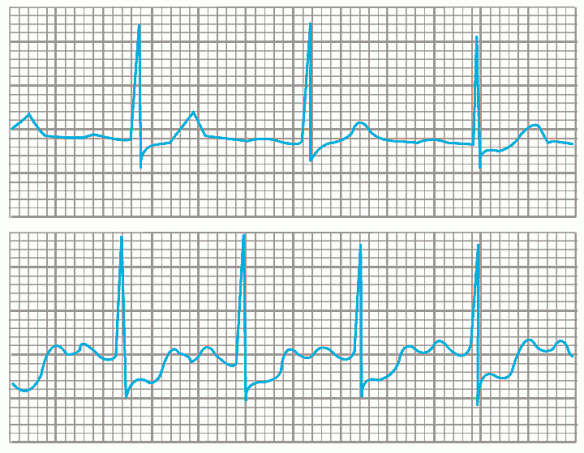
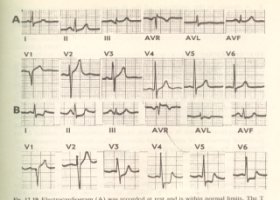
Lead V4 at rest (top) and after 41/2 min of exercise (bottom). There is 3 mm (0.3 mV) of horizontal ST-segment depression, indicating a positive test for ischemia.
Stress induced Electrocardiogram in a patient of Angina Pectoris
Illustration of typical exercise electrocardiographic (ECG) patterns at rest and at peak exertion. The patterns represent a gradient of worsening ECG response to myocardial ischemia.The first two tracings illustrate normal and rapid upsloping ST segments; both are normal responses to exercise.
Stress induced Electrocardiogram in a patient of Angina Pectoris
Normal Electrocardiogram
Angina Pectoris