Tumescent Liposuction

Tumescent Liposuction
The Tumescent Technique, which permits the local anesthesia of large areas of subcutaneous fat, was developed by a California dermatologic surgeon Jeffrey Klein, M.D., in 1985. Klein first presented his findings in 1986 at the Second World Congress of Liposuction Surgery in Philadelphia.
The Tumescent Technique utilizes large volumes of saline solution, containing dilute local anesthetic and adrenaline, which is injected into the fatty tissue. The injected area then becomes locally anesthetized – “numbed”. There may be some discomfort during the initial process of injection. With the tumescent technique, liposuction patients usually need no general anesthesia, as compared with the traditional standard liposuction methods. However, patient may require intravenous sedation or narcotics. In fact, many receive only minor sedation to help them relax, and are completely conscious and comfortable during suctioning portion of tumescent liposuction surgery. After surgery, most patients may get up and walk out of the office without assistance. Patients are usually back to their regular routine in a couple of days. With the Tumescent Technique, postoperative discomfort is significantly reduced, since the local anesthesia remains in the treated tissue for 16 hours after surgery.The Klein formula tumescent solution is injected into the fatty tissue through small, “numbed” slit incisions in the skin. These slit incisions are made, when possible, in inconspicuous places. The tumescent fluid is injected under pressure which causes the target fatty tissue to become firm and inflated. This allows the surgeon to later extract the fat in a more accurate and uniform fashion, thereby producing smoother results. The anesthetic and other agents in the tumescent solution should be allowed sufficient time to diffuse (percolate) and take full effect throughout the fatty tissue. The solution will numb the areas as well as reduce bleeding by temporarily closing down capillaries. Constricting the capillaries is important to reduce bleeding during and after surgery. Less bleeding means less bruising. Not only does this make the surgery safer, it also speeds up postoperative recovery. As a result, most patients can return to work or their regular routines in a couple of days.
Advantages of Tumescent Liposuction

  1. Tumescent liposuction is a dermatologic surgical procedure that can be done safely and less expensively in the office surgical suite.
  2. Relatively large liposuction cases can be done safely in an office surgical setting, affordably, using the tumescent method.
  3. The risks of general anesthesia are eliminated with tumescent liposuction (e.g.: risks of endotracheal intubation, risks of significant blood loss, risks of hypoxemia (low blood oxygen), and risks of side effects from general anesthesia).
  4. The desired fat compartments can be anesthetized (numbed) individually with tumescent liposuction.
  5. Intraoperative blood loss has been greatly reduced with tumescent liposuction. Usually, only 12cc of blood is lost for each liter of fat that is removed with tumescent liposuction. More blood than this (about 24cc) is required for a routine preoperative blood test!
  6. Blood transfusions and intraoperative intravenous fluid replacement are rarely necessary with tumescent liposuction.
  7. Sensations felt during the suctioning portion of tumescent liposuction are usually minimal. Patients rarely have intraoperative discomfort. However, some patients with a history of pain sensitivity may benefit from having an anesthesiologist “stand-by” or administer some “light sedation”. Patients who have never had surgery may wish this option as well if large or many areas are planned for liposuction.
  8. Post-operative recovery is faster following tumescent liposuction as, opposed to traditional/standard liposuction.
  9. The post-operative recovery period at home is usually 1-2 days. Many patients desire to have their liposuction performed on Thursday or Friday to take advantage of weekend (non-work) days.
  10. Post-operative discomfort is typically minimal. Significant numbing usually lasts for 18 hours in the suctioned areas. This is yet another major advantage that tumescent liposuction has over the other methods.
  11. Patients usually dress without assistance following tumescent liposuction and may walk out without assistance. In comparison, patients are customarily very bruised, very sore, and may be incapacitated for weeks following standard liposuction under general anesthesia.
  12. Post-operative pain medicines are rarely needed with tumescent liposuction.
  13. There is usually much less bruising and swelling with tumescent liposuction compared with standard liposuction under general anesthesia.
  14. Medical journal studies confirm that the aesthetic results of tumescent liposuction are superior.
Obesity 
Liposuction

Obesity & Serotonin

Obesity & Serotonin
It is increasingly recognized that obesity is not a failure of will or behaviour, nor is it a disorder of body weight regulation. It is a chronic medical condition, like hypertension or diabetes.In the obese person, body weight is just as carefully regulated as it is in non obese persons, but regulation is around an elevated set point. This homeostatic set point — strongly influenced by genetics and is probably controlled by neurotransmitters that signal hunger or signal satiety.Only those individuals with exceptional will power and the ability to tolerate discomfort are able to defeat this homeostatic mechanism through dietary energy restriction.
A number of major studies have shown that the majority of dieters who lose weight with low-calorie diets and behaviour modification regain that lost weight within 3 to 5 years.
If eating behaviour, like mood and personality, is simply the result of a mixture of neurotransmitters, then a pharmaceutical intervention may be more effective than attempts at behaviour modification, just as antidepressants are generally more effective for clinical depression than a psychiatrist.At one time, amphetamines were being used for weight control, although when the drug was discontinued, the patient gained back all the lost weight. However, if obesity is a chronic medical condition in the same way that hypertension is a chronic medical condition, then weight gain following drug discontinuation is no different from rising blood pressure after the discontinuation of antihypertensive medications.
Using serotonin reuptake inhibitors for weight lossIn the early 1980s, clinical investigators discovered a link between serotonin and eating disorders. The discovery was unexpected: during clinical trials of the serotonin reuptake-inhibitor fluoxetine, one side effect noted was weight loss. Even before this, seotonin was implicated in the eating disorders.

The dietary starch is converted to sugar, sugar stimulates the pancreas to release insulin, insulin raises brain levels of the amino acid tryptophan, tryptophan is a precursor of serotonin, and serotonin regulates mood, producing a sense of well-being. Therefore, obese people load up on carbohydrates to elevate mood. In studies with obese women, it was found that a high-carbohydrate snacks improved mood.

Subsequent studies showed that serotoninergics helped overeaters lose weight. One agent — dexfenfluramine — was particularly effective for cutting food intake. Dexfenfluramine is the active portion of the anti-obesity agent fenfluramine. Its side effects are dry mouth, diarrrhea, unsteadiness, and memory problems along with cardiac problems..

Because of the seriousness of the valvular heart disease associated with the use of fenfluramine, the medication was withdrawn from the market in September of 1997

According to the National Institutes of Health and the Centers for Disease Control, more than 30% of Americans are 20% or more overweight, and one third of women and more than one quarter of men are trying to lose weight at any given time.

Obesity ~ Some facts

Obesity – some facts
  • Exercise alone is not enough to get rid of the obesity.
  • Fact is, one pound of body weight is equivalent to 3,500 kcal. To shed this much body weight one needs to walk approximately 50 miles or 80 km.
  • A slice of bread pasted with jam and butter contains some 150 kcal. To be able to burn up this much body needs workload equivalent to strenuous exercise for half an hour or a 3 mile run. How many of us can do it!!!
  • By far the only way of shedding excessive weight is to eat fewer calories, fewer that those expended.
  • Losing weight should be a gradual process. There is no miraculous diet which would take off extra large amount of weight within a few days without toiling hard.

  • Complete fasting for a week is difficult and inadvisable, but even if it is accomplished it would take away not more than 5 pounds of body fat.
  • The best way to fight obesity is to consume a properly balanced low caloric diet, to be accompanied by bouts of exercise.
  • Overweight people who manage to lose just a little bit of weight – even just a pound a year – may substantially lower their risk of high blood pressure. The hard part, of course, is keeping the weight off. But a new study shows that surprisingly little weight loss – if it can be sustained – carries a big payoff in better health.
  • If you’re overweight, losing just a pound or two a year–and keeping the weight off–can help prevent diabetes. The more weight lost, the bigger the reduction in diabetes risk. In a long-term study, the risk of developing diabetes was 33% lower in overweight people who lost between 8 and 15 pounds, while those who lost more had a 51% reduction in risk.
  • Women who repeatedly gain and lose weight, especially if they are obese, have significantly lower levels of HDL or “good” cholesterol than do women who maintain their weight.
  • Women who are not obese should try to maintain a stable weight.
  • Being overweight and having high blood pressure can independently increase a man’s chances of developing kidney cancer. 
 

 Obesity

Childhood Obesity

Childhood Obesity
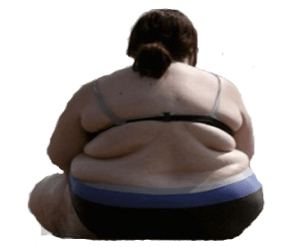
Obesity is one of the most significant health problems in the developing and developed countries. An overweight adolescent has a 70 percent chance of becoming an obese adult, and obesity can lead to a higher risk of life threatening health problems like –

  • High blood pressure
  • Premature heart attacks
  • Diabetes
  • Physical risks
  • Emotional ramifications because of peer ridicule and lower self-esteem levels.
  • The additional weight can result in reduced endurance, leg pains from stressed joints and often make simple activities more taxing.

All this leads to “The Vicious Cycle of Childhood Obesity”.

It is believed that children are becoming heavier due to –

  • decrease in physical activity (modern transportation, television, computers and video games)
  • Increasing availability of higher calorie foods such as fast foods, higher-fat convenience foods and snacks.

Management of Childhood Obesity

  • Dietary intervention.
  • An exercise program.
  • Behaviour counselling with family participation.
There is a rare genetic disorder that is related to childhood obesity. It is named Prader-Willi Syndrome, a rare genetic disorder that affects about one of every 15,000 people. Prader-Willi Syndrome has been recognized as the most common genetic cause of potentially life-threatening childhood obesity.It results from an abnormality on the 15 chromosome.The children have extraordinarily low metabolism and an insatiable hunger and insatiable urge to eat, which is beyond the control of the patient.

Other features of this condition are:

  • Low muscle tone and short stature
  • Small hands and feet
  • Poor motor skills
  • Reduced bone mineral density.
  • Delayed or incomplete sexual development
  • Mild to moderate mental retardation
  • Distinctive facial features (including a narrow face, small mouth, and full cheeks)


 Low Muscle Tone
Obesity 
Obesity ~ Your Weight or Your Shape ?

Obesity ~ Your Weight or Your Shape ?

Obesity What is more Important – Your Weight or Your Shape ?
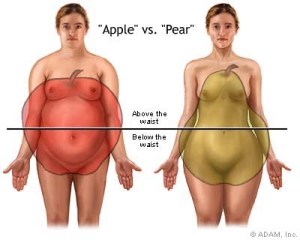
The ultimate risk of diseases in relation of obesity is not the weight but the shape of the weight your body carries.
Now many studies have established the fact that if you have a pear shape – namely carrying most of your fat in your butt and your thighs – you are better off than an apple shape where your waist measurement is beyond your hip measurement.
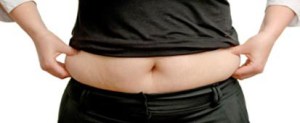
Here is an eight-year follow-up to the nurse’s health study which began with almost 45,000 women. A definite pattern emerged which tells you that it’s not how much you weigh, but where that weight is that can be critical for heart disease. For woman, risk for dying from heart disease is much greater than the risk of dying from breast cancer and yet, the latter seems to get a lot more attention and fear.To find out what the risks are this simple test would help.First, let’s start with waist-hip ratio.To measure your waist-hip ratio, measure your waist at the level of your belly button and your hips at the largest circumference with a tape measure.On division of waist and hip measures we get the waist -hip ratio which should be somewhere between 0.7 to 1.0.If it’s above one that implies your waist is larger than your hips. That’s not good.
Now let’s go for the body mass index.
The body mass index, or BMI, is the ratio of your weight in kilograms divided by your height in meters squared.
It is now found that even if your BMI is higher than desirable, it doesn’t seem to make as much difference as your waist-hip ratio.BMI’s of less than 25 has been considered desirable, over 25 is considered to be undesirable.
It is also to be understood that the risk for women under the age of 60 is more pronounced than women over the age of 60. The risk factors that we are concerned here are mainly for coronary heart disease which includes non fatal heart attacks as well as fatal heart attacks.
If your waist-hip ratio is 0.72 or below, you are the standard, and don’t at least have to worry about heart attacks based on your body shape.If your waist-hip ratio is 0.72 to .76 and you are under 60, your risk is 1.7 times higher than the standard or 70 percent higher.If your ratio is 0.76 to 0.80, your risk is two and a half times higher.If your ratio is 0.80 to .88, your risk approaches three times higher.If your waist-hip ratio is over 0.88, your risk is four and a half times higher.If you are older than 60, the top category of risk is 1.9 times higher.So you can see that the effects of this are diminished in women over the age of 60, implying that extra abdominal fat is less risky for older woman. Now here is the major point of this study. With minor exceptions, it didn’t matter whether your body mass index was under 25 or over 25. In other words, an overweight woman, if she has more of an hour-glass figure, seems to be protected. In addition, you can look at the absolute waist circumference measurements.

At 71.1 centimetres, your waist is fine.At a waist circumference of 81.3 to 86.4 centimetres, your risk is a couple of times higher.If your ratio is over 96 centimetres, and you are under 60, your risk is up four times. If you are over 60, your risk is only up two times.

It can be easily concluded that an overweight woman, if she has more of

an hour-glass figure, seems to be protected.

A waist circumference above 100 cm in men and above 90 cm in women is associated with increased levels of triglyceride and reduced levels of HDL cholesterol.

So, for those who are in a high risk category it’s important to take preventive measures concerning exercise and cholesterol and take care of oneself as best as possible.

Obesity
Childhood Obesity