Prevention & Treatment of Osteoporosis

Prevention & Treatment of Osteoporosis
The Role of Hormone Therapy (HRT) in the Prevention and Treatment of OsteoporosisWhat is Hormone Therapy?

Hormone therapy in cases of osteoporosis is treatment which supplements of the hormones that ovaries have stopped making at menopause. It consists of either Oestrogen alone or in combination with Progesterone.

Possible guidelines for the use of Hormone therapy

  • As a preventive measure for women entering menopause with multiple risk factors. Post menopausal osteoporosis is best prevented by starting hormonal therapy at the time of menopause and continued for a minimum of 10 years.
  • Women who undergo early menopause or surgical menopause should start hormone therapy immediately and continue until at least up to the average age of menopause.
  • Women with osteoporosis even if she is many years past menopause.
  • Women in early 40, with signs of low bone density, especially with multiple risk factors and her bone density tests revealing low bone mass.
Types of Hormone therapy
Hormone therapy can be given in a number of ways. Oestrogen can be given alone or in combination with progesterone. When oestrogen is given alone chances of uterine cancer increases. To eliminate this risk progesterone can be added to oestrogen. Women who have had a hysterectomy may be treated with estrogen alone.Common Hormone Regimens

  • Estrogen and progesterone are both taken every day.
  • Estrogen is taken every day for 31 days and progesterone is taken for the first 14 days.
  • Women without a uterus can take estrogen alone ­ every day of the month or for 25 days followed by a five-day break, which can help control sore breasts.

Recently claims have been made that natural progesterone creams will prevent osteoporosis.

A dosage of 0.625 mg of oral estrogen per day (or its equivalent) is the minimum dose required to protect against osteoporotic fractures. Lower doses of estrogen (0.3 mg per day) combined with calcium supplements (1,500 mg per day) may also protect bones.

Side effects of Hormone therapy: depression, headaches, breast tenderness, skin irritation and weight gain.

Conditions when Hormone therapy is to be Avoided

  • history of unexplained vaginal bleeding
  • active liver disease or Chronic Liver disease
  • breast cancer
  • active vascular thrombosis
  • migraines
  • history of thromboembolism (blood clots which break up, travel and form other blockages)
  • history of hypertriglyceridemia in your family (elevated blood lipids)
  • uterine fibroids
  • endometriosis
  • past history of uterine cancer — effectively treated
  • gall bladder disease
  • strong family history of breast cancer

To be on Guard when on Hormone therapy

  • To report any Irregular Vaginal Bleeding
  • Regular checkup for Breast Health. Fequent self examination of Breasts.
  • Regular Mamograms advisible.
Other benefits of Hormone TherapyResearchers believe it helps to prevent heart disease; and it may provide protection against Colon cancer, Alzheimer’s disease and stroke.
Risks of Hormone therapyMost researchers believe that hormone therapy is safe for short term – 10 years. Even for longer use the risks are minimal and the benefits outweigh the risks.

Results of various studies suggest that over a lifetime approximately 10 in 100 women on hormone therapy will develop breast cancer.

 Osteoporosis

Conditions associated with Osteoporosis

 Conditions associated with Osteoporosis
  • Hypogonadism
  • Hyperadrenocorticism
  • Chronic steroid administration
  • Thyrotoxicosis
  • Hyperparathyroidism
  • Malabsorption
  • Scurvy
  • Calcium deficiency
  • Long period of immobilization
  • Chronic heparin administration
  • Metabolic bone diseases
  • Osteogenesis Imperfecta
  • Homocystinuria
  • Marfan’s syndrome
  • Ehlers-Danlos syndrome
  • Rheumatoid Arthritis
  • Malnutrition
  • Epilepsy
  • Primary Biliary cirrhosis
  • Chronic Obstructive pulmonary disease
  • Alcoholism
  • Menkes’ syndrome

Osteoporosis ~ Diagnosis

Osteoporosis ~ Diagnosis
To diagnose Osteoporosis we have to find out the calcium content of the bones. To put it more scientifically, the Bone Mineral Density ( BMD) has to be evaluated. The technology that is used to do this is known as Bone Densitometry.
Before the advent of BMD tests, osteoporosis was diagnosed by routine X-rays or by bone biopsy. By these methods osteoporosis could be rarely diagnosed before at least 25 % of the bone mass was lost, and by this time the disease is well advanced. Today BMD tests help in diagnosing the disease and also help in warning us from the likely hood of developing osteoporosis in the near future.
Indications for BMD tests
1. At Menopause, to decide regarding the need for Hormone therapy.
2. Those on glucocorticoids, to see if they are losing bone mass or not.
3. Recent fractures, where osteoporosis is suspected.
4. Those with osteoporosis and under treatment, to monitor the effectiveness of treatment.
5. Those with Primary Hyperparathyroidism.
6. A man with Hypogonadism.
7. Those on chemotherapy and may be losing bone mass.
 
The most common bone density test in use today is called  dual energy x-ray absorptiometry (DXA).
It is a non invasive procedure and the amount of radiation exposure is very little.The results are expressed in units referred to as standard deviations (SD). These SD units tell how far you differ (or deviate) from what is considered normal. If you are 2.5 SD units below normal (-2.5), you will be told that you have osteoporosis.
Heel Ultrasound: A new Technology for testing Bone Density
The test usually involves immersing your foot in a bath of warm water, allowing high frequency sound waves to pass through your heel. The test measures the density and quality of the bone in your heel. It has not yet become a standard testing procedure.

Diagnostic Classifications of Osteoporosis

Classification Definition Risk and Recommendations
Normal BMD is not more than -1 SD below the average peak bone mass of a young person (30-45) Risk of fracture is very low.
Low Bone Mass (sometimes referred to as Osteopenia) BMD is between 1 and 2.5 SD below normal (between 1 and 2.5) • Risk of fracture is usually low to moderate.
• Accelerated bone loss at menopause requires immediate intervention.
Osteoporosis BMD is greater than 2.5 SD below normal (-2.5) and there have been no fractures • Moderate to very high risk of fracture.
• Treatment is advised .
Severe Osteoporosis BMD greater than 2.5 SD below normal (-2.5) with existing fractures • Very high to extremely high risk of fracture.
• Treatment is strongly advised.

Osteoporosis – Risk Factors

Osteoporosis – Risk Factors
The following conditions predispose to loss of bone and increased susceptibility to osteoporosis and consequent fractures.

  • Women with early menopause (40-45 years)
  • Younger women with ovarian hormone failure Or bilateral oophorectomy ( removal of Ovaries ) before normal menopause.
  • Women not receiving hormonal therapy for at least 5 years after menopause.
  • Patients after prolonged corticoid treatment of more than 3 months.
  • Primary hyperparathyroidism.
  • Strong family history of osteoporosis.
  • Men with hypogonadism.
  • Patients who have received chemotherapy, especially for breast cancers and haematological cancers.
  • Certain drugs enhance bone loss and render the patient susceptible to development of osteoporosis (e.g. corticoids, anti-convulsants, excessive doses of thyroid hormone, prolonged heparin therapy and anti-cancer drugs including high doses of methotrexate.
  • Low Calcium in diet.
  • Insufficient exposure to sunlight or not enough Vitamin D in diet.
  • White or Eurasian ancestry.
  • Caffeine (consistently more than three cups a day of coffee, tea, cola).
  • Alcohol (consistently more than two drinks a day).
  • Sedentary life style or prolonged bed rest.
 Conditions associated with Osteoporosis

Osteoporosis

Osteoporosis

Osteoporosis
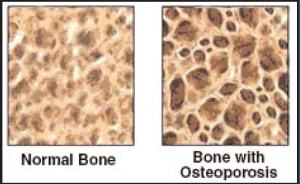
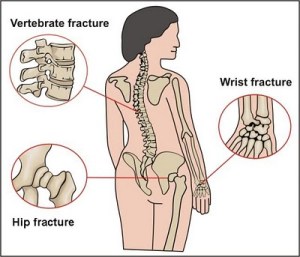
Bone is living tissue, not a lifeless structure, that only supports your muscles and flesh. In fact, bone, like other body tissue, changes throughout a person’s life.Bone tissue is constantly renewed through a process called remodelling in which old bone is removed and replaced by new bone. This remodelling is a natural, ongoing process that takes place in a healthy body. It is Nature’s way of seeing that old bone is discarded and replaced with new bone. Loss in bone occurs because, as we age, new bone is not laid down at the same rate as older bone is lost; the result may be a thinning of the bones, referred to as Osteoporosis.Osteoporosis is characterized by low bone mass and deterioration of bone tissue.WHO defines osteoporosis as a marked reduction in bone density, to differentiate it from osteopenia which refers to mild reduction in bone  density. In osteoporosis, the bone density is more than 2.5 standard deviations below the young normal mean (T scale <-2.5).Osteoporosis is often known as the silent thief because bone loss occurs without symptoms.True osteoporosis causes bone pain and or spontaneous fractures of the spine, hip and wrist.
Osteoporosis is usually asymptomatic until fracture develops. Older persons with a fracture, especially spontaneous fracture of the spine, wrist or femur should be investigated for osteoporosis.
 
 
Prevalence
One in four women over the age of 50 has osteoporosis. One in eight men over 50 also has the disease. However, the disease can strike at any age.
More women die each year as a result of osteoporotic fractures than from breast and ovarian cancer combined.
A fifty-year-old woman has at least a 40 per cent risk of an osteoporotic fracture during the remainder of her life. Up to 20 per cent of individuals, who fracture a hip, die as a result of complications. Fifty per cent of those who survive remain permanently disabled.

Osteoporosis related topics