Gurpreet Kaur’s journey in this world ....
Gurpreet Kaur was a Musician. She was a singer and a composer of music. Her interest was composing and singing Gurbani Shabads in Indian Classical style. She sang Shabads in All the Raags mentioned in Sri Guru Granth Sahib Ji. She also taught Gurmat Sangeet at Gurmat Gian Missionary College, Jawadi, Ludhiana.
Elder child to Pushpinder Kaur and Dr. Brig. Harminder Singh, was born in Amritsar on 13th Jan 1962. She attended various convent schools as a child because her father would get frequent Army postings as a dental surgeon. She graduated with Music Honors from Govt. College for Women, Chandigarh.
Music was her hobby and she composed and sang Raag based Gurbani Shabads. Doing Kirtan was part of growing up nurtured by her parents. She learned music from her father Dr. Brigadier Harminder Singh who was a dental surgeon in Indian Army and a very good singer himself. Gurpreet’s Bhua (father’s sister), Ajit Kaur retied as a Head of Department of Music from Govt. College for Women Ludhiana, and was a renounced Punjabi singer of her time. Gurpreet Kaur also learned nuances of Indian Classical Music from Pandita Sharma.
She was a mother of three children, and a grandmother. Her daughter Keerat Kaur is a Computer Engineer. Her two sons Gurkeerat Singh and Jaskeerat Singh are doctors in USA. Her daughter Keerat Kaur too was part of her group ~ Gurmat Gian Group.
Gurpreet Kaur left this world at the age of 54yrs on 12th Sept 2016 in Baltimore USA.
She had recorded around 25 cds of Gurbani Keertan.
'Raag Ratan' Album (6 CDs) is a Compilation of Shabads in All the 31 Sudh Raags of Sri Guru Granth Sahib Ji.
'Gauri Sagar' Album (3 CDs) is a Compilation of All forms of Raag Gauri in Sri Guru Granth Sahib Ji.
'Nanak Ki Malhaar' ~ ((3 CDs) is an album of Raag Malhar Shabads in various forms of Malhar.
'Gur Parsaad Basant Bana' ~ (3 CDs) is an album of Shabads in Raag Basant sung in various forms of Raag Basant.
Har Ki Vadeyai
Sarni Aayea
Sewa
Priya Kee Preet Piyaree
Mohan Ghar Aavho Karo Jodariya
Mo Kao Taar Le Raama Taar Le
Tere Kavan Kavan Gun Keh Keh Gawan
Mera Baid Guru Govinda
Saajanrraa Mera Saajanrraa
It was invented by a German chemist, Gerhard Schrader, in the mid 1930s.It is a colourless or brownish as a liquid and odorless as a vapor. Schrader worked for IG Farben, a company that later used slave labour from the Birkenau concentration camp to produce its products. Another one of Fraben’s invention was Zyklon-B, a type of hydrogen cyanide used by the Nazis to gas victims in those same camps during World War II. Tabun is also an organophosphate like many pesticides and is among the easiest to nerve gases to manufacture.
It is a colourless odourless nerve gas. It belongs to organophosphate chemical group. Most of the moderninsecticides too belong to this family of chemicals.
US, Russia and Iraq had produced Sarin. By the end of World War I, most European powers had integrated gas warfare capabilities into their armies at some level, and nerve gases such as sarin, small amounts of which cause paralysis or death, were developed in Germany between the two world wars. Despite the availability of gases, only Japan used them in China—as World War II became global. After World War II, knowledge of nerve-gas manufacture became widespread.
Soman
Soman : is also a nerve agent. It is a volatile substance effective mainly through inhalation.
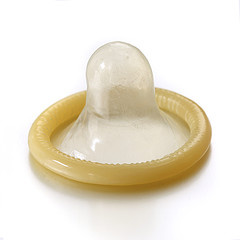
Condoms are a commonly used contraceptive device. It is a sheath or covering which fits over a man’s penis, and which is closed at one end. Mostly it is the male condom that is used. A type of female condom is also available. It is a female condom, or vaginal sheath, which is used by a woman and fits inside the vagina.Use of Condoms is very important in the prevention of Sexually Transmitted Diseases.
Male condom is made of latex or polyurethane. Latex condoms are more reliable. Most of the condoms are lubricated. Some condoms are not lubricated at all, some are lubricated with a silicone substance, and some condoms have a water-based lubricant. The lubrication on condoms aims to make the condom easier to put on and more comfortable to use. It can also help prevent condom breakage. Some condoms and lubricants contain spermicide.
When using only put on a condom once there is a partial or full erection. If the penis is not circumcised, pull back the foreskin before rolling on the condom. You need to use a new condom every time you have sexual intercourse. Never use the same condom twice. When you have ejaculated or finished having sex, withdraw the penis before it softens. Make sure you hold the condom against the base of the penis while you withdraw, so that the semen doesn’t spill.All used condoms should be wrapped in tissue or toilet paper and thrown in the bin. Condoms should not be flushed down the toilet as they may cause blockages in the sewage system.
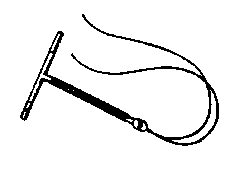
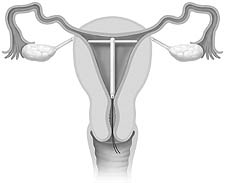
An intrauterine device (IUD) is a small T-shaped plastic device that is placed inside the uterus to prevent pregnancy. It is a reversible type of contraception. The women having IUD in place is protected till she decides to get the device removed. The device can be kept in the uterus for 10 yrs. It can be removed early if and when the woman wants to have a pregnancy.
The IUD has a plastic string is attached to its long arm end to ensure correct placement and for removal. IUDs are an easily reversible form of birth control, and they can be easily removed. However, an IUD should only be removed by a medical professional.
IUDs are the most inexpensive long-term birth control method available.Two types of IUDs are available: copper and hormonal. The most recently introduced hormonal IUD is the levonorgestrel intrauterine system. An IUD can be placed during an outpatient visit. It can be inserted at any phase of the menstrual cycle, but the best time is right after the menstrual period because this is when the cervix is softest and when women are least likely to be pregnant.To place the IUD, a speculum is used to hold the vagina open. An instrument is used to steady the cervix and uterus, and a tube is used to place the IUD. The arms of the T shape bend back in the tube and then open once the IUD is in the uterus. Once the IUD is in place, the instruments are withdrawn. The string hangs about an inch out of the cervix but does not hang out of the vagina.
Women should never try to remove an IUD themselves. A clinician can usually remove an IUD very simply by carefully pulling the string ends at a certain angle. This causes the IUD arms to fold up and the IUD to slide out through the cervix.
The arms of this IUD contain some copper, which is slowly released into the uterus. The copper prevents sperm from making their way through the uterus into the tubes and prevents fertilization. If fertilization does occur, the copper prevents the fertilized egg from implanting on the wall of the uterus.Hormonal IUDs that contain progesterone must be replaced every 5 years. They can be removed at any time if a woman decides she wishes to become pregnant or if she does not want to use it anymore. Hormones are in the arms of the IUD and are released slowly into the uterus. The hormone used is mostly levonorgestrel, which is similar to progesterone. It causes cervical mucus to thicken to prevent sperm from entering the cervix and reaching the egg.
Emergency Contraception is a method to avoid pregnancy after an unprotected sex. It is not to be used as a frequent birth control measure. Emergency contraceptives should not be used as a contraceptive method in women who are sexually active or planning to become sexually active.Emergency contraceptive pills are sometimes called the morning-after pill. This pill has to be taken within 72 hrs of unprotected sex. These pills contain high doses of the same hormones that are in birth control pills.It is mostly a single doses product. But some brands have to be taken as 2 doses, 12 hrs apart. One must follow the advice available with the pill.
A woman is most likely to become pregnant if sexual intercourse occurs in the few days before or after ovulation, release of an egg from the ovary. This pill prevents pregnancy either by preventing ovulation, or by preventing the union of sperm with the egg or by preventing the embedding of the fertilized egg in the uterus.
Another Emergency Contraceptive measure that is possible is use of Intrauterine Device. This devie is Copper T. It can be inserted up to 5 days after unprotected sexual intercourse but should be inserted as soon as possible. The IUD can be removed after your next menstrual period, when it is confirmed that you are not pregnant. You can use the IUD for long-term birth control. The copper IUD can be left in place for up to 10 years for contraception, and it is a reversible form of birth control.


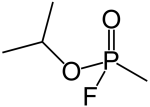 It is a colourless odourless nerve gas. It belongs to organophosphate chemical group. Most of the moderninsecticides too belong to this family of chemicals.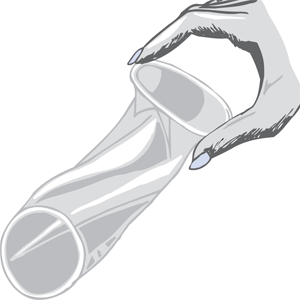
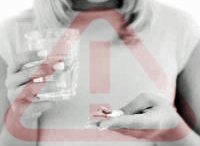 Emergency contraceptive pills are sometimes called the morning-after pill. This pill has to be taken within 72 hrs of unprotected sex. These pills contain high doses of the same hormones that are in birth control pills.It is mostly a single doses product. But some brands have to be taken as 2 doses, 12 hrs apart. One must follow the advice available with the pill.
 Manbir Online ~ for Health & Fitness