
Unknown's avatar

About Manbir & Gurpreet

Gurpreet Kaur’s journey in this world .... Gurpreet Kaur was a Musician. She was a singer and a composer of music. Her interest was composing and singing Gurbani Shabads in Indian Classical style. She sang Shabads in All the Raags mentioned in Sri Guru Granth Sahib Ji. She also taught Gurmat Sangeet at Gurmat Gian Missionary College, Jawadi, Ludhiana. Elder child to Pushpinder Kaur and Dr. Brig. Harminder Singh, was born in Amritsar on 13th Jan 1962. She attended various convent schools as a child because her father would get frequent Army postings as a dental surgeon. She graduated with Music Honors from Govt. College for Women, Chandigarh. Music was her hobby and she composed and sang Raag based Gurbani Shabads. Doing Kirtan was part of growing up nurtured by her parents. She learned music from her father Dr. Brigadier Harminder Singh who was a dental surgeon in Indian Army and a very good singer himself. Gurpreet’s Bhua (father’s sister), Ajit Kaur retied as a Head of Department of Music from Govt. College for Women Ludhiana, and was a renounced Punjabi singer of her time. Gurpreet Kaur also learned nuances of Indian Classical Music from Pandita Sharma. She was a mother of three children, and a grandmother. Her daughter Keerat Kaur is a Computer Engineer. Her two sons Gurkeerat Singh and Jaskeerat Singh are doctors in USA. Her daughter Keerat Kaur too was part of her group ~ Gurmat Gian Group. Gurpreet Kaur left this world at the age of 54yrs on 12th Sept 2016 in Baltimore USA. She had recorded around 25 cds of Gurbani Keertan. 'Raag Ratan' Album (6 CDs) is a Compilation of Shabads in All the 31 Sudh Raags of Sri Guru Granth Sahib Ji. 'Gauri Sagar' Album (3 CDs) is a Compilation of All forms of Raag Gauri in Sri Guru Granth Sahib Ji. 'Nanak Ki Malhaar' ~ ((3 CDs) is an album of Raag Malhar Shabads in various forms of Malhar. 'Gur Parsaad Basant Bana' ~ (3 CDs) is an album of Shabads in Raag Basant sung in various forms of Raag Basant. Har Ki Vadeyai Sarni Aayea Sewa Priya Kee Preet Piyaree Mohan Ghar Aavho Karo Jodariya Mo Kao Taar Le Raama Taar Le Tere Kavan Kavan Gun Keh Keh Gawan Mera Baid Guru Govinda Saajanrraa Mera Saajanrraa

Y Chromosome

Y Chromosome

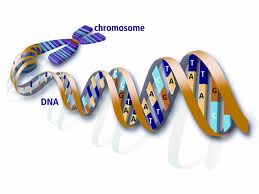
We know that chromosomes are the microscopic rods that hold genes. Chromosomes generally come in matched pairs, with one member of each pair from Mom and the other from Dad. But men have one wildly mismatched pair, the X and the Y. The Y chromosome makes males. If you inherit it from your dad, you’ll become a boy. If you get an X chromosome from Dad instead, you’ll be a girl.

The idea that men had their own chromosome was recognized in the early 1920s, and the Y was one of the first to be identifiable under a microscope. But while researchers could figure out what kinds of genes the X chromosome carried by studying generations of families, this approach failed when applied to the Y. For decades after that, scientists regarded the Y as a like a wasteland, not of much significance except that it carried some gene that determined gender in a fertilized egg.

That view has largely held on, even though evidence has emerged that the chromosome carries at least two dozen genes or gene families. That’s a small number compared to maybe 2,000 or more genes on the X.

Scientists are now close to deciphering the makeup of the Y chromosome. , Scientists hope to have worked out the DNA sequence of the Y chromosome. The work should help researchers learn about causes of male infertility, because it’ll help them identify genes on the Y that men need to make sperm.

Genes & Chromosomes

Artificial Sweeteners

Artificial Sweeteners

Artificially sweeteners are typically between 200 and 2000 times sweeter than sugar (sucrose).

  • Aspartame is 200 times sweeter
  • Acesulfame-K is 300 times sweeter
  • Alitame is 2000 times sweeter than sugar.

Fact is that sugar is not the primary concern when considering causes of obesity.

• Thus replacing sugar with artificial sweeteners does not dramatically affect weight control compared with a reduction in fat intake.

Appropriate use of artificial sweeteners may help control energy intake and bodyweight in the short-term, but little is known about the long-term impact of artificial sweetener consumption on energy intake and body weight

• Thus, current evidence suggests that, although artificial sweeteners may be helpful in the short-term, there is little long-term benefit of in people of normal, body weight.

It is suggested by some that consumption of artificial sweeteners or low-energy foods tends to be followed by an increase in energy intake to make up for the lost energy in people of a normal bodyweight.

A lower intake of energy relative to energy expenditure promotes weight loss.

However, the science is not as straight forward as it may seem. The body is capable of sensing and adapting to a reduced energy intake, and as a result people may compensate for this by eating more later.

People who exercise dietary restraint (i.e. watch what they eat carefully) may benefit from artificial sweeteners as they tend not to compensate for energy intake.

Rabies in Animals

Rabies in Animals

Rabies is primarily a disease of animals. The most commonly involved and frequently associated animal is the Dog. It can also be seen in other animals with which man has been in close contact since ages.

DOG

The incubation period of this disease is about 10 days to 2 months and sometimes even longer. In the initial stage the dog stars behaving differently and abnormally. It goes to dark corners, becomes restless, shows unusual agitation and develops fever. There are two clinical varieties that are seen of this disease. Furious Rabies and the Dump Rabies.

Furious Rabies: is the more common variety. In this the dog becomes dangerously aggressive, bites – may be its own chain, stone, paper, wood iron and other metal objects and even man or any other animal. Later there is paralysis of the jaws and there is drooling of the saliva and the vocal cord paralysis which leads to change in tone of bark. In the end there is paralysis of the limbs and trunk and death occurs due to respiratory paralysis and convulsions.

Dump Rabies: is less common. In this there are mainly paralytic features. The paralytic feature  start with the muscles of head and back regions. The animal has difficulty in the swallowing. At times the owner tries to help the pet in feeding and thus gets exposed to this disease.

The survival for the animal is generally for 3-5 days.

OTHER ANIMALS

In Cats it is mostly the furious variety. The cat may strike in air as if trying to catch mice. The death is due to convulsions and respiratory paralysis.

Cows & Horses get rabies from bite by another animal mainly the Dog. In cows there is profuse salivation and excitation and paralysis. Horses may show excitation and occasionally show aggression. Wild animals may lose fear of man and the nocturnal animals are seen during day time and may attack man.

Laboratory Diagnosis: in case of animals is done after the death of the animal. It is done by the examination of the brain. This is done —

  • by demonstration of Negri bodies by seller’s stain.
  • by detection of rabies viral antigen by fluorescent antibody test – it is quick and the best method.,

Immunization of Animals

Tissue culture vaccine is used for Pre-Exposure Immunization. For Dogs and Cats 2 injections at 2 months age and another one month later is given. Then a booster every year.
Rabies

Administering a Rabies vaccine

Administering a Rabies vaccine

General considerations:

The combination of local treatment of the wound, passive immunization with Rabies lmmunoglobulin (RIG) and vaccination is recommended for all severe exposure (category 111) to rabies. Prompt and thorough cleansing of the wound, and administration of purified Equine or Human Rabies lmmunoglobulin (ERIG or HRIG) and cell culture rabies vaccine immediately after exposure virtually guarantee complete protection, and the risk of post-exposure treatment complications is much lower than with brain-tissue vaceines.

Intramuscular schedule:

All intramuscular injections must be given into the deltoid region or,

in small children, into the anteriolateral area of the thigh muscle.

The vaccine should never be administered in the gluteal region.

The most widely used WHO scheme calls for a single 1.0 ml dose IM, administered in the upper deltoid (anteriolateral area of thigh for children) on day 0, 3, 7, 14 and 30 with an optional further dose on day 90.

Often the day 90 dose is omitted except in those also given passive immunisation with RIG (usually categ III bite).

The gluteal region is not recommended on account of high fat content in this region which retards the absorption of the vaccine.

Age and/or weight & dose:

Neonates can be given the anti-rabies vaccine without any additional side effects vis-a-vis older children or adults. Modern tissue culture rabies vaccine should not be given in reduced dosage  irrespective of the age and/ or weight.

The dosage schedule for the modern tissue culture vaccine remains same for all age groups. Continue reading

Rabies Vaccination

Vaccination procedure for persons who have not been vaccinated


Pre-exposure vaccination Days 0,28,56 & once one year later, or Days 0,7,21 & once one yr. later
Post -exposure vaccination Days 0,3,7,14,30 & 90 (optional)
Post-exposure simultaneous prophylaxis Vaccination as above, plus Human Rabies Immunoglobulin 20 I.U./ Kg bwt or Rabies immune serum 40 I.U / Kg bwt with the first dose of vaccine or no later than 8 days. Half of total amount of immunoglobulin to be infiltrated in the region of the wound. The remainder is preferably to be injected intragluteally.

Local treatment of the wound should always be carried out. Usually the time interval between the last dose of the vaccine and the date of pre-exposure are taken into consideration. 
Previous Vaccinations using a rabies vaccine with a potency of >2.5 I.U./dose, which date back:- Vaccination Scheme
Less than One year 1 vaccination on day 0. For high-degree exposure 2 vaccinations on day 0 & 3.
1 to 5 years 2 vaccinations: day 1 & 3 For high degree exposure: 3 vaccinations day 0, 3 & 7
More than 5 years A complete course of vaccination including RIG if indicated.

Regimen for post-exposure treatment of a previously vaccinated person

Cases of high degree of exposure, category 11 and III Persons who have previously received pre or post exposure treatment with vaccines of unproven potency, and those who have not demonstrated an acceptable rabies neutralizing antibody titre should receive a complete post-exposure course, including Rabies lmmunoglobulin (RIG) if indicated.

It may be appropriate to double the first dose of the vaccine in the following situations:

  • In patients with underlying chronic diseases e.g. liver cirrhosis.
  • In patients who are congenitally immunodeficient or suffering from AIDS.
  • In patients taking immuno suppressive drugs including corticosteroids and anti  malarials.
  • In severely malnourished.
  • In patients who come for treatment after a delay of 48 hr. or more.
  • In patients where RIG is indicate but is unavailable.


 Continue reading