Gurpreet Kaur’s journey in this world ....
Gurpreet Kaur was a Musician. She was a singer and a composer of music. Her interest was composing and singing Gurbani Shabads in Indian Classical style. She sang Shabads in All the Raags mentioned in Sri Guru Granth Sahib Ji. She also taught Gurmat Sangeet at Gurmat Gian Missionary College, Jawadi, Ludhiana.
Elder child to Pushpinder Kaur and Dr. Brig. Harminder Singh, was born in Amritsar on 13th Jan 1962. She attended various convent schools as a child because her father would get frequent Army postings as a dental surgeon. She graduated with Music Honors from Govt. College for Women, Chandigarh.
Music was her hobby and she composed and sang Raag based Gurbani Shabads. Doing Kirtan was part of growing up nurtured by her parents. She learned music from her father Dr. Brigadier Harminder Singh who was a dental surgeon in Indian Army and a very good singer himself. Gurpreet’s Bhua (father’s sister), Ajit Kaur retied as a Head of Department of Music from Govt. College for Women Ludhiana, and was a renounced Punjabi singer of her time. Gurpreet Kaur also learned nuances of Indian Classical Music from Pandita Sharma.
She was a mother of three children, and a grandmother. Her daughter Keerat Kaur is a Computer Engineer. Her two sons Gurkeerat Singh and Jaskeerat Singh are doctors in USA. Her daughter Keerat Kaur too was part of her group ~ Gurmat Gian Group.
Gurpreet Kaur left this world at the age of 54yrs on 12th Sept 2016 in Baltimore USA.
She had recorded around 25 cds of Gurbani Keertan.
'Raag Ratan' Album (6 CDs) is a Compilation of Shabads in All the 31 Sudh Raags of Sri Guru Granth Sahib Ji.
'Gauri Sagar' Album (3 CDs) is a Compilation of All forms of Raag Gauri in Sri Guru Granth Sahib Ji.
'Nanak Ki Malhaar' ~ ((3 CDs) is an album of Raag Malhar Shabads in various forms of Malhar.
'Gur Parsaad Basant Bana' ~ (3 CDs) is an album of Shabads in Raag Basant sung in various forms of Raag Basant.
Har Ki Vadeyai
Sarni Aayea
Sewa
Priya Kee Preet Piyaree
Mohan Ghar Aavho Karo Jodariya
Mo Kao Taar Le Raama Taar Le
Tere Kavan Kavan Gun Keh Keh Gawan
Mera Baid Guru Govinda
Saajanrraa Mera Saajanrraa
Report released by UNAIDS today said that: the global response to AIDS is showing results. As the world marks 30 years of AIDS, UNAIDS estimates about 34 million people are living with HIV and nearly 30 million people have died of AIDS-related causes since the first case of AIDS was reported on June 5, 1981.
Some of the facts:
Global rate of new HIV infections declined by nearly 25 per cent between 2001 and 2009.
The total number of HIV infections remains high, at about 7000 per day.
26 per cent of all new global HIV infections are among young women aged 15-24.
The rate of new HIV infections fell by more than 50 per cent in India between 2001 and 2009, double of the average decline in the world.
In South Africa it fell by more than 35 per cent.
People were starting to adopt safer sexual behaviors, reflecting the impact of HIV prevention and awareness efforts.
74 per cent of young men know that condoms are effective in preventing HIV infection, compared to just 49 per cent of young women.
In recent years, there has been significant progress in preventing new HIV infections among children as increasing numbers of pregnant women living with HIV have gained access to antiretroviral prophylaxis during pregnancy, delivery and breastfeeding.
The number of children newly infected with HIV in 2009 was 26 per cent lower than in 2001.
There has been an increase in rate of new HIV infections in Eastern Europe and in the Middle East and North Africa.
In HIV infection there is intense and persistent viral replication which leads to gradual depletion of CD4 cells. The primary goal in managing the HIV patients is to prevent this process of replication to as low as possible and to maintain it as long as possible. With this there is lower risk of clinical progression of the disease and prevention of opportunistic infection.
Classes of ANTIRETROVIRAL DRUGS: Anti retroviral drugs act by inhibiting the multiplication of the virus. The drugs mainly target 2 key enzymes the virus requires to multiply.These are PROTEASE , REVERSE TRASCRIPTASE. Drugs inhibiting the Reverse Transcriptase enzyme are divided into two types – Neucleoside Reverse Transcriptase Inhibitors (NRTIs) & Non-Neucleoside Reverse Transcriptase Inhibitors (NNRTIs).
Combination Therapy: HIV virus has the ability of developing resistance if any one drug is used alone. Hence current guidelines are to use at least 3 antiretroviral drugs in combination. This is the same principle used in the treatment of tuberculosis. This triple drug regime is commonly called HAART ( Highly Active Antiretoviral Therapy). HAART has been shown to inhibit viral replication to levels below the limit of detection.
Initiating Antiretroviral Therapy: The antiretroviral therapy is started in persons with sign of compromised immune system or indication of presence of Opportunistic infection.
CD4+ cell count less than 500 cells/ micoliter or increase of viral load to more than 5,000 – 10,000 copies/ milliliter. are indications of reduced immune strength. All symptomatic patients with symptoms suggestive of active infection – wasting, thrush or unexplained fever for > 2 wks. should be started with antiretroviral drugs irrespective of the viral load. Proper counseling of the patients is also very important before commencing the therapy. Patients is told about the fact that the therapy has to be life long and it is not curative. Cost of the therapy and side effects should be known to the patient. Adherence to the treatment process should be thoroughly stressed. The patient should know that even if he or she is keeping fine transmission of the infection to others is possible and safe sex methods should be practiced.
Commonly used initial Antiretroviral regimens
Antiretroviral drug regimens are comprised of one choice each from column A and B.
Column A
Column B
Efavirenz
Stavudine + Didanosine
Indinavir
Stavudine + Lamivudine
Nelfinavir
Zidovudine + Lamivudine
Nevirapine
Zidovudine + Didanosine
Saquinavir
HIV positive patients should be kept up to date on immunizations. Pneumococcal vaccine: Booster at 5 years. Hepatitis B vaccine. Influenza vaccine: yearly.
A very promising development in the research towards finding a cure for HIV Positive patients is outcome of a treatment procedure on a patient. Doctors believe an HIV-positive man who underwent a stem cell transplant has been cured as a result of the procedure.
Brown, who is known as the “Berlin Patient” received stem cells from a donor immune to HIV.
About 1 percent of Caucasians are said to be immune to the virus.
Timothy Ray Brown, 45, tested positive for HIV in 1995.He lives in the San Francisco Bay Area. Brown lived in Berlin, Germany in 2007, and had HIV and Leukemia. Scientists gave him a bone marrow stem cell transplant.
He is not taking HIV medication since that time. The Leukemia did come back about a year later, so he got a transplant from the same initial donor in February of 2008. Both HIV and Leukemia have not returned, he says.
Dr. Jay Levy, an HIV researcher at the University of California, San Francisco said white cells were manipulated so they were no longer infectable by HIV and became the entire immune system. He called the result a “functional cure.”
This development can have a far reaching ramification where the treatment for HIV positive patient is concerned. It would certainly give a boost towards research to develop Stem cell treatment for HIV positive patients. Who knows we may be heading towards a phase when we have a cure for HIV disease.
Apart from Smoking, Tobacco is taken in various other forms: Tobacco with betel leaves, Chewing tobacco (khaini), Guthkha, Tobacco snuff.
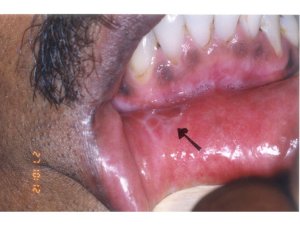
People who chew tobacco for many years are 50 times more likely to get oral cancer, gum disease and losetheir teeth than people who do not chew.The risk of other cancers, heart disease, and ulcerative colitis is 50-70% higher among chewers.Nicotine addiction and dependence is also very real with chewing tobacco. Nicotine addiction leads to increased heart rate and blood pressure. Nicotine constricts the blood vessels and limits oxygen supply throughout the body.Chewing tobacco leaves irritating juices in contact with gums, cheeks and lips for prolonged periods of time. This can lead to a condition called leukoplakia which appears as a smooth, white patch or as leathery-looking wrinkled skin.Oral leukoplakic lesions have been seen upon continued use of tobacco use, which undergo transformation to a dysplastic state. The dysplastic lesions can further develop into carcinomas.Tobacco chewing leads to:
Cancer of the oral cavity
Cancer of the pharynx, larynx
Cancer of esophagus.
The potent carcinogens found in snuff and chewing tobacco include nitrosamines, polycyclic aromatic hydrocarbons, and radiation-emitting polonium.
Oral lesions caused by chewing tobacco rarely cause pain and thus such persons should regularly undergo dental checkups.
Some of the danger signs in those who chew tobacco:
Oral sore that won’t heal
Oral lump or white patch
Prolonged sore throat
Difficulty in chewing
Restricted movement of the tongue or jaws
A feeling of something in the throat
More Dangers of Chewing Tobacco Hazards
The enamel of the teeth gets eroded causing sensitivity problems of teeth.
Tooth decay.
Stained teeth and bad breath are common among long-term smokeless tobacco users.
Chewing tobacco reduces the senses of taste and smell.
Chewing tobacco consistently in the same spot can cause permanent gum damage and damage to the supporting bone structure resulting to loss of teeth.
Damage to gums leads to leukoplakic lesions which in turn lead to cancer.
MORE and more patients who fail to respond to modern medicine are turning towards alternative forms of therapy. Do these alternative systems work? Is it merely a placebo effect? Few doctors have done clinical studies to gather objective evidence to answer these questions.
In England, Dr. Tanvir Jamil, has systematically gathered information that suggests acupuncture could help patients quit smoking. He has used acupuncture on 21 patients who wanted to quit smoking and found that five of these gave up the habit, seven reduced the number of cigarettes smoked, and all found the therapy beneficial.
Basic principles
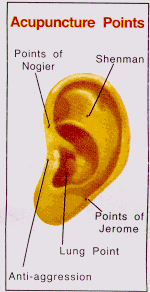
Chinese physicians have practiced acupuncture for over 5000 years. It is based on the concept Qi or bio- energy. The Chinese believe that Qi flows in the body through certain channels or ‘meridians’. Impaired flow leads to disease. ‘Acupoints’ are specific areas on the surface of the body which when stimulated modulate flow of Qi and influence the function of internal organs. Stimulation is achieved by puncturing the ‘acupoint’ with a needle or pressing it with the fingertip (acupressure). Doctors use special ‘maps’ that indicate the location of acupoints all over the body that can be stimulated to treat various conditions.
Many doctors in the West are using acupuncture to treat aches, pains, respiratory infections and allergies. Some claim that they have helped patients quit smoking, but there are no published data. So Dr. Jamil decided to bridge the gap by compiling information on patients who received acupuncture therapy in his clinic to help them quit smoking.
TherapyOver a six-month period, 15 women and 6 men received one acupuncture treatment every week for an average of four (range 2-5) weeks. At each session five ear points (see diagram) and two distal points in the hand were punctured and the needle was left in place for 20 minutes. Patients were also taught to use simple acupressure methods like applying firm pressure on the ‘lung point’ if they felt the urge to smoke.
ResultsFour patients withdrew from the therapy. Five quit smoking and seven decreased the number of cigarettes. Many found that acupuncture reduced stress and controlled craving. In one case, the patient had already stopped smoking and found the acupuncture helped in dealing with “withdrawal’ symptoms. Some noticed that the cigarettes started to taste terrible. Acupressure gave many patients something to do and distract themselves during periods of craving. Overall, patients found the therapy of ‘definite’ benefit.
One 66-year-old woman who had been smoking 20 cigarettes a day for more than 20 years could give up smoking because of this therapy. She had tried unsuccessfully to quit smoking five years earlier when her father died of bronchitis. Her husband had managed to quit with the help of nicotine patches. Neither nicotine patches nor smaller packs of cigarettes nor herbal cigarettes nor hypnotherapy helped her in any way. But after two sessions of acupuncture, she was down to five cigarettes a week. At the end of five sessions, she had stopped smoking. There was some craving initially but this settled rapidly after her second session. She found that acupressure helped her relieve stress. Three years after therapy, she continued to be a non-smoker. In this time, she had taken three sessions of acupuncture during periods of stress.
Scientific basisThe results seen by Dr. Jamil’s clinic could be due to release of endorphins and encephalins that were able to latch on to nicotine receptors in the brain. They could also have been due to hormonal stimulation that brought about the stress relief. Placebo effect cannot be ignored, especially as most of the patients were highly motivated and had wanted to give up smoking for a number of years.
Dr. Jamil has acknowledged that his sample size was too small with no control group to generalize the findings of his study. But data from an open study are better than no data at all. Besides, the results are encouraging enough to undertake further research.


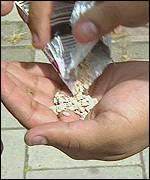 their teeth than people who do not chew.The risk of other cancers, heart disease, and ulcerative colitis is 50-70% higher among chewers.Nicotine addiction and dependence is also very real with chewing tobacco. Nicotine addiction leads to increased heart rate and blood pressure. Nicotine constricts the blood vessels and limits oxygen supply throughout the body.Chewing tobacco leaves irritating juices in contact with gums, cheeks and lips for prolonged periods of time. This can lead to a condition called leukoplakia which appears as a smooth, white patch or as leathery-looking wrinkled skin.Oral leukoplakic lesions have been seen upon continued use of tobacco use, which undergo transformation to a dysplastic state. The dysplastic lesions can further develop into carcinomas.Tobacco chewing leads to:
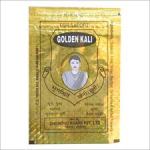 hydrocarbons, and radiation-emitting polonium.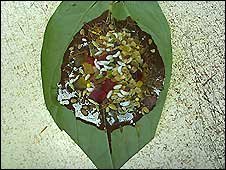
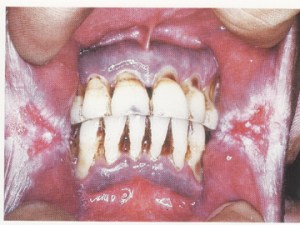
 energy. The Chinese believe that Qi flows in the body through certain channels or ‘meridians’. Impaired flow leads to disease. ‘Acupoints’ are specific areas on the surface of the body which when stimulated modulate flow of Qi and influence the function of internal organs. Stimulation is achieved by puncturing the ‘acupoint’ with a needle or pressing it with the fingertip (acupressure). Doctors use special ‘maps’ that indicate the location of acupoints all over the body that can be stimulated to treat various conditions.
 Manbir Online ~ for Health & Fitness