Unknown's avatar

About Manbir & Gurpreet

Gurpreet Kaur’s journey in this world .... Gurpreet Kaur was a Musician. She was a singer and a composer of music. Her interest was composing and singing Gurbani Shabads in Indian Classical style. She sang Shabads in All the Raags mentioned in Sri Guru Granth Sahib Ji. She also taught Gurmat Sangeet at Gurmat Gian Missionary College, Jawadi, Ludhiana. Elder child to Pushpinder Kaur and Dr. Brig. Harminder Singh, was born in Amritsar on 13th Jan 1962. She attended various convent schools as a child because her father would get frequent Army postings as a dental surgeon. She graduated with Music Honors from Govt. College for Women, Chandigarh. Music was her hobby and she composed and sang Raag based Gurbani Shabads. Doing Kirtan was part of growing up nurtured by her parents. She learned music from her father Dr. Brigadier Harminder Singh who was a dental surgeon in Indian Army and a very good singer himself. Gurpreet’s Bhua (father’s sister), Ajit Kaur retied as a Head of Department of Music from Govt. College for Women Ludhiana, and was a renounced Punjabi singer of her time. Gurpreet Kaur also learned nuances of Indian Classical Music from Pandita Sharma. She was a mother of three children, and a grandmother. Her daughter Keerat Kaur is a Computer Engineer. Her two sons Gurkeerat Singh and Jaskeerat Singh are doctors in USA. Her daughter Keerat Kaur too was part of her group ~ Gurmat Gian Group. Gurpreet Kaur left this world at the age of 54yrs on 12th Sept 2016 in Baltimore USA. She had recorded around 25 cds of Gurbani Keertan. 'Raag Ratan' Album (6 CDs) is a Compilation of Shabads in All the 31 Sudh Raags of Sri Guru Granth Sahib Ji. 'Gauri Sagar' Album (3 CDs) is a Compilation of All forms of Raag Gauri in Sri Guru Granth Sahib Ji. 'Nanak Ki Malhaar' ~ ((3 CDs) is an album of Raag Malhar Shabads in various forms of Malhar. 'Gur Parsaad Basant Bana' ~ (3 CDs) is an album of Shabads in Raag Basant sung in various forms of Raag Basant. Har Ki Vadeyai Sarni Aayea Sewa Priya Kee Preet Piyaree Mohan Ghar Aavho Karo Jodariya Mo Kao Taar Le Raama Taar Le Tere Kavan Kavan Gun Keh Keh Gawan Mera Baid Guru Govinda Saajanrraa Mera Saajanrraa

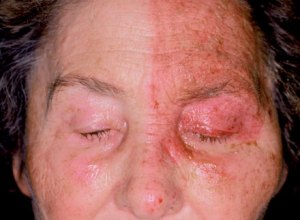
Eczema

Eczema

There are two types of Eczema:

Exogenous or Contact Eczema
Endogenous or Constitutional
Eczema

CONTACT ECZEMA

IRRITANT CONTACT ECZEMA
Detrgents, alkalis, acids, solvents and abrasive dusts are common causes of irritant contact eczema. Majority of industrial irritants causing contact dermatitis come under this category. Those with fair dry skin and with a family history of allergic diseases such as asthma, hay fever or eczema are more vulnerable to irritant contact dermatitis. Napkin eczema in babies comes under this type of eczema.
ALLERGIC CONTACT ECZEM
It is due to delayed hypersensitivity reaction to a contact with an antigen. Previous exposure to antigen is required for sensitization to occur and the reaction is specific to the antigen or closely related chemical.

COMMON ALLERGENS :

Nickel: Jewellery, jeans studs, bra clips.
Dicromate: Cement, leather, matches.
Rubber: Clothing, tyres, shoes.
Colophony: Sticking Plaster.
Paraphenylenediamine: Hair dye, Clothing.
Balsum of Peru: Perfumes, Citrus fruits.
Parabens: Preservatives in cosmetics and creams.
Wool Alcohols: Lanolin, Cosmetics, Creams.
Epoxy Resins: Resin Adhesives.
Topical Applications: Neomycin, Benzocain


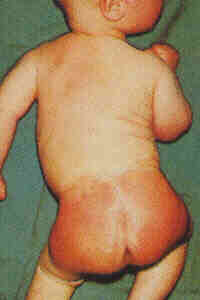
Diaper Dermititis

Moist, bright red lesoins over the diaper area sparing the inguinal flexures. Setellite lesions may be seen.

Treatment : Area to be kept dry. Topical antifungal – steroids creams or lotions.

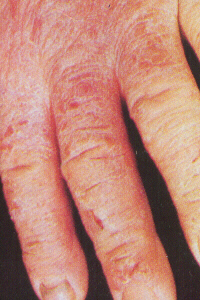
  Hand Eczema

Excessive exposure of hands to soaps, chemicals etc. causing redness, scaling and fissuring.

Treatment : Avoidance of causative factors, Topical steroids-antibiotic preparations.

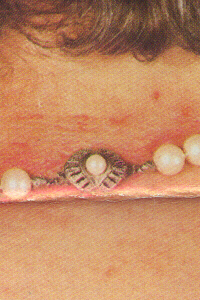
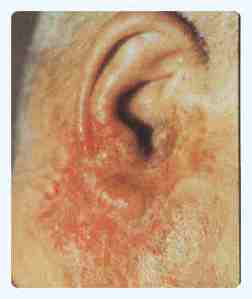
  Contact Dermatits

Erythematous, oozing, crusted lesions occurring at the site of contact with metals (earrings, wrist watches, necklaces etc.)

Treatment : Avoid contact with the allergens. Topical steroids creams or lotions.

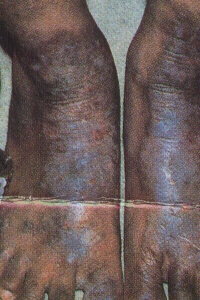
  Foot Wear Dermatitis

Erythema and oozing, or lichenification seen on the dorsal aspects of feet. Depigmentation may also occur.

Treatment : Topical steroids, change of footwear.

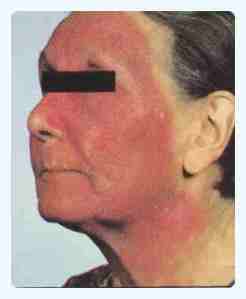
  PhotoContact Dermatitis

Itchy, erythematous, scaly and or fluid filled lesions seen on the exposed areas of the face, neck, back of the hands etc.

Treatment : Avoid photosensitizing agents, Use steroid topically and sun screening agents.

  Microbic Eczema

Sensitizaton to causative organism leads to oozing, crusted eczematous lesions around the primary lesion.

Treatment : Local cool compress, topical steroid-antibiotic cream,systemic antibiotic.

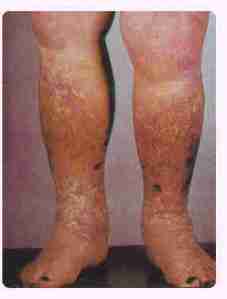
  Stasis Eczema

Pruritic, weeping and eroded lesions seen on the lower leg. Varicose veins usually present.

Treatment : Leg elevation , wet compresses, systemic antibiotics and topical steroids.

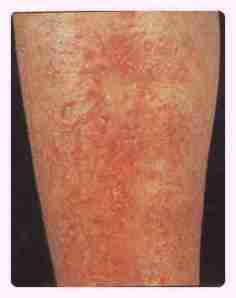
  Xerotic Eczema (Dry Skin)

Skin is dry and flaky especially over the arms and legs with generalised pruritus.

Treatment : Infrequent bathing; avoid soaps; Urea cream, vaseline or cold cream.

Dengue Fever

Dengue Fever

Dengue is a viral infection that can lead to fever (Dengue fever syndrome) and can sometimes result in severe bleeding (Dengue Haemorrhagic Fever) and shock (Dengue Shock Syndrome).

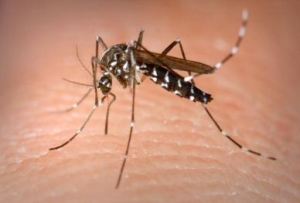
The Aedes mosquito spreads the dengue virus. This mosquito bites humans during daytime and breeds in relatively clean water stored for drinking or washing purposes and in rainwater that collects in various containers (e.g. tyres, bottles, tanks, shallow wells, plastic bottles.)
People of all ages and both sexes who are exposed to mosquito bites can get this disease. Children usually have a milder disease than adults.

There are basically four ways in which a patient – with Dengue presents himself:

1. Mild uncharacteristic fever.

2. “Break-bone” fever characterized by chills, high fever, severe headache, rash spreading from trunk to extremities, muscle and joint pains preventing all movements lasting for nearly 5 days.

3. DHF or Dengue Hemorrhagic Fever abrupt onset, high continuous fever lasting for 2-7 days with bleeding patches under skin, nose bleeding, gum bleeding, blood vomit, black tarry stool, capillary leakage ( ascites and pleural effusion), low platelet count and around 20% rise in haemotocrit.

4. DSS or Dengue Shock Syndrome shows all the signs and symptoms of DHF with cold clammy skin, weak and rapid pulse, hypotension and narrow pulse pressure.

Treatment

There is no specific drug or vaccine available that acts against the Dengue virus. Management follows general principles: –

  • Bed-rest under a mosquito net.
  • Sponge for fever.
  • Paracetamol for pain and fever.

Avoid Asprin and other NSAIDs that can reduce platelet count and increase bleeding

Cheek vital signs, haematocrit, urine output for signs of dehydration and electrolyte imbalance. Rapid intravenous replacement of fluids and electrolytes to sustain patient till recovery occurs. Plasma or plasma colloid preparations should be given if the haematocrit remains elevated. Care should be taken to avoid over hydration and pulmonary oedema (should this occur, diuretics may be used) Benzodiazepines (eg. diazepam) may be given to calm patients. Platelets concentrate needs to be given in those with low platelet count.

The disease cannot be spread by direct contact. It spreads only via Aedes mosquito bite. The transmission route is ‘Man-Mosquito- Man’.

This spread of the disease can be achieved by protecting individuals from mosquito bite (sleeping under a mosquito net, using insect repellants) and by controlling the Aedes mosquito population in the area.

The anti mosquito measures include:

  • Reduce Aedes mosquito breeding ground by getting rid of water holding containers such as discarded tins, empty pots, broken bottles etc.
  • Destroy larvae by adding oil to water collected in small ponds etc.
  • Kill adult mosquitoes by spraying insecticides.

Difference between Dengue Fever complicated by bleeding from DHF

Dengue Fever with Bleeding

  • Bleeding from pre-existing lesion like peptic ulcer.
  • Ascites and Pleural Effusion not seen.
  • Liver usually not enlarged.
  • Haematocrit falls.
  • Leucopaenia (fall of WBC)
  • Mild fall in Platelets count (rarely less than 1,00,000/cumm.

DHF – Dengue Hemorrhagic Fever

  • Bleeding under skin and from all mucosal surfaces.
  • Ascites and pleural effusion seen.
  • Liver enlargement seen in 1-2 days.
  • Haematocrit rises by 20% or more.
  • Leucocytosis (rise in WBC count)
  • Severe fall in Platelets count (usually less than 1,00,000/ cumm.)

Herpes Zoster

Herpes Zoster

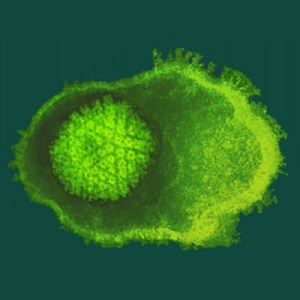
Herpes Zoster is caused by Varicella-zoster virus.
Varicella-zoster virus causes two distinct clinical entities: varicella, or chickenpox, and herpes zoster, or shingles. Herpes Zoster presents as a type of skin rash accompanied by severe nerve pain.

Herpes zoster disease, is the consequence of reactivation of latent VZV ( Varicella – zoster virus ) from the dorsal root ganglia. Herpes zoster occurs at all ages, but its incidence is highest (5 to 10 cases per 1000 persons) among individuals in the sixth through the eighth decades of life. It has been suggested that approximately 2 percent of patients with herpes zoster will develop a second episode of infection.

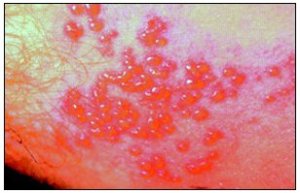
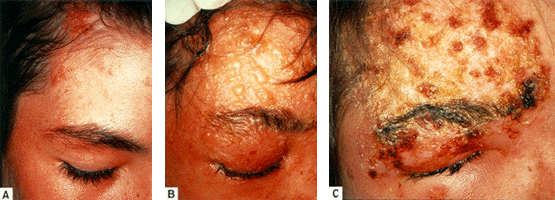
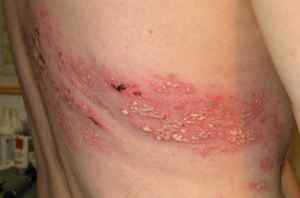
This disease is characterized by a one sided vesicular eruption on the line of a nerve and is associated with severe pain. The erythematous maculopapular rash changes rapidly into vesicular lesions. The onset of the disease starts usually with severe pain on the line of the nerve that is involved with the disease process. The eruption may remain few in number or may continue to form for 3 to 5 days. The total duration of disease is generally between 7 and 10 days; however, it may take as long as 2 to 4 weeks for the skin to return to normal.

The disease may appear practically any place in the body. It may appear on the face (very common), tongue, mouth, and eye. It’s commonly seen on the one side of the chest.

If vesicles appear in the ear canal,  patients lose their sense of taste in the anterior two-thirds of the tongue while developing one sided facial palsy.

Post Herpetic Neuralgia is the most common complication of this disease. It’s seen most in the elderly patients or in immuno-compromised patients. This is a very troublesome pain persisting after the resolution of the disease process.

Treatment
Acyclovir, 800 mg per day for 7 to 10 days. FamciclovirValacyclovir are also used for herpes zoster. Other supportive measures may also be needed to manage pain and to prevent secondary infection of the eruptions.

Involvement of the eye needs timely care by ophthalmologist. Eye involvement can be troublesome when cornea is involved.


Smallpox

Smallpox

Our world has been eradicated from Smallpox. The last case of endemic smallpox was reported in 1977 from Somalia. In 1980 the World Health Organization officially declared that smallpox had been eliminated worldwide as a result of a global vaccination and eradication program. The only known remaining samples of smallpox virus are two research laboratories – located in the United States and Russia.

Smallpox was a relatively less contagious disease whose transmission required close contact. Fever and macular rash appeared after an average incubation period of 12 days, with a progression to typical vesicular and pustular lesions over 1 to 2 weeks.

Clinical features

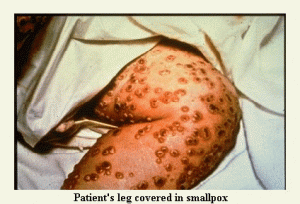
This disease is spread by inhalation of air droplets or aerosols. Twelve to 14 days after catching infection, the patient becomes febrile and has severe aching pains. Some 2 to 3 days later, a papular rash develops over the face and spreads to the extremities. The rash soon becomes vesicular and later, pustular. The patient remains febrile throughout the evolution of the rash and experiences considerable pain as the pustules grow and expand. Gradually, scabs form, which eventually separate, leaving pitted scars. In severe cases death usually occurs during the second week.
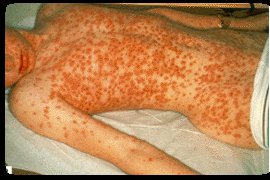
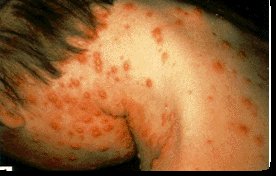
Before the eradication of the smallpox this disease was confused frequently with chickenpox mainly during the early stage.

The differentiating features are:

All smallpox lesions develop at the same pace and, on any part of the body, appear identical.

Chickenpox lesions are much more superficial and develop in crops. With chickenpox, scabs, vesicles, and pustules may be seen simultaneously on adjacent areas of skin. Moreover, the rash in chickenpox is more dense over the trunk which is reverse with smallpox. Chickenpox lesions are almost never found on the palms or soles.

In 5-10% of the patients the disease takes a malignant shape and the patients die in 5-7 days. There may be bleeding in the skin and other parts of the body especially the intestines.

Vaccination

The only protection against this disease is vaccination. Vaccination before exposure or within 2 to 3 days after exposure affords almost complete protection against disease. Vaccination as late as 4 to 5 days after exposure may protect against death. Because smallpox can only be transmitted from the time of the earliest appearance of rash, early detection of cases and prompt vaccination of all contacts is very important in the spread of this disease.

Smallpox vaccination is associated with some risk of adverse reactions. The two most serious are postvaccinal encephalitis and progressive vaccinia. Postvaccinal encephalitis may be fatal and those who survive may have residual neurological damage. Progressive vaccinia is seen in those with immunosuppression.

Before the eradication of smallpox, variola virus existed as two related strains: variola major (smallpox), with a case-mortality rate of 20 to 50 percent, and variola minor (alastrim), which caused a clinically milder form of smallpox with a mortality of less than 1 percent.

The vaccine against smallpox is made from vaccinia virus. Its origin is uncertain, but it was probably derived from cowpox virus, variola virus, or a hybrid of the two. Experience has proven the effectiveness of live vaccinia-virus vaccine. Percutaneous administration of vaccinia virus vaccine results in protective immune responses in more than 95 percent of primary vaccines. Formation of a pustule and scab at the site of inoculation is indicative of immunity. Because immunity wanes after 10 to 20 years, revaccination every 10 years is recommended for continued protection. Routine smallpox vaccination was discontinued in 1971 and has not been required for international travel since 1982. However, use of vaccinia viruses for use in vaccines against other infectious agents or as immunotherapy against malignant diseases has led to the recommendation that laboratory and health care employees working directly with vaccinia virus be considered for vaccination. Selected groups that may be exposed to poxviruses (e.g., some military personnel and individuals who work with animals) should also be vaccinated.
Researchers at the University of North Carolina say many people vaccinated against smallpox more than 35 years ago are still immune to the disease.The findings published in Thursday’s edition of the New England Journal of Medicine refute the widely-held belief by doctors that the vaccine lasts no more than 10 years.

Chickenpox

Chickenpox

Chickenpox 

Chickenpox, a extremely contagious infection, is usually a benign illness of childhood characterized by an exanthematous vesicular rash. Children between the ages of 5 and 9 are most commonly affected and account for 50 percent of all cases.

Clinically, chickenpox presents as a rash, low-grade fever, and malaise.

The skin lesions, the hallmark of the infection, include maculopapules, vesicles, and scabs in various stages of development. These lesions, which evolve from maculopapules to vesicles over hours to days, appear on the trunk and face and rapidly spread to involve other areas of the body. Most are small and have an erythematous base with a diameter of 5 to 10 mm. Successive crops of rash appear over a 2 to 4 day period. Lesions also can be found on the mucosa of the pharynx and or the vagina. Their severity varies from one individual to another. Some individuals have very few lesions, while others have as many as 2000. Younger children tend to have fewer vesicles than older individuals.

The most common infectious complication of chickenpox is secondary bacterial superinfection of the skin.

The most common extracutaneous site of involvement in children is the nervous system. Pneumonia is the most serious complication following chickenpox, developing more commonly in adults.

Other complications of chickenpox include myocarditis, corneal lesions, nephritis, arthritis, bleeding diatheses, acute glomerulonephritis, and hepatitis.

Chickenpox, is more severe in the immunocompromised than in the normal individual.


Smallpox