Unknown's avatar

About Manbir & Gurpreet

Gurpreet Kaur’s journey in this world .... Gurpreet Kaur was a Musician. She was a singer and a composer of music. Her interest was composing and singing Gurbani Shabads in Indian Classical style. She sang Shabads in All the Raags mentioned in Sri Guru Granth Sahib Ji. She also taught Gurmat Sangeet at Gurmat Gian Missionary College, Jawadi, Ludhiana. Elder child to Pushpinder Kaur and Dr. Brig. Harminder Singh, was born in Amritsar on 13th Jan 1962. She attended various convent schools as a child because her father would get frequent Army postings as a dental surgeon. She graduated with Music Honors from Govt. College for Women, Chandigarh. Music was her hobby and she composed and sang Raag based Gurbani Shabads. Doing Kirtan was part of growing up nurtured by her parents. She learned music from her father Dr. Brigadier Harminder Singh who was a dental surgeon in Indian Army and a very good singer himself. Gurpreet’s Bhua (father’s sister), Ajit Kaur retied as a Head of Department of Music from Govt. College for Women Ludhiana, and was a renounced Punjabi singer of her time. Gurpreet Kaur also learned nuances of Indian Classical Music from Pandita Sharma. She was a mother of three children, and a grandmother. Her daughter Keerat Kaur is a Computer Engineer. Her two sons Gurkeerat Singh and Jaskeerat Singh are doctors in USA. Her daughter Keerat Kaur too was part of her group ~ Gurmat Gian Group. Gurpreet Kaur left this world at the age of 54yrs on 12th Sept 2016 in Baltimore USA. She had recorded around 25 cds of Gurbani Keertan. 'Raag Ratan' Album (6 CDs) is a Compilation of Shabads in All the 31 Sudh Raags of Sri Guru Granth Sahib Ji. 'Gauri Sagar' Album (3 CDs) is a Compilation of All forms of Raag Gauri in Sri Guru Granth Sahib Ji. 'Nanak Ki Malhaar' ~ ((3 CDs) is an album of Raag Malhar Shabads in various forms of Malhar. 'Gur Parsaad Basant Bana' ~ (3 CDs) is an album of Shabads in Raag Basant sung in various forms of Raag Basant. Har Ki Vadeyai Sarni Aayea Sewa Priya Kee Preet Piyaree Mohan Ghar Aavho Karo Jodariya Mo Kao Taar Le Raama Taar Le Tere Kavan Kavan Gun Keh Keh Gawan Mera Baid Guru Govinda Saajanrraa Mera Saajanrraa

Molluscum Contagiosum

Molluscum Contagiosum
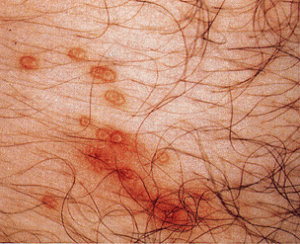
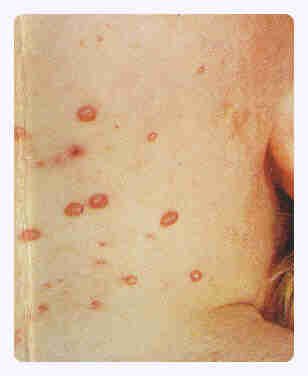
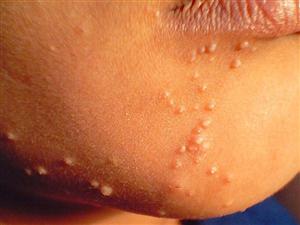
Molluscum contagiosum is a skin disease. It is generally a benign disease characterized by pearly, flesh-colored, umbilicated skin lesions 2 to 5 mm in diameter. It is caused by a Poxvirus.
The infection can be transmitted by close contact, including sexual intercourse.
Lesions typically occur in the genital region but can be found anywhere on the body except the palms and the soles. In most cases the disease is self-limited and has no systemic complications.
 
Mulluscum contagiosum develops often in cases with the advanced stages of HIV infection. 5 to 18 percent of HIV-infected patients develop this complication. The disease is more generalized and severe in AIDS patients with frequently involving the face and upper body.  
There is no specific systemic treatment for molluscum contagiosum, but a variety of techniques for physical ablation have been used such as Electocautry, chemical cautry, Trichloroacetic acid applications or Liquid nitrogen applications or Light electrosurgery.  
 Skin Diseases

Menorrhagia

Menorrhagia ~ Excessive Menstrual Bleeding
It is one of the most common menstrual disorders and is called Menorrhagia. It affects about a third of the women. A woman who bleeds for more than 10 days or women who uses more than 10 pads a day may be labelled as suffering from Menorrhagia.

Causes:

  • Hormonal imbalance.
  • Fibroids & polyps
  • Infection of uterus or cervix.
  • Cancer of uterus or cervix or vagina.

Women due to excessive bleeding develop anaemia. It leads to deterioration of general health which lead affects family and social life.

Dysfunctional Uterine bleeding is abnormal uterine bleeding caused by interruption of normal ovarian functions that produces eggs called ovulation.

Tests are performed to evaluate the status and cause of the bleeding. These include blood tests, ultrasound examination, Pap smear, D&C, and Hysteroscopy.

Women who experience single episode of heavy bleeding may not need much treatment but those who get heavy bleeding for more than 24 hrs need to seek medical advice.

Relief from menorrhagis is achieved by treating under lying causes. Often it is managed with progesterone or a combination of progesterone and oestrogen as in the form of oral contraceptive.

Benefits of Sex

Quote

Benefits of Sex

  • Good sex helps in boosting your immune system or maintaining a healthy weight. It gives higher levels of an antibody called immunoglobulin A or IgA, which can protect you from getting colds and other infections.
  • Having sex twice or more a week reduced the risk of fatal heart attack by half for the men, compared with those who had sex less than once a month.
  • Helps in lowering Blood Pressure.
  • Frequent sex helps in Overall Stress Reduction.
  • Having sex and orgasms increases levels of the hormone oxytocin, the so-called love hormone, which helps us bond and build trust.
  • It Reduces Pain. Having sex increases the level of hormone oxytocin, which in turn increases endorphins levels, and pain declines. So, headache, arthritis pain, or PMS symptoms seem to improve after sex.
  • Frequent ejaculations, especially in young men, may reduce the risk of prostate cancer later in life.
  • Sex promotes release of Oxytocin which promotes a good sound sleep. We all know that a Good Sound Sleep has lots of overall benefit.
In a study done to find out the relation between Sex and Cardiovascular benefit it was found that those who have regular sex do get some cardiovascular protection. This benefit was seen in a group who had sex in a married relationship and not among those having casual sex outside marriage.


Hormone Replacement Therapy (HRT) ~ Risks

Risks of Hormone Replacement Therapy (HRT)
Two major studies created lot of the furrow and confusion among a large population of women and medical professionals. The first, Women’s Health Initiative (WHI), was called off after Prempro, a popular estrogen and progesterone combination therapy, was shown to increase risk of stroke, heart disease and breast cancer in post-menopausal women.The second, being conducted by the National Cancer Institute (NCI), showed that post-menopausal women who took estrogen had a 60 percent greater chance of contracting ovarian cancer than did women who took no hormones.

Estrogen products have been used for decades and have helped millions of women handle symptoms of menopause, including hot flashes, night sweats, sexual discomfort and the increased risk of bone fractures.

For years, studies on heart disease, Alzheimer’s, colon cancer and bone fractures also showed potential benefits to women taking hormone replacement long-term, and these findings were widely accepted by doctors and advertised by the drug makers.

The findings regarding the benefits of estrogen on heart disease were considered strong enough by the American Heart Association to be included in its literature for women as recently as 1997.

But all this has changed over night with the findings of WHI.  Researchers running the federally funded Women’s Health Initiative announced that the largest U.S. trial of combination hormone therapy in healthy postmenopausal women had been stopped three years early because of an increase in breast cancer cases among hormone users. Increases in heart attacks, strokes and blood clots also led the oversight committee to halt the study. Overall, the researchers concluded that the treatment was hurting the test subjects more than it was helping them.

That assessment applied to women taking estrogen and progestin, but not to women in a separate study evaluating the use of estrogen alone. Researchers said that they had not detected any significant increase in breast cancer among women taking estrogen only and that the study would continue.

Experts say, women who are taking the hormones should not panic, but should consult with their doctors about whether to continue. It is advised that women who take the two hormones to relieve hot flashes and other symptoms of menopause should use the treatment as briefly as possible, and those wishing to prevent osteoporosis should probably choose alternatives to hormones.

Also, the result of this study on the use of contraceptive is unclear for the present. The observations of this study has no bearing on the use of contraceptive pills by women of pre menopausal age. This study was conducted with Prempro.

Prempro is taken all month, while oral contraceptives are prescribed to be taken for three weeks, then stopped for one week — to mimic the body’s natural hormonal cycle. Some think this cycling may be protective.

Findings of WHI in relation to HRT
Following are the observations out of the Women’s Health Initiative study:Before stopping its eight-year study at the five-year mark, the WHI came to the following conclusions:

  • Each year 30 out of 10,000 postmenopausal women taking no therapy fall ill to heart disease. For every year women took HRT, they increased their risk of heart disease by seven per 10,000. This means that for every 10,000 women taking HRT, 37 could expect to fall ill to heart disease the first year, 44 the next year, 51 the following year, and so forth. While the absolute risks are small, the increases were viewed as significant, and women’s heart risks escalated the longer they stayed on the drugs.
  • For stroke, risk rose from 21 per 10,000 (for post-menopausal women not taking HRT) to 29 per 10,000 among those taking HRT, increasing eight per 10,000 per year.
  • For pulmonary embolism, risk increased from eight per 10,000 in the post-menopausal women not taking HRT to 16 per 10,000 among HRT users, increasing eight per 10,000 per year.
  • For invasive breast cancer, risk rose from 30 per 10,000 among post-menopausal women not taking HRT to 38 per 10,000 among those taking HRT, increasing eight per 10,000 per year.
  • For colorectal cancer, risk decreased after taking HRT, from 16 per 10,000 in non-HRT users to 10 per 10,000 HRT users.
  • For hip fractures, risk decreased too, from 15 per 10,000 for non-HRT users to 10 per 10,000 HRT users.

There was no difference in death rates between the two groups. However, women on the hormone treatment had a

  • 26 percent higher incidence of breast cancer.
  • 29 percent higher incidence of heart attacks.
  • 41 percent higher incidence of strokes.
  • Twice as many blood clots in the lungs and leg veins as those taking the placebo.

In contrast, the hormone-treated women

  • 37 percent fewer hip fractures.
  • 34 percent lower rate of colon cancer.

The study found that the frequency of these effects in hormone users did not differ by age, ethnic group or prior health status.

Menopause

Menopause

Menopause

The menopause is defined as the final episode of menstrual bleeding in women. The term is used commonly to refer to the transitional period up to and after the last episode of menstrual bleeding. During this period, there is a progressive loss of ovarian function and a variety of changes due to hormonal upset.The median age of women at the time of cessation of menstrual bleeding is 50 to 51 years. In the 5 years before menopause there is gradual increase in the number of anovulatory cycles – i.e. cycles without ovulation. During this period the estrogen secretion falls and there is increased pituitary secretion of LH and FSH hormones.  The age of menopause varies widely. Before the menopause the interval between the menses is variable and it becomes longer and longer.The menopause is the consequence of the exhaustion of folicles in the ovaries of a female. The decrease in the number of ova begins in the womb itself. By the time of the menopause, few ova remain, and these appear to be non-functional. Only a small number of ova are lost as the result of ovulation during reproductive life. The stopping of follicular development results in decreased production of estradiol and other hormones.Estrogen and androgen levels in plasma are reduced but not absent.
Clinical Features

About 3 of 4 women experience menopausal symptoms, but in 50 percent to 75 percent of sufferers they last a year or less. In about one-third of sufferers, they persist for up to five years, and in a small percentage, they last longer.

  •  Irregular periods commonly precede the menopause.
  • Hot Flashes and sweating. Hot flashes may start even when the paerson still has regular periods.
  • Nervousness, Anxiety, Emotional lability, Irritability, Depression.
  • Increased Vaginal Infection, Vaginal dryness, atrophy of urogenital epithelium.
  • Urgency of micturition.
  • Decrease in the size of breasts.
  • Approximately 40 percent of menopausal women develop symptoms serious enough to seek medical assistance.
  • Osteoporosis – reduction of Calcium in bones, is one of the crippling afflictions of aging, and there is a close relationship between estrogen deprivation and its development. Approximately one-fourth of aging women and one-tenth of elderly men sustain a vertebral or hip fracture between the ages of 60 and 90, and the incidence is highest in elderly white women. Such fractures are a major cause of death and morbidity. 

Many factors affect the development of osteoporosis, including diet, activity, smoking, and general health, and estrogen deprivation is of particular importance. White postmenopausal women are more predisposed to osteoporosis and its consequences. It is known that fall in the secretion of estrogen is associated with initial rapid loss of bone mass. Vertebral compression fracture, fracture neck femur and radius is seen more in females in  comparison to males. Those women who smoke are at a greater risk. Excessive alcohol and lack of exercise add to this risk. Earlier the menopause greater is the problem. Oestrogen started at the time of menopause is shown to prevent the bone loss. Many factors affect the development of osteoporosis, including diet, activity, smoking, and general health, and estrogen deprivation is of particular importance. White postmenopausal women are more predisposed to osteoporosis and its consequences. It is known that fall in the secretion of estrogen is associated with initial rapid loss of bone mass. 

  • After the menopause women experience an increase in the incidence of cardiovascular disease.

Management

  • Many women do not need any treatment. Explaining the problem and reassurance is what most of them need.
  • Imipramine, may be helpful to relieve anxiety and depression.
  • Hot flashes and sweating – may be helped by Clonidine 50 µg twice daily. But in many patients estrogen therapy is required.
  • Oestrogen Replacement Therapy

Oral Oestrogen – cyclical Ethinyl oestrogen 0.01-0.02 mg / day for 21 days with Medroxyprogesterone acetate 5 mg daily for the last 10  days.

Percutaneous Patches with reservoir of oestradiol 25-50 µg / day. Change every 3-4 days. Add oral Progestogen for 10 days per month.

Topical oestradiol – for Atrophic Vaginitis 0.01 % Dienoestrol cream.

  • Isoflavones: from plant sources esp. Soya, has oestrogen like activity. They do help to relieve symptoms to large extent in many women. They can be given in combination with Calcium, Magnesium and Vitamin D.

Hormone Replacement Therapy (HRT)~Risks