Advice to Pregnant Women
|
|
|

Advice to Pregnant Women
|
|
|
| Premenstrual Syndrome |
Premenstrual Syndrome consists of variety of symptoms that occur during a particular phase of menstrual cycle, usually 7-10 days before the periods begin. cycle, usually 7-10 days before the periods begin.These symptoms mostly begin in 20s. 10 to 50 % of women suffer from PMS regularly. 5-10 % suffers from symptoms severe enough to seek medical help. Women most often affected by PMS are those:
PMS is rarely debilitating. |
| Symptoms Of PMS occur 7-10 days before periods are due. | More intense symptoms in a small number of women |
|
|
CausesNumerous theories are proposed to explain the symptoms of Premenstrual Syndrome.
|
Treatment
Various relaxation techniques, such as yoga and meditation, can be helpful in reducing the anxiety, irritability and other emotional symptoms that sometimes occur premenstrually. The Cobra and Bow yoga positions are particularly recommended for PMS. Hormonal agents, anti-anxiety and antidepressants may be needed in some. |
| Calcium most helpful in Premenstrual syndromeOf all the dietary supplements that claim to help women reduce the physical and emotional symptoms associated with premenstrual syndrome (PMS), there is only one that is really helpful – calcium.
Researchers say there is convincing evidence that 1,000-1,200 milligrams/day of calcium can substantially reduce PMS symptoms such as fatigue, irritability and abdominal bloating. Magnesium supplements of 200-400 mg/day may be helpful, but their efficacy hasn’t been proven and higher dosages can trigger a mild laxative effect. Other supplements, including vitamin B6, have conflicting results in past studies, according to a report in the Journal of the American College of Nutrition. Other remedies supposed to benefit PMS are chaste tree oil and dong quai. These herbs may be unsafe for women who become pregnant. No scientific evidence has proved their effectiveness. So, if one is looking for something to help with PMS, calcium tablets are the best bet. Cutting down on fat in your diet also helps. |
| Stroke Treatment |
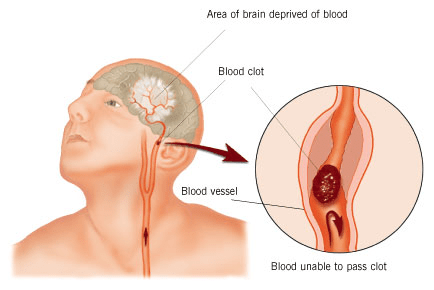
| Acute hospital care, drugs, surgery and rehabilitation are all accepted ways to treat stroke. It is important that the patient seeks treatment early. Acute hospital care depends upon the state of the patient, level of consciousness, extent of damage to the brain cells. |
| Surgery may be needed when a neck artery has become partially blocked. Surgery might be used to remove the buildup of atherosclerotic plaque. This is called Carotid endarterectomy. |
| Cerebral angioplasty is a new, experimental technique. Balloons, stents and coils are used to treat some types of cerebral vascular problems. Its widespread use will require further study of safety and effectiveness. |
| Tissue plasminogen activator (TPA) This is a major advance in medical therapy because physicians now have an approved treatment for acute strokes caused by blood clots, which constitute 80 percent of all strokes. A risk of bleeding in the brain accompanies use of the drug. However, that risk is outweighed by its benefits when an experienced doctor uses it properly. Not every stroke patient should receive TPA treatment. TPA is effective only if given promptly. For maximum benefit, the therapy must be started within three hours after the onset of a stroke. |
| Treating heart disease? Sometimes treating a stroke means treating the heart, because various forms of heart diseases can contribute to the risk of stroke. For example, damaged heart valves may need to be surgically treated or treated with anti-clotting drugs to reduce the chance of clots forming around them. Blood clots can also form in patients with Atrial fibrillation, a type of arrhythmia (abnormal heart rhythm). If clots form, there’s a chance they could travel to the brain and cause a stroke. |
| Stroke |
| Tests for Stroke |
| It is now possible to examine how the brain looks, functions and gets its blood supply. These tests can outline the affected part of the brain and help define the problem created by stroke. Most of these tests are safe, painless and can be done as an outpatient. A doctor must decide on a case-by-case basis whether such tests will be useful, and if so, which ones to use.
Some of the Tests useful in the investigation of Stroke
|
| Computerized axial tomographic scan (C.T. or CAT scan)
Imaging procedure that uses x-rays to generate an image of the brain. Doctors use CT to determine whether a stroke has occurred and to identify the type of stroke: ischemic (result of blockage) or hemorrhagic (result of bleeding). |
| Magnetic resonance imaging scanning (M.R.I.)
In this imaging procedure, the patient is placed in a magnetic field, causing a change in the behavior of the cells in the brain. Once the patient is in a magnetic field, the head is subjected to bursts of energy of a known frequency. The response of the brain cells to these bursts of energy is detected in the form of signals that ultimately generate the image of the brain. MRI can provide very accurate images of the brain and is used to determine the presence, location and size of aneurysms and arteriovenous malformations, which are potential sources for hemorrhagic stroke. |
| Radionuclide angiography
An imaging procedure where radioactive compounds are injected into a vein in the arm and allowed to be carried in the bloodstream toward the head. As the radioactive compound circulates in the bloodstream, it is constantly emitting bursts of radiation. Once the radioactive compound reaches the brain, these bursts of radiation are detected by a special detector and used to form an image of the brain. This imaging procedure can detect blocked blood vessels and areas where the brain has been deprived of blood flow and is damaged. |
| Electroencephalogram (E.E.G.)
In this diagnostic procedure, small metal disks (electrodes) are placed at strategic locations on a person’s scalp. The electrodes can detect the electrical activity in the form of impulses that are then transcribed to paper. By observing the characteristics of the impulses such as intensity (how large is the impulse), duration (how wide is the impulse), frequency (how often do impulses occur during a given time) and location (what region of the brain is producing these impulses), an EEG can provide valuable information about underlying problems in the brain. |
| Evoked response test
A diagnostic procedure that provides a measurement of the brain’s ability to process and react to different sensory stimuli. A doctor evokes a visual response by flashing a light or checkerboard pattern in front of a patient. For auditory evoked responses, a doctor produces a sound in one of the patient’s ears. For bodily evoked responses, one of the nerves in an arm or leg is electrically stimulated. The responses from either of these sensory stimuli can indicate abnormal areas of the brain. |
| Doppler ultrasound test
In this imaging procedure, ultrasound or high-frequency sound waves are used to detect blockages in the carotid artery . A Doppler probe or instrument capable of generating ultrasound waves is placed on the neck, very close to the carotid artery. Ultrasound waves generated from the probe travels through the neck and bounces off the moving blood cells. The reflected sound wave, now returning to the probe at a different frequency, is then detected by the same probe. The change in frequency of the sound waves is related to the speed of the blood cells and hence the blood flow. |
| Carotid phonoangiography
In this diagnostic procedure, a sensitive microphone is placed on the neck, very close to the carotid artery, to record generated sounds. Ordinarily, in a normal artery, blood flows in a smooth and controlled manner. However, the presence of blockages, such as those caused by atherosclerosis, disrupt the controlled nature of blood flow, causing the blood flow to become turbulent. The turbulent blood flow can create a sound, called a bruit, that can be detected and registered by the microphone. The presence of a bruit indicates a blockage in the carotid artery and is cause for further investigation. |
| Digital subtraction angiography (D.S.A.)
In this imaging procedure, a contrast dye is injected into a vein in the arm and allowed to circulate in the bloodstream. Once the dye reaches the brain, an x-ray machine quickly takes a series of images or pictures of the head and neck. The images track the movement of the contrast dye as it proceeds through the blood vessels of the brain. This imaging technique allows the doctor to identify and localize the source of stroke, whether it be ischemic (result of blockage) or hemorrhagic (result of bleeding) |
| Stroke |
| Effects of Stroke |
| Strokes affect different people in different ways, depending on the type of stroke and the area of the brain affected and the extent of the brain injury.
Brain injury from a stroke can affect the
Paralysis or weakness on one side of the body is common. |
Effect of stroke on emotionsA stroke survivor may cry easily, often for no apparent reason. This is called emotional lability. Laughing uncontrollably may also occur but is not as common as crying. Depression is common. |
Effect of Stroke on awarenessStroke often causes people to lose mobility and/or feeling in an arm and/or leg, or suffer dimness of sight on one side. The loss of feeling or visual field results in a loss of awareness, so stroke survivors may forget or ignore their weaker side. As a result, they may ignore items put on their affected side, have trouble reading, or dress only one side of their bodies and think they’re completely dressed. Bumping into furniture or door jambs is also common. One-side neglect is most common in those with injury to the right hemisphere of the brain. |
Effect of Stroke on perceptionA stroke can also affect seeing, touching, moving and thinking, so a person’s perception of everyday objects may be changed. Stroke survivors may not be able to recognize and understand familiar objects the way they did before. When vision is affected, objects may look closer or farther away than they really are, causing spills at the table or collisions when walking. |
Effect of Stroke on hearing and speechUsually stroke doesn’t cause hearing loss, although people may have problems understanding speech. They also may have trouble saying what they’re thinking. This is called Aphasia. Aphasia affects the ability to talk, listen, read and write. It is most common when a stroke weakens the right side of the body.A related problem is that a stroke can affect muscles used in talking (those in the tongue, palate and lips), and speech can be slowed, slurred or distorted. Stroke survivors thus can be hard to understand. This is called Dysarthria. |
Effect of Stroke on chewing and swallowing foodThis problem, called Dysphagia, can occur when one side of the mouth is weak. |
Effect of Stroke on ability to think clearlyPlanning and carrying out even simple activities may be difficult. Stroke survivors may not know how to start a task, confuse the sequence of logical steps in tasks, or forget how to do tasks they’ve done many times before. |
| Stroke |
 Manbir Online ~ for Health & Fitness